Plot: What’s it about?
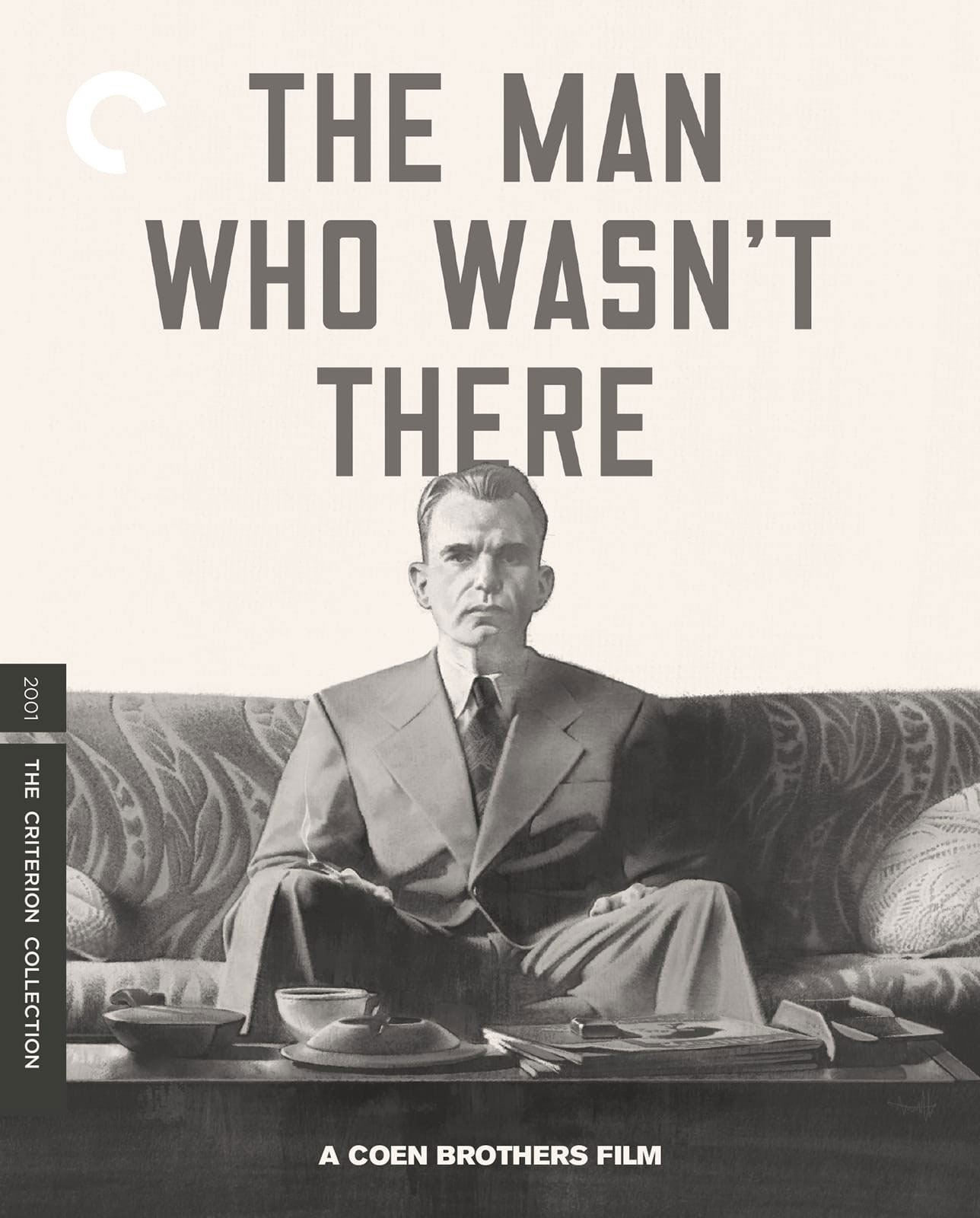
The Coen brothers are two of Hollywood’s most versatile filmmakers, and in the seventeen years since their debut feature, 1984’s Blood Simple, they have both exemplified and defied their roles as contemporary auteurs. This has never been more obvious than with the release of The Man Who Wasn’t There. It comes on the heels of the Coen brothers’ Oscar-winning comedy O Brother, Where Art Thou? and offers the filmmakers’ familiar taste for irony, but does so in a far darker and more stylistically stimulating context.
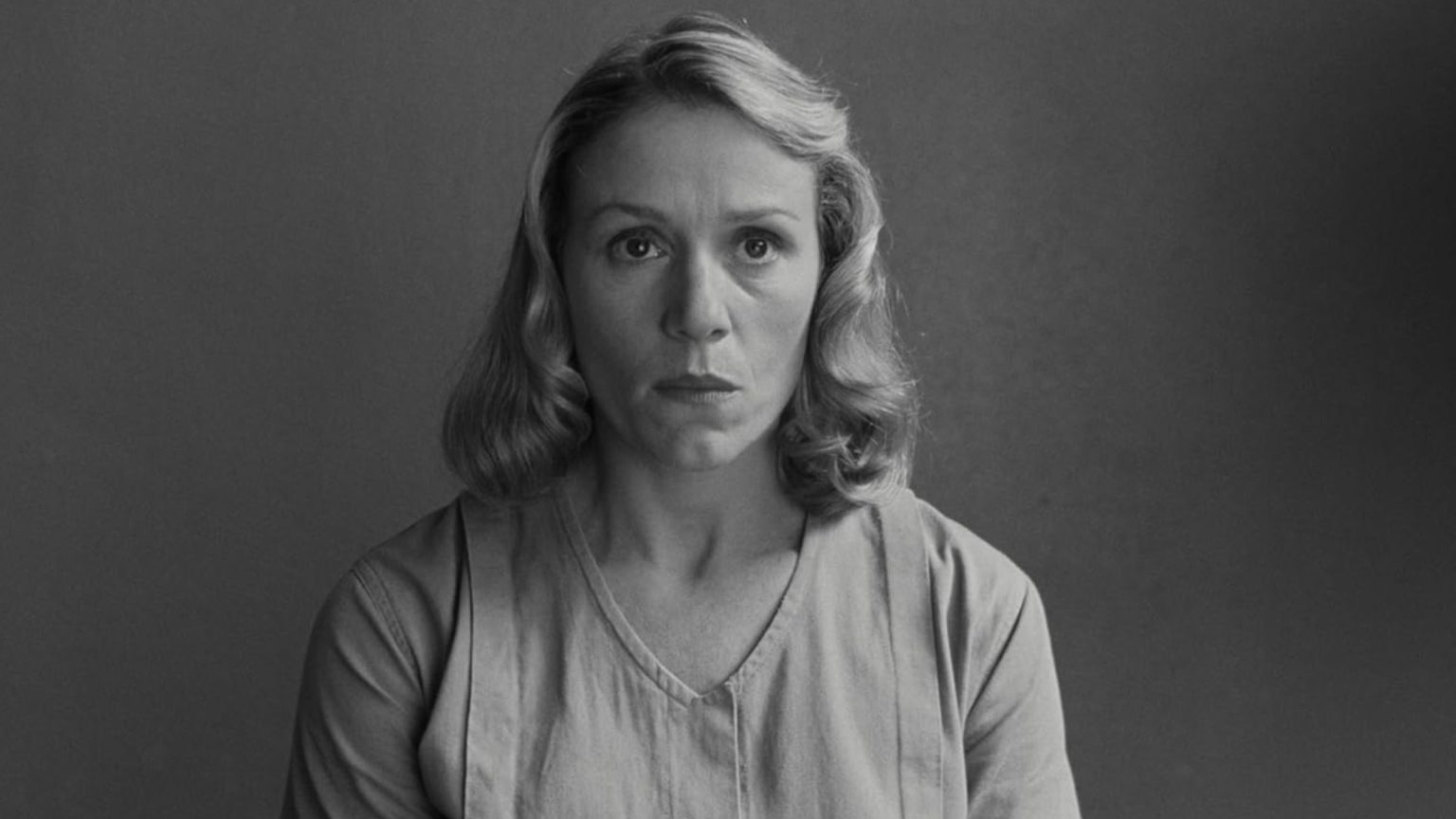
The most obvious element of the Coen brothers’ chosen context is the noir genre, and moreover, the black-and-white noir genre (film noir seems to have adopted black-and-white film as an intrinsic component more than any other type of cinema). While this choice may have some Hitchcock fans up in arms, it is relatively new ground for the Coens. Regardless, director Joel Coen and cinematographer Roger Deakins show no lack of skill in the medium, manipulating light and shadow to give the film a depth it would have easily lost in color.
It’s easier to stomach the black and white frames because the film is set in Santa Rosa, California, in 1949 — and given the low-key nature of the production the audience might easily be fooled in to thinking they’re watching a restored print of some long-forgotten noir suspense flick. That is, if not for the dominating presence of Billy Bob Thornton, whose creased, weathered face fills every frame with a powerfully stoic silence.
Thornton is Ed Crane, a barber in the quiet town of Santa Rosa content to live his life as the number two man at his brother-in-law’s barber shop and as the husband in a lifeless marriage to his wife Doris (Frances McDormand). He suspects his wife is having an affair with her boss (James Gandolfini) at a local department store, but he doesn’t mind much — it’s a free country, explains Ed. Nevertheless, looking for a change of pace, he agrees to finance a dry-cleaning venture run by a traveling salesman (Jon Polito) and blackmails Doris’s boss to get the necessary ten thousand dollars.
It is the first in a series of attempts that Ed makes to swim against the current of his lonely world — he is the title’s man who wasn’t there, and it’s more than apt when applied to Thornton’s rendition of Ed Crane — but also something of a new start for the apathetic barber. There is the sense that by finally lashing out against the established society that has backed him into a dark corer, however futilely, Ed experiences something of a renewal.
Still, the specifics of Ed’s renewal are best captured on black-and-white film. He seems to become a part of the inky, obtuse shadows which, characteristic of the genre, comprise the majority of the frame. Likewise, Thornton’s neutral complexion blends into the grayscales of his surroundings, and visually, he recedes into the background. Intangibly, though, he is always present, his worrisome eyes and pensive mouth calling the viewer’s attention to the lion-sized devil riding on his back.
In point of fact, there’s a lot of blending done in The Man Who Wasn’t There. Thornton blends Ed Crane into the background, both physically and through voice-over; composer Carter Burwell integrates strains of Ludwig von Beethoven into his original score; and director Coen and cinematographer Deakins effectively weave light and shadow together for a priceless noir feel, to name a few.
Perhaps most notably, though, Coen brothers fans won’t be disappointed because amidst all this depression is a healthy sampling of Ethan and Joel Coen’s ironic wit. Although less pronounced in O Brother, Where Art Thou? — often considerably brighter than most of the brothers’ films — it is more at home here, the same way it was in 1996’s Fargo. To be sure, this isn’t side-splitting laughter; the jokes are as low-key as the entire production.
It is the production as a whole that is the secret to the film’s success. While the plot is original, it is occasionally over-complicated, with too many subplots for its own good. Hitchcock, the man to which this film will be credited with countless homages, knew that the secret to suspense was to squeeze as much as possible out of the barest setup. With all of its elements, the Coen brothers essentially have one-and-a-half films — the gem that is The Man Who Wasn’t There and some extras that might have made for an intriguing film if they had been saved for their next venture.
Quite often, though, the Coen brothers have been called an acquired taste, and those who have acquired that taste will be suitably equipped to deal with the brothers’ tendency to occasionally overachieve. The most important thing about the film is its unique execution — partially because of the black-and-white medium and partially because of Ed Crane’s seamlessly integrated voice-over that becomes as much a part of the narrative as Crane himself becomes a part of life’s backdrop.
Simply put, The Man Who Wasn’t There is different, and in a good way. It will have audiences on the edge of their seat — if not for the competent suspense that the Coen brothers draw up, then at least for the amount of visual complexity they stuff into every frame. Like Ed Crane, they’re content to quietly ply their trade, to the inevitable delight of American movie audiences.
Video: How does it look?
The film has gotten a new 4K overhaul courtesy of the fine folks at Criterion and, let me tell you, the print looks almost pristine here, with minimal grain, marks, and debris, which results in a stunning image, to say the least. The black & white photography is gorgeous and this treatment ensures it looks as good as can be, via sharp black levels and an image that never softens even for a second. There’s something about a black and white film in 4K that just looks enticing. This one delivers.
Audio: How does it sound?
The sound here isn’t anything that will make your mouth drop open. While the DTS HD Master Audio 5.0 mix (yes, folks, no LFE) soundtrack is fair at times, this sounds like a mostly mono track. The Coen Brothers aren’t really noted for their use of sound, and it’s never been more evident here. Still, a new movie, it has none of the drawbacks of “older” movies that really were recorded in mono. The action is limited to the front three channels, and even further limited to the center channel for a majority of the movie. Disappointing? Not really.
Supplements: What are the extras?
Most of the supplements from the Universal disc have been ported over to this Criterion version and we even get a new feature as well.
- Audio Commentary – While the Coen Brothers aren’t noted for their supplements either, this disc features a nice offering ranging from a “legitimate” commentary track (unlike their “fake” track for Blood Simple) with actor Billy Bob Thornton. The three have a good time here, and though some gaps in the track do exist, they are short-lived. We learn a lot about the movie through this track and if you’re a fan of them or this movie, their “first track” should be one you listen to.
- Megan Abbott – This newly recorded conversation between the Coens and author Megan Abbott is new to this disc and offers some insight on the film.
- Roger Deakins – Deakins is the cinematographer for the film, and discusses the movie in this 45 minute interview. While this occupation might be a bit overlooked, it’s odd how even the most casual viewer can distinguish good cinematography from bad.
- Documentary/Deleted Scenes – There are 5 deleted scenes that are shown along with a standard “Making of…” documentary.
- Illustrated Booklet – Film historian Laura Lippman contributes an essay along with the usual bevy of production photos.
The Bottom Line
I’ve said it before and I’ll say it again, there are enough “Coen Brothers” films out there that one’s bound to suit your style. This wasn’t really it for me, but I know it’s got a big following. And it’s yet another addition to the Criterion Collection and it’s certainly worthy.