Plot: What’s it about?
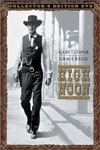
Movies have become so intertwined in our daily lives, odds are that we’ll likely quote them long before we even see the film. “Play it, Sam”, “I’ll have what she’s having…”, “Frankly my dear, I don’t give a damn.” and so on. Such is the case with High Noon in which the film’s title is what is most recognizable. But High Noon goes way beyond the title and it was made at a very dark time in Hollywood’s history. Some call it an allegory for what was happening with the blacklistings of several movie stars, directors and others in the entertainment industry. The film was inspired by a magazine short entitled “The Tin Star”, but was brought to the screen by Carl Foreman and directed by Fred Zinneman (From Here to Eternity). It’s no secret that High Noon was a “different kind of Western”; and it shows on many levels. Gary Cooper had not recaptured the former glory of his early days, but found new life in the title role of Will Kane (note the last name) and it won him his second Academy Award (his first was for Sergeant York). New to the screen was the lovely Grace Kelly and this is the movie that made her famous. Almost as famous as the movie was that of the title song; “Do Not Forsake Me, Oh My Darlin'” sung by Tex Ritter (father of John Ritter).
High Noon, running at 84 minutes, plays out in a close approximation of real time. On his wedding day, Marshal Will Kane (Gary Cooper) and his new Quaker bride (Grace Kelly) plan to head out of town and start a life together. However, Frank Miller, a man that was sentenced to jail by Kane, has been released and vowed to come back and kill Kane. Together with his band of buddies, his train will arrive (and therefore Kane’s fate) at High Noon. As mentioned, the screenplay had a lot to deal with what was going on in “real life” as Kane is encouraged to leave town with his new bride and therefore escape Miller’s wrath. Kane, being the brave individual he is, ignores the pleas of his wife and the town and decides to confront what awaits him. Trying to persuade the townspeople to stand with him, they do not and eventually it’s Marshal Kane vs. the four outlaws. Interestingly enough, the only people who are willing to help Kane is a crippled old man who wears and eye patch and a teenager who knows no fear. Kane, for obvious reasons, can’t let them participate. His trusted deputy (Lloyd Bridges) is involved in a power struggle with him and is bitter, thinking that he should have the job as town Marshal. When his relationship with his girlfriend is compromised, sparks flare and in the end it’s still Kane who stands alone.
Stylistically, the use of some static shots throughout the film set the standard for what was to come. Shots of empty train tracks that represented the train coming into town. The shots of clocks not only told the time, but also built the tension as the time crept closer and closer to noon. The washed out skies of Hadenville (where the film takes place) aren’t the familiar skies of a John Ford western. There’s no scenic sunsets and no mountains in the background, it’s washed out and appears like that of a newsreel. This unique look added to the tension and forced us not to look at the scenery, but pay attention to what might happen at High Noon.
The film, like so many others, was a huge success at the time. It won four Academy Awards including Best Editing, Best Score, Best Original Song and Best Actor for Gary Cooper. It was nominated for Best Picture, but lost to The Greatest Show on Earth. Also of note is the fact that it’s the highest “ranked” of the American Film Institute’s Top 100 movies of all time, clocking (no pun intended) in at #33. While some critics, including Roger Ebert, have called this film dated, I think the values it instills hold up well even today. For what it’s worth, this is Bill Clinton’s favorite movie of all time! While High Noon has been copied time after time, the original is still the best and it’s unlikely we’ll see something this exciting come along in the near future. Gary Cooper was the perfect choice for the role and the supporting cast shines as well. Look closely and you’ll compare the ending with that of Dirty Harry. Highly recommended.
Video: How does it look?
This, like so many other movies, is now the second incarnation of High Noon. The first came out a few years ago and featured only a few supplements. The DVD has been re-mastered from the original DVD (something I’ve not heard before). However, the picture looks great and one of the major factors of the film is the way it looks. The washed out skies give the movie a “newsreel” feel in look and appearance and the long shadows of Gary Cooper have become unmistakable. Shot in a full-frame aspect ratio, the film cannot take advantage of anamorphic enhancement, but the black and white image looks very good, especially for a film celebrating it’s 50th anniversary. I noticed no halos or artifacts and what little there were seemed to fit in well with the film. The gritty look of the picture only adds to the way the movie plays out. Very little edge enhancement is included and only in some scenes can you tell that things really look a bit off. While not looking as good as Citizen Kane, it has all the right elements that make for a good-looking picture, in every sense of the word.
Audio: How does it sound?
There have been two restored versions of the audio on the disc. I consider myself kind of a “purist”, so I listened to the Dolby Digital mono mix and wasn’t let down. In fact, I found it a bit loud in some parts. Also included was a 3.1 mix that sounded way too loud, but the theme music does do its part to build the feeling and mood of the movie. While the soundtrack certainly can’t compete with that of today’s movies, the dialogue didn’t have that “hiss” that is so associated with older movies. Sound doesn’t come out of all the channels, but with what is going on screen, you really won’t notice. This sounds great for being as old as it is and no one should be let down.
Supplements: What are the extras?
This new Special Edition sports some extras, but not too many. Still, this is worth a buy if you have the old version and certainly if you don’t own it yet. The feature-length audio commentary is quite chatty with Jonathan Foreman leading the way (he’s the one with the British accent) and even John Ritter is included! While not learning a whole lot more about the film, it’s a great extra to have and one of the tracks that is actually worth listening to. Next up is the featurette with Leonard Maltin, this was on the original disc as well, as he takes us through the process of High Noon. The featurette is a bit dated, as Lloyd Bridges and Director Fred Zinneman have both passed away several years ago. Still, Maltin is a critic who not only has high regard for the film, but can talk down to “our level”. The on-screen interviews with Stanley Kramer, Bridges and Zinneman are worth the price of admission alone. Next up is a radio broadcast with Tex Ritter, running only 5 minutes he tells of the song and gives a bit of history of his own (he starred in over 80 Western movies). This leads us to the documentary “Behind High Noon” hosted by Cooper’s daughter, Maria. This might be nitpicking, but it’s almost distracting how bad she is at hosting. She’s obviously reading the lines off a teleprompter and for some reason stops in the middle of a sentence! I tried to tune it out, but it was just too much. Still, the featurette is interesting, filled with little facts about the production and the shooting of the movie (it was made in 28 days). A chapter stop is included so that you may hear the entire “Do Not Forsake Me, Oh My Darlin'” song, but it plays throughout the movie almost all the way too. High Noon has certainly been given the deluxe treatment here and if you don’t own it, this is the version to pick up. One of the greatest films of all time, in my opinion, High Noon has never looked and sounded better. Highly recommended.