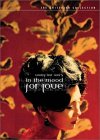
Plot: What’s it about?
The time is 1962 and the place is Hong Kong, where a newspaper editor named Chow (Tony Leung) has just been moved into a new home. As he and his wife begin to settle within their new place, Chow meets Li-Zhen (Maggie Cheung), a beautiful young woman who lives next door as it turns out, she is also just moving in at that time. Both happen to be moving in alone also, even though both are married and this sparks a small bond between them, even if just a bond of common fate on this certain date. As time passes, the two become even more social, with polite greetings and such, but never much beyond those basics. It becomes clear that some kind of emotion is present between the two neighbors, but as both have spouses and are good people, the emotion is never explored in the least. But soon, a shocking turn of events will open a window that could change their lives forever, should either of them choose to take the chance. Even with a tragic, emotional shock in their lives, can these two finally reach out and let their feelings be known?
This film has such a simple premise, yet comes through with such emotional force, it is hard to believe how focused it is sometimes. As per usual, director Wong Kar-Wai creates very complex, effective visuals to enhance the storyline, but this time around, he takes a much more natural, unobtrusive approach. The pace is slower and allows the material to develop as needed, but In the Mood for Love never becomes dull, not even for a second. The kinetic textures come from the intricate placement and movement of the stars, as well as the well crafted atmospheres they find themselves in, very impressive indeed. This is a very sensuous, erotic picture and remains one in good taste, as it relies more on emotion and sensuality, as opposed to nudity or graphic sex, which is also most welcome in this case. As with most of Wong Kar-Wai’s films, this one is not for those of you who pledge allegiance to the mainstream, happy ending kind of movies, as this is not your usual romance based motion picture. I do feel it is a modern masterpiece however and since Criterion has issued a deluxe two disc edition, I’m giving it my highest recommendation.
He has a resume with many impressive features, but up to this point, I feel this is director Wong Kar-Wai’s greatest cinematic achievement. His basic scheme is intact with In the Mood for Love, but he has held back some of his usual elements and when the smoke clears, I think he made all the right decisions. The editing is slower and more deliberate, which allows the pace to stay reserved and the material to speak for itself, which is excellent news here. But even though he has changed his approach a shade with this film, fans of his work will not be let down, as he delivers on all fronts and remains true to his trademarks. This is just soaked in emotion and when he adds the cramped visuals & stunning performances, you can’t help but be swept into the events yourself. Other films by Wong Kar-Wai include Fallen Angels, Ashes of Time, As Tears Go By, Chungking Express, and Happy Together. The cast includes Tony Leung (Tokyo Raiders, Hard Boiled), Maggie Cheung (Chinese Box, The Heroic Trio), and Rebecca Pan (Flowers of Shanghai).
Video: How does it look?
In the Mood for Love is presented in a 1.66:1 anamorphic widescreen transfer. This is a lavish, very impressive visual presentation and I have no real complaints to make, as Criterion has done some excellent work here. The print looks brand new and shows minimal flaws, while sharpness is superb, but edge enhancement and shimmering are absent, which is great news, of course. The colors look on the muted side, as intended, with a lot of green and brown hues to be seen. The shades sometimes richen, but not too much and the film’s naturalistic color scheme is well presented here. No issues with contrast either, as black levels come across in razor sharp form and leave detail high, but never overexposed. A clean, sharp visual effort with all the bases covered, which leaves me to score this one highly, very highly indeed. .
Audio: How does it sound?
The included Dolby Digital 5.0 track is superb, but keep in mind the nature of this movie and the kind of audio it calls for. This material needs a more subtle, atmosphere audio presence, so don’t expect a room shaking track, not by any means. But that doesn’t mean this is a bad audio option, as it packs a mean punch when it needs to, conjuring up a deep, complex audio effort that enhances the experience more than a little. The original Cantonese & Shanghainese soundtrack is preserved and dialogue sounds terrific, no problems in the least to report on that end. The beautiful musical score is rich and expansive also, while sound effects come through as intended, with no volume balance issues to discuss. This disc also includes a 2.0 surround option, as well as optional English subtitles, should you need those.
Supplements: What are the extras?
The first disc houses the film itself, as well as a few bonus materials, such as an isolated music & effects track. I love it when these isolated tracks are made available and since this film has such a wonderful score, fans will be most delighted with this inclusion. You’ll also find four deleted scenes, an interactive essay on the film’s musical score, and a short film by Wong Kar-Wai, all on this first disc alone. The second disc hosts the bulk of the extras however, starting off with @ In the Mood for Love, an extensive behind the scenes documentary. This is no promo fluff however, as it contains real insight into how the film was imagined, how it evolved over time, the challenges in making the film, and all sorts of other topics. You’ll hear from various cast & crew members, who share their thoughts on the film, the director, and the vision of the film. Additional insight can be found in two informative interviews with Wong Kar-Wai, as well as via a video of the press conference at the Toronto International Film Festival. This disc also includes an essay on 1960s Hong Kong, some talent files, extensive text notes on Wong Kar-Wai, a selection of still photos, unused conceptual artwork, a gallery of poster designs, the film’s EPK, four television spots, and two of the film’s theatrical trailers.