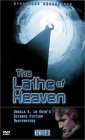
Plot: What’s it about?
Most people wish they could make their dreams come true, but George Orr (Bruce Davison) wishes he could suppress his. In a most unusual turn of events, Orr discovers he can alter reality via his dreams, although he cannot always control what happens. This lack of control becomes a threat to others and himself, so Orr decides to keep the dreams under control, no matter what it takes. Orr tries to keep them hidden by use of narcotics, but soon he finds himself powerless and eventually, he ends up under the care of Dr. William Haber (Kevin Conway). Of course, Haber has real doubts about Orr’s claims of dream powers, but once he begins to test and question him, Haber realizes that Orr was telling the truth. As Dr. Haber looks around the world and thinks about Orr’s powers, he decides to manipulate Orr’s dreams to enhance the world, which he thinks needs a lot of help. But when his plans fail to yield results, Dr. Haber pushes his approach even harder, which could land he and Orr within a lot of problems.
I’d never seen this film before and thanks to all the rave reviews I had heard, my expectations were very high going into The Lathe of Heaven. After the movie was run on PBS many years ago, it never surfaced again due to legal issues, but now it has been released to our beloved format. As I said, I had high hopes as I sat down to watch this one and as such, perhaps that is why I wasn’t too impressed. I did like The Lathe of Heaven, but I didn’t feel as though it was the visionary flick a lot of people had claimed. I think had I went into the movie without so much input, then my expectations would have been lower and I would have liked this one more. I was looking to see a masterpiece, so even though I feel this picture is above average, I was let down to a certain degree. I found the basic premise to be interesting and while the details seem fumbled at times, I think it unfolds pretty well and more than keeps your attention. The special effects are very dated, but given the low budget nature of the picture, that flaw is more than forgivable. In the end, if you’re interested in this film, then this disc is a good investment, but if this is your first time, just watch it and don’t expect it to change your life.
I had read a lot about this movie beforehand, so I knew the acting was solid, but not without some flaws. I found that to be the truth as I viewed the picture as well, as most of the acting was more than effective, but it was by no means perfect. I think Bruce Davison stands out as the finest in this bunch, as he is able to convey the emotions and energies of his character very well here. Davison has been in the business for some time now and worked on a vast number of projects, so his experience even at this time shows. That isn’t to say his work here is his best, because that’s not the case, but he still more than carries himself and the film is better due to his presence. You can also see Davison in such movies as The Crucible, Six Degrees of Separation, Short Cuts, Spies Like Us, At First Sight, X-Men, and Grace of My Heart. The rest of the cast includes Kevin Conway (Thirteen Days, One Good Cop), Niki Flacks (Semi-Tough), Candy Clark (Cool as Ice, Cherry Falls), Peyton E. Park (Michael), Frank Miller (2001: A Space Odyssey, Ricochet), and Margaret Avery (The Color Purple, White Man’s Burden).
Video: How does it look?
The Lathe of Heaven is presented in a full frame transfer, which preserves the film’s original broadcast form. This transfer is less than stellar, but since the original materials were lost and this release was made from a secondary source, I assume this is as good as this is going to look. The print used shows signs of dirt and debris, but not too much, so the image is pretty clean overall. The main problem comes in the form of ghosting and bleeding, which happen a lot with this presentation. The disc has a warning screen that details the reasons for these problems though, so no one should be surprised. The contrast and colors look passable, but the bleeds, ghosting, and other problems keep this score down pretty low. I know this transfer will let some folks down, but if this represents the best materials out there, you can’t fault New Video here.
Audio: How does it sound?
The audio is much better than the video, but still only ranks up to an average level. On a film like this one however, that is all you need and as such, no real complaints can be made. I suppose some sequences could have used a surround boost, but I think the included track more than handles the needs here. The music and sound effects are clean and distinct, but lack range and fullness, though you can’t expect too much from this track in the first place. The dialogue is good here, though not as crisp as I would have liked, but it gets the job done and that is what counts.
Supplements: What are the extras?
This disc includes a talent file on author Ursula K. Le Guin, as well as a nice interview session with her, which runs a little over twenty minutes. Le Guin is questioned by Bill Moyers, who has some good questions and Le Guin is able to answer them well, so there’s a lot of information to be found here, very cool indeed.