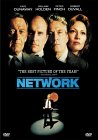
Plot: What’s it about?
In the world of television, there is only one thing that truly matters, and that is ratings. Ratings means advertisers, and advertisers mean cold, hard cash, which what it’s all about. This makes reporting the news difficult, since people want to be entertained and not depressed by the events they see on television. This type of issue is what faces Howard Beale, a news anchor whose ratings have been slowly dropping, as the other stations air less somber programs. To help increase ratings, the network hands over the news department to the entertainment department, in an effort to spice things up and draw more people in. The first change is made when Beale is given a two weeks notice, after that he will be taken off the air and fired. Enraged at this action, Beale uses his on air time to vent his frustrations with the world. He explains how low ratings have caused his show to end, and says in two weeks, on his final show, he will kill himself on live television. Of course, this causes ratings to skyrocket, and Beale is given his own show to rant and rave. But will Beale allow the network to exploit him so easily, or does he have a plan of his own?
“I’m as mad as hell…and I’m not gonna take it anymore!” That seems to be the one thing everyone knows about Network, even if they’ve never seen the film. While that line is a classic, this film is about much more than Howard Beale on air rant, that’s for sure. This is a stunning tour of the inner workings of a television studio, one that seems almost too realistic to be fictional. With some of the finest writing I have witnessed, Network is a powerful film, one that deserved it’s multiple Oscar nominations and place on the AFI’s top 100 American films of all time. Among the droves of thousands upon thousands of films floating around out there, there aren’t that many that serve as must see material, but this film is surely one of them. This movie has it all, an almost perfect cast, a fantastic script, and a skilled director to make sense of it all. How in the world Rocky took Best Picture away from this film, I will never understand. A few moments of cheering in that film doesn’t surpass the hours of though provocation this film supplies, that’s for sure. More poignant now than ever, I recommend you see this film at least once, and a rental or purchase will serve your needs well.
This film was directed by Sidney Lumet, who also directed such films as 12 Angry Men, Serpico, Running On Empty, and Dog Day Afternoon. While Lumet’s resume has several excellent films, I feel this is his finest work, and one of the all time classic films. While many films exhibit outstanding performances, I feel Network serves as the film with the best overall acting, with powerful performances on almost count. With names like Duvall, Finch, and Holden on the roster, what else would you expect, though? In one of his finest turns, Robert Duvall steals the show in this film, aside from some of Finch’s more ranting moments. I feel Duvall (The Apostle, Tender Mercies) is the most gifted actor to surface in the business, and his work here is one of the many reasons why. Peter Finch’s explosive turn as Howard Beale is what made this movie famous though, with his almost eerie believability. Faye Dunaway (The Thomas Crown Affair, Don Juan DeMarco), William Holden (The Towering Inferno, Casino Royale), and Ned Beatty (Deliverance, Back To School) also hand in terrific performances. The supporting cast also includes Wesley Addy (Tora! Tora! Tora!), Bill Burrows, Arthur Burghardt (G.I. Joe- The Movie, The Favor), and John Carpenter (Cradle Will Rock, Tootsie).
Video: How does it look?
Network is presented in a 1.85:1 anamorphic widescreen transfer, with a full frame version included on the disc’s flip side. This movie might be well over twenty years old, but it sure doesn’t look like it here. Some wear signs and minor grain emerge on the print, but the degree is so slight, it never distracts you from the film. The colors in this film revolve around blues and greys, but when the color picks up at times, the hues look vibrant and rich, and flesh tones look natural and consistent as well. Contrast is stark and detailed, very high visible detail level and complex and deep shadows appear here.
Audio: How does it sound?
This movie is about as dialogue driven as they come, so the included mono track is more than enough to suit the material. There is little music and effects to be found in this film, so the surrounds would have went to waste for the most part anyway. The dialogue is what’s important here, and it comes across perfectly. The usual mono hiss is absent also, and no volume issues arise here either.
Supplements: What are the extras?
This release contains production notes, a trivia game, information on the Nielson ratings system, and the film’s theatrical trailer.