Plot: What’s it about?
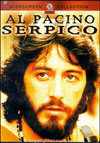
Serpico is the true story of Frank Serpico, brilliantly played by Al Pacino in the film. It was made right after The Godfather, but as it turned out that film was much more of a "Brando or Coppola" movie than that of Al Pacino. This endeavor on Serpico was Pacino’s chance to carry a movie all by himself. It succeeded and as it stood, this was the role that made him a star. Directed by Sidney Lumet, better-known for his work on 12 Angry Men and Network, this was yet another in the string of early 70’s "Police" movies. Most were not that good, but a few stood out as being great (The French Connection comes to mind), and this was another. Lest we forget that the movie was based upon the life of Frank Serpico, who had all of the events happen to him. The story of an honest cop in a city full of corrupt policemen had it’s appeal then, as it does now and with the hit and miss movies of this genre, this was a bullseye.
Like another Pacino film, Carlito’s Way, we first see Frank Serpico (also known to his friends as "Paco") as he has just been shot in the face. He’s in the back of a police car being rushed to the hospital. It’s then that we see how it all started…as a fresh-faced graduate of the Police Academy, Frank is assigned as a uniformed officer at one of the local New York precincts. His partner, an older and more experienced cop, exposes him to minor acts of corruption (getting their food for free in exchange for some breathing room when it comes to double parking). This doesn’t sit well with Frank, but he is young and eager and turns his head the other way. What Frank really wants is to be a detective "to get that gold shield" he says. He tries to accomplish this by becoming a "Plain Clothes" officer, and he throws himself into the part by growing his hair longer and sporting a beard. This isolates him from his fellow officers, but it turns out to work in his favor as he finds that he is much more successful when it comes to arrests. This is when he is exposed to the corruption that is at the center of the movie. It seems that most every plain-clothed officer in the force is on the take, Serpico, having morals won’t accept money because he feels that it’s wrong to accept bribes that the other officers have extorted from criminals. His failure to not "play ball" is impeding his progress to the Detective status that he so desires as well.
Serpico tries to deal with the problem by going to his superiors, but they, having come from the same corrupt system, either ignore his requests or table the issue hoping that it will go away. With the help of his friend, Bob (Tony Roberts), Frank eventually lands a story in the New York Times exposing the corruption of the NYPD. With this now in print, Serpico’s safety is now in danger, but at what cost? Serpico is a truly great film, one that I have never seen before. Pacino delivers a great performance and this film established him as a star. Lumet was at the top of his game and this started off a series of films that eventually led to Network, the jewel in Lumet’s crown. The entire look and feel of the movie is real as it was shot in New York at the height of the town’s demise, back in the early 70’s. For a gritty, true feel to the movies, they don’t get much better than this.
Video: How does it look?
I had to rub my eyes in the sense that what I was seeing on the screen was almost perfect! Ok, well not perfect perse, but for a movie approaching it’s 30th anninversary, this looks amazing. The 1.85:1 anamorphic image is similar to that of some other Paramount movies that look great as well (Sunset Boulevard and Roman Holiday), granted they’re a bit more "important" than this movie, but it looks as if Serpico got the royal treatment as well. What stuck me first off was the clarity of the picture, the print used was nearly free of dirt and any grain that might have accumulated. The detail is very good as well with black levels being right on target. I noticed hardly any artifacting at all and edge enhancement, though present, wasn’t a factor at all. I was very impressed with how this looks on DVD and audiences are likely to agree.
Audio: How does it sound?
As Paramount has done in the past, Serpico has a newly-remixed Dolby Digital 5.1 track and a restored mono track as well. I chose to listen to the 5.1 track and can say that it sounds very good, clean and precise. As Lumet admits on the featurette, there is only 14 minutes of an actual score to the movie (that runs 130 minutes) as the rest of the film is dialogue-driven. The lack of a score doesn’t hurt the movie any, in fact it draws the audience more into the picture as we concentrate on what they’re saying as opposed to seeing where the sound is coming from. I have to admit that I wasn’t expecting much, but from what the 5.1 track sounded like, I was pleasantly surprised. The mono has a much more limited range, but sounds good as well. For the "full effect", purists might want to listen to the mono track and get the movie the way it was intended to sound.
Supplements: What are the extras?
Paramount must have taken a hint from some of the DVD reviews out there, because the most recent waves of some of their catalog titles are finally showing up with some supplements, then again the titles are more noted and maybe they figure that the public will be more willing to purchase the DVD if some supplements are included. In any case, Serpico has a few featurettes, starting with "Serpico: From real to reel". An interview with the producer is shown and he tells of how the film got made. Paramount gave him a chance and he tells of his experience of working with Lumet on the film. Running at only ten minutes, there could have been a bit more; but it’s better than nothing. Clocking in at 13 minutes is "Inside Serpico" which features an interview with Sydney Lumet. Lumet tells of the rapid shooting schedule and the experience of working with Pacino. Evidently the shooting started in July and had to be ready for a Christmas release! Next up is "Serpico: Favorite Moments", in which the director and producer point out their favorite parts of the movie. Essentially an empty featurette, but again, better to have than have not. Lastly, we get a photo gallery with a commentary by Lumet. The montage of photos are from the set and publicity, but Lumet’s comments make it more interesting. One wonders why he didn’t sit down and do a feature-length commentary? The theatrical is also included, presented in anamorphic widescreen. Serpico exceeded my expectations and I was struck by how well the transfer looked. For fans of Pacino, this is required viewing and for the rest, a rental is a sure thing.