Plot: What’s it about?
After an opening statement from the great Forrest J. Ackerman himself, we’re introduced to Jamie (Melissa Baum), a young student from another land. She is quite beautiful and hopes to find work as a baby-sitter, but she hasn’t even had the interview yet. The child is an infant boy and it seems like a normal, everyday kind of situation. Jamie will watch the youngster and keep up around the house, the kind of stuff baby-sitters are supposed to do. In other words, she doesn’t expect any unusual events or anything out of the ordinary to happen. But little does she know, as this is not the typical family by any means and once Jamie is inside the homestead, very little will be normal when compared to the outside world. As time passes, she begins to feel herself surrounded by the house and those within it, which unsettles her to no end, of course. But what is it about the parents and this strange home, what makes it all seem so bizarre? And what about the youngest member of the household, the baby boy Jamie was hired to supervise?
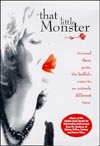
This is an odd, very well crafted chiller that might only last just under an hour, but it never wastes even a single minute. Shot in beautiful black & white, That Little Monster looks a lot like the atmospheric horror films from the classic era, but this is by no means just an homage picture, as it has some teeth of its own also. Yes, it conjures up memories of 1930s horror movies and does so with great affection, but writer & director Paul Bunnell (The Visitant, Cellar Doors) gives the film a texture of its own and as such, That Little Monster can stand firm on its own. Much like Bunnell’s other works, this movie has a Twilight Zone feel to it and features superb visuals, including some creative use of the cameras. In fact, you’ll probably run back through the movie a few times, just to admire some of the inventive, highly effective visual tricks employed. That Little Monster is an imaginative, eerie picture that pays its respects to the classics, but also makes sure to have a mind of its own. I recommend it to fans of unusual cinema and since Elite’s disc is terrific, I see no reason to let this one sit on the shelves.
Video: How does it look?
That Little Monster is presented in a full frame transfer, as intended. This film was made over a span of three and a half years, with about a thirty-thousand dollar budget, on 16MM film, but this visual effort looks terrific. Of course, you’ll see some grain at times, but it never becomes much of an issue and never interferes with the visuals. The print seems to be in great condition, with no real wear signs to discuss, which is good news, of course. The contrast is accurate and well balanced also, which is important, since this is a black & white picture, after all. Given the circumstances around its production, I think we should be glad That Little Monster looks as good as it does, which is pretty darn good, in truth.
Audio: How does it sound?
The audio is not too memorable here, but it is more than adequate and delivers on all the basic elements. The track is clean and well recorded, with no real errors to discuss, despite the film’s low budget roots and unusual shooting methods. The eerie, very cool musical score is well presented and never falters, while the various sound effects are as well, at least within the limits of a stereo option. The dialogue remains crisp and easy to understand, which leaves to score this one with a solid number, as it deserves.
Supplements: What are the extras?
An audio commentary with Bunnell and producer Carl Mastromarino starts us off, loaded with behind the scenes information. Bunnell reveals some of his tricks used to achieve the film’s inspired visuals, as well as a wealth of other topics. Bunnell talks about how he often shot too much footage, while Mastromarino simply agrees, though both seem talkative and bounce off each other well, a terrific overall session. This disc also includes a riotous interview with Bunnell, as well as his excellent debut short, The Visitant.