Plot: What’s it about?
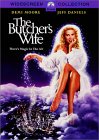
The year is 1991 and Demi Moore is still coasting off her success of ‘Ghost’. She’s more the international superstar now that she’s with Bruce Willis and a certain magazine cover, but all in all…it was a great time to be Demi Moore. Failing to really emerge as a woman who can carry a movie on her own (Striptease was a nice try), The Butcher’s Wife was a good try for her. While this movie does have a lot of potential, it seems to fall short in the sense that it’s so predictable and it just seems to try too hard. Not to mention the fact that Moore’s accent (it’s supposed to be that of a South Carolina woman), sounds more like a female version of Forrest Gump. But that’s just my humble opinion. I question the judgment of Demi Moore to do this movie, too. She was coming off one of the most successful movies of all time and as likeable as The Butcher’s Wife tries to be, she followed this up with two more “hit” movies: ‘A Few Good Men’ and ‘Indecent Proposal’. Granted, when you have Tom Cruise, Jack Nicholson and Robert Redford at your side, you’ll tend to sell a few more tickets! In any case, let’s proceed and see what The Butcher’s Wife is really all about.
Marina (Demi Moore) has grown up a clairvoyant, meaning she can feel and sense things that other people can’t; though the movie tends to have us make the assumption that she is a psychic (the two are very different). Sensing that she will find true love, she interprets some very obvious signs (all during the opening credits) that her price is very near. However, once she sees Leo (George Dzundza), she assumes that he must be “the one” and within two days they are married and off to New York. I must admit that several of the shots in the movie have a very eerie feeling now that the World Trade Centers do not exist, many times throughout the movie we see them in the background (it goes to show you how much has changed in the short ten years since the film’s release). Leo is the owner of a butcher shop in Greenwich Village and his neighbors and friends are surprised to hear of his sudden marriage. It’s not long after this that Marina starts making off hand remarks, predictions, rather that the locals seem to percieve as the truth. In the process of Leo’s market booming, neighboring shrink Alex (Jeff Daniels) sees that a few of his customers are leaving. We also see that Marina is having second thoughts about her supposed “true love” and from there on out…the writing’s on the wall.
While it sounds like I bashed this movie, I really hope I didn’t. It’s a nice feel-good movie that had a lot of the right ingredients to it, but it just lacked the right direction. The plot is nice, but the movie is very predictable (you can watch about 30 minutes of it and know what will happen at the end). The cast, on the other hand, is very good. Moore’s accent could use some work and I found Jeff Daniels to be the one to really carry the movie. Oscar winner Mary Steenburgen plays Stella and then future Oscar winner Frances McDormand plays the shop owner, Grace. I say again, all the right elements are there, but something about the movie just didn’t take off. Little things like the gust of wind that occurs whenever Marina is about to make a prediction, get old. Once is enough, but when it happens every scene, you just get a bit annoyed. While The Butcher’s Wife is a good little date movie (it was then and probably still is now), I don’t think it’s one you’ll be watching all the time. Then again, I could be wrong. I’d consider a rental first.
Video: How does it look?
Presented in a 1.85:1 anamorphic transfer, I can safely say that The Butcher’s Wife has never looked better. The movie is just a shade over ten years old (according to the trailer, it was released on Oct. 25, 1991), so there shouldn’t be too much grain or dirt on the print to keep it from looking it’s best. Some Paramount releases appear to have a very grainy appearance and there’s a few instances in this film that prove that. For the most part, the colors are strong, bright and vivid (even in the Village) that would tend to show a more muted palette. The level of detail is dead on as are the black levels. While it could have been better, it could have been a lot worse.
Audio: How does it sound?
While Paramount is in the habit of re-mastering all of their catalog titles in Dolby Digital 5.1, this doesn’t guarantee that they will sound awesome. In the case of The Butcher’s Wife, we find that the mix isn’t too overly aggressive, but rather a nice-sounding surround mix. The movie is dialogue driven for the most part and you won’t get too much action out of any of your speakers. Dialogue is free of any distortion, and you won’t hear your surrounds that much (except when that wind kicks up). Most of the action is handled by the front three channels, which is the way it’s supposed to sound. While this isn’t a bad mix, it isn’t great either. I’d compare it to sounding a bit clearer than it’s LaserDisc counterpart, but then again sound isn’t what this movie is all about. Bottom line, you won’t be disappointed, but you won’t have anything to cheer about either.
Supplements: What are the extras?
Not much in terms of supplements here, a trailer shown in anamorphic widescreen and Dolby Surround sound. That’s it.