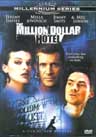
Plot: What’s it about?
The son of a billionaire media mogul has died, but it is unknown whether it was a suicide or murder. The young man lived within a skid row hotel, where various unusual people live, none of whom can afford much of anything, to be sure. In order to solve the case, an FBI agent named Skinner (Mel Gibson) has been dispatched to the hotel and while he has no real desire to be there, he is determined to bring the case to a close. As he makes his way through the hotel and meets the various inhabitants, he gets the feeling it was indeed a murder, but of course, he needs to be able to prove it and that won’t be as simple as it sounds. At the same Skinner is investigating, the residents have plans of their own, from selling the dead man’s artwork to planting clues, just to keep Skinner off their backs for a while. Tom Tom (Jeremy Davies) has fallen in love with fellow hotel inhabitant Eliose (Milla Jovovich), but he also begins to develop a (one sided) connection with Skinner. As the residents become stranger by the minute and Skinner takes even more drastic measures to solve the case, will anyone be able to escape alive?
After this project was lambasted by star Mel Gibson, it just sort of fell into oblivion, with a limited theatrical run and a quick appearance on home video soon after. The Million Dollar Hotel is loaded with talented actors, has a unique and enjoyable storyline, has more than able direction from Wim Wenders, and features some terrific visuals, so how did it end up so disliked? I think most people assumed that since it had Mel Gibson, it was a normal, mainstream film and in the end, that couldn’t be further from the truth. Gibson plays an unusual role by his standards and in truth, is often upstaged by his costars Jeremy Davies, Milla Jovovich, and Jimmy Smits. I think mainstream viewers were taken back by the highly offbeat characters, intense & dark visuals, and deliberate pace of the film, which you just don’t see often these days. I think Wenders uses the perfect speed here and while it does run a little slow, the time is never wasted and as such, I see no reason to complain. I liked The Million Dollar Hotel a lot and while I can see why some people wouldn’t care for it, I recommend it to anyone interested, although a rental might be a wise choice, if you’re skeptical.
This film was thrust into the spotlight when actor Mel Gibson made public his distaste for the picture, which I think sunk the movie before it ever had a chance. Gibson was obviously looking to make a picture outside of his usual realm of roles and he didn’t like the results, so he decided to bash The Million Dollar Hotel. As such, fans of Gibson who want his character to be like prior ones are out of luck, Gibson takes on a much different role here. But his performance is a good one, though the nature of his character might make viewers think otherwise. Gibson’s turn is wooden to be sure, but that is how it should be played and as such, no real complaints should be lodged. This is not his usual role by any means, but if you ask me, that’s why it works so well. You can also see Gibson in such films as Lethal Weapon, The Road Warrior, Ransom, Braveheart, Maverick, and What Women Want. The rest of the cast includes Jeremy Davies (Saving Private Ryan, Ravenous), Milla Jovovich (The Fifth Element, Dazed and Confused), Peter Stormare (Fargo, Armageddon), Jimmy Smits (Price of Glory, Bless the Child), and Donal Logue (The Tao of Steve, Reindeer Games).
Video: How does it look?
The Million Dollar Hotel is presented in a 2.35:1 widescreen transfer, which is not enhanced for widescreen televisions. The lack of anamorphic treatment is obvious at times, thanks to frequent edge enhancement and in the end, I am unsure why this lacking transfer was used. Even so, this is a pretty good looking effort in most respects, especially given the film’s dark and complex visual nature. The contrast is not razor sharp per se, but it is sharp and allows the image to shine, which is does, even in the shadow laden and almost pitch black scenes. The film uses a rather limited band of colors, but all the hues surface in fine enough form, given the circumstances. I do wish this was an anamorphic transfer, but even as it stands, I think fans will pleased with this treatment.
Audio: How does it sound?
The included Dolby Digital 5.1 track is no dynamic wonder, but it seems to handle the needs of the material, which is what counts. The surrounds are used to enhance the atmosphere at times via subtle presence, but the main element found in the surround channels is the score, which sounds excellent in this mix. The dialogue is clear, crisp, and always at a proper balance also, which leaves me to score this one well. This disc also includes subtitles in English, Spanish, and French, just in case you’ll need those.
Supplements: What are the extras?
This disc is part of Studio’s Millennium Series, but it doesn’t quite have the depth of extras we’ve come to expect from this line. The main bonus is an audio commentary track with director Wim Wenders and musician Bono, who helped write the story for the flick, as well as kick in on the soundtrack. The two offer a solid overall session, but I wish more time was spent talking about the controversy with Gibson, as that seems quite interesting indeed. Even so, it was nice to listen to the two discuss various topics and in the end, plenty of insight can be gained from this session. This disc also includes about nine minutes of behind the scenes footage, a wealth of cast & crew interviews, and the film’s theatrical trailer.