Plot: What’s it about?
A strange thing happened shortly before the release of Nightmare Alley. I did some research and learned that it was in fact a remake. I then stumbled upon a few reviews of the original, 1947 film and even did a blind purchase. A similar thing happened way back when 3:10 to Yuma when the remake was released in 2007. While both versions are fine, I preferred the 2007 much more. Unfortunately, I cannot say the same for the Nightmare remake. Maybe it was viewing both versions very closely to one another, but the original reeled me in in such a way that the remake failed to do. I also preferred Tyrone Power in the lead. I don’t feel Bradley Cooper was the best fit here. Before I get too far ahead of myself, I did enjoy this updated version, but much of the film’s scenes (the first half especially) are basically lifted from one and put into another. This has happened in countless remakes, but when it’s in such a manner here I began to question this one’s very existence. My mind started wondering why remake a film to follow it the original so closely. To its credit, Director Guillermo Del Toro gets the look of the film just right. Some may argue that it’s perhaps too modern looking for a film that begins in 1939.
Bradley Cooper plays Stan Carlisle. He takes a job as a carny with a traveling carnival. In the film’s opening scenes, we see Stan burning down a house to dispose of a dead body. This is something that is brought up throughout the film. The film’s early moments are particularly interesting as we see how the carnival operates and get a feel for how various things are performed. It doesn’t take long for Stan to concoct an idea of learning a code that is used in one of the acts of reading people’s minds. It is Stan’s hope to take the bit of information he learns and use it for his own personal gain, away from the carnival. He hopes that a fellow performer named Molly (Rooney Mara) will join him. The film then flashes forward and before long introduces Cate Blanchett as Lilith Ritter who is a psychologist who attempts to expose Stan’s act. Those who’ve seen the original film will have a general idea where this one is headed, but the running time here is extended by nearly 40 minutes. Therein lies my biggest issue with this version. When things should be speeding up and reaching the urgency the story calls for, Del Toro brings it to a halt.
What’s most interesting to me with having Del Toro as director here is how most of his films deal with monsters of some sort, but in this one, the monsters are in fact human. It felt like an interesting contrast to some of his other work. His version of Nightmare Alley gets a lot of things right even if I still find it inferior to the original film. It could’ve used some tightening, but the cast helps things a bit. Cooper does solid work, but I do think a different actor in the lead could’ve given us better results. Something about him just felt a bit out of place here. I wonder how Michael Fassbender might’ve fared in the lead. In supporting roles are Willem Defoe, Toni Collette and Richard Jenkins all turn in strong performances. I did appreciate some of the changes Del Toro made here, but the film throws a bit too much at us. As it stands, viewers should feel good about checking out both versions if for no other reason than comparison’s sake.
Video: How’s it look?
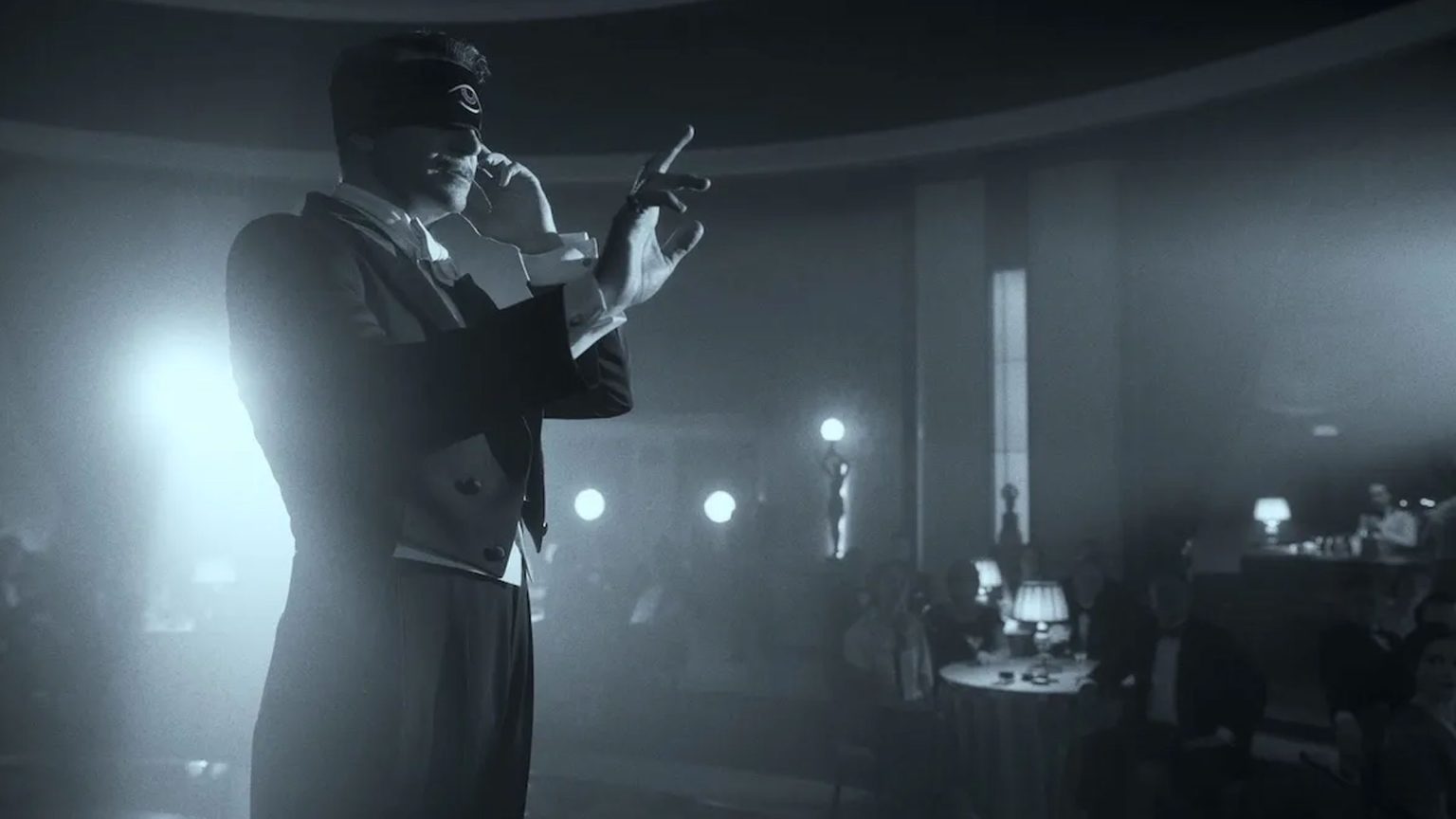
The phrase “the best of both worlds” comes to mind here as we’re presented with not one, but two versions of the film. The first is one we’re familiar with, the 150 minute theatrical cut of the film which, as expected, looks divine. Del Toro and his cinematographer certainly know how to frame a shot. Colors are bold, bright and vivid, detail is razor sharp, contrast is strong – you know…all the things we’d expect given the film’s age. The real treat is the 159 minute version of the film presented in glorious black and white. Seeing new movies in black and white, to me, is quite the treat and this one doesn’t disappoint. The black and white image displays strong contrast, nothing gets lost in the shadows (literally) and detail is the same as the theatrical cut. Given that the film is, by and large, the “same” as its theatrical counterpart, I found it odd how this feels like a totally different movie. Nevertheless, viewers won’t be disappointed.
Audio: How’s it sound?
In a bit of an odd move, we find that the theatrical version does maintain the Dolby Atmos mix found on Fox’s 4K disc from a few years back. The mix earns its keep with all the caveats of dynamic audio with height and surrounds being used effectively and often, vocals are crisp and clean with a front stage that puts you right in the middle of the action. The extended cut, however, is a different story. We get a DTS HD Master Audio mix which doesn’t sound “bad” by any means, but when compared to its Atmos counterpart, there are a few instances in which it is noticeable. It’s a trade off, to be sure, but not much of one. Either way you go, you’ll be good.
Supplements: What are the extras?
Unfortunately, none of the supplements from Fox’s disc made the cut, so if you want the true, definitive version of this film with all supplements intact, keep that disc. If not – don’t.
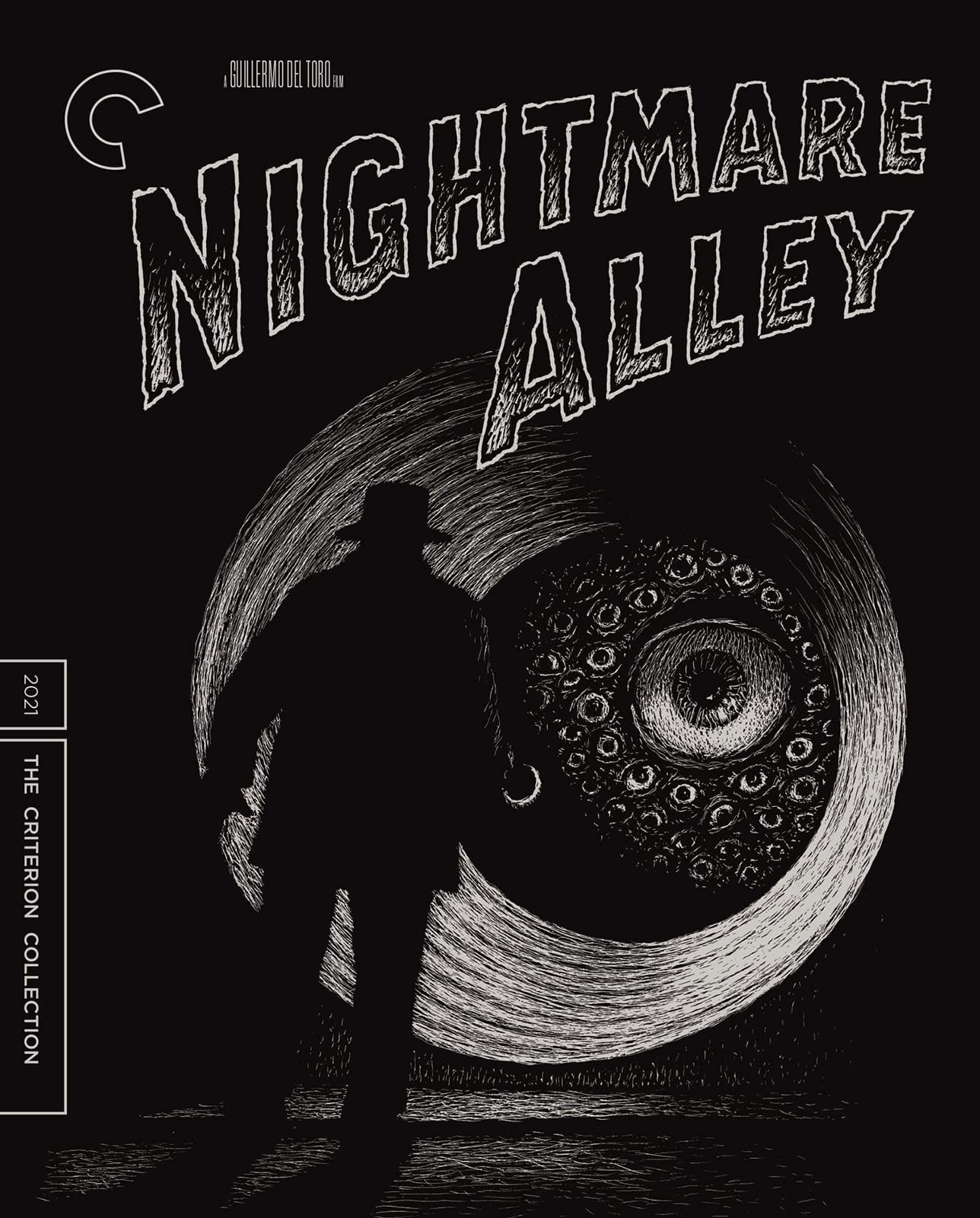
- Nightmare Alley: A Vision of Darkness and Light – The main “bonus” on this 4 disc set is the inclusion of the Extended/Director’s cut of the film which adds 9 minutes to the runtime as well as being presented in black and white.
- Audio Commentary – Del Toro’s tracks are not to be missed and this one is no exception. I will say that his accent makes things a bit difficult to understand, but with this track (on the extended edition), he addresses a few things that fans are sure to love. His reason for the extended cut, the use of black and white and so forth. It’s a great track and well worth the time involved.
- A Geek’s Tale: Adapting Nightmare Alley – Next up is a 13-minute interview with Guillermo del Toro and co-writer Kim Morgan as the duo discuss the project, its lineage and the “need” to make it.
- Noir Anew – This 45 minute documentary encompasses a vast majority of the cast and crew, they again explore the genesis of the project and even tough on the way the film was made, the black and white, hair, costumes and so on.
- Bradley Cooper and Guillermo Del Toro – The “main duo” discuss the film, Cooper’s character, what they set out to accomplish and more.
- Theatrical Trailer
- Illustrated Booklet – An essay by crime-fiction and true-crime expert Sarah Weinman along with the usual bevy of production stills in a nice little booklet.
The Bottom Line
There’s certainly more substance with this version of the film. I’m always amazed at what some additional footage can actually do to a film. Criterion’s presentation of this knocks it out of the park with some new extras (though we lose those from the Fox disc), a new extended cut of the film and more. For fans, this is a no-brainer.