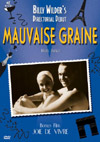
Plot: What’s it about?
Henry Pasquier (Pierre Mingand) is the son of a wealthy doctor, so he assumes life is his to take, delivered on a silver platter. So of course, Henry has become very spoiled as he has grown, which displeases his father to no end. As he seeks to see his son work hard and find success on his own, Henry’s father sets into motion some drastic changes. Henry is told to find work and begin supporting himself, which causes Henry immense grief. He even loses his car in the process, which really sends him down a spiral. If nothing else, the loss of his car means he will have to miss an important date, but Henry doesn’t plan to let that happen. In order to keep his date and be on time to meet the woman, Henry steals a car and heads off, only to find himself trailed not by the police, but by a gang of car thieves. It seems his handiwork was observed by the thieves, who chase him down and take him back to their garage. Henry is then beaten and just when he thinks all is lost, he is brought into the ranks to the organization. He soon climbs the ladder of success within the gang, even becoming its unofficial leader, not exactly the kind of success his father had hoped for, but its good enough for Henry. Can his luck continue, especially now he’s romantically involved with a female who assists him in boosting expensive cars?
One of the best ripples of DVD’s success is the emergence of little known movies, obscure pictures that might not have otherwise seen a release. This includes some clunkers of course, but then we have discs for wonderful movies like Mauvaise Graine. Although this has been released on video before, it seemed a longshot for DVD and even though director Billy Wilder is now a cinema legend, it took a while for Mauvaise Graine to land on this format. So for fans of Wilder’s work, was it worth the extensive wait? I would have to say yes, because this is a fun movie that shows Wilder’s skills were sharp, even back in 1933. As you can imagine, this film has elements of silent cinema and that means some additional emphasis on visual presence, which is excellent in Mauvaise Graine and adds a lot to the experience. So while there is dialogue and such, the story often advances without such ingredients and you’ll notice some extended silent stretches. Have no fear however, as you’ll never mind these moments, as the movie never slows down in the least. The story is a solid one too, one which allows for ample suspense and plenty of comedic moments also, which Wilder and codirector Alexander Esway blend together quite well. As far as the movie itself, this one rates a strong recommendation, but Image’s disc is no frills. I know this one isn’t a boon in terms of supplements, but with Wilder’s name involved, I figured some interviews or such could be wrangled and tossed on. But even without much in the extras department, Mauvaise Graine is such a fun movie, it still warrants a solid recommendation.
He is looked upon a master of cinema now, but before he became such an icon, Billy Wilder codirected this picture, Mauvaise Graine. Yes, eight years before his debut American picture The Major and The Minor, Wilder was in France and worked on this movie, his first ever project as a director. Even back then however, Wilder showed he could handle himself and brought some terrific moments to the screen. His move from Germany was prompted by the Nazi revolution, but before he left, he penned numerous screenplays in his native land. In a brief emergence on his way to the United States, Wilder worked on Mauvaise Graine and without question, his trademark techniques were already spinning. Although seen here in rough form, his masterful comedic touch would later bloom into full scale magic. Even here though, you can tell some great work took place behind the camera, in the form of Wilder’s direction. Other films directed by Wilder include Sunset Boulevard, The Seven Year Itch, The Lost Weekend, Some Like It Hot, The Spirit of St. Louis, The Big Carnival, The Apartment, and Double Indemnity.
Video: How does it look?
Mauvaise Graine is presented in full frame, as intended. The presentation here is a mixed bag, but given the age of the materials involved, I think there’s more positive than negative elements to discuss. The print has seen better days, with grain evident and various defects to be seen, but some scenes look quite good. So we have some flawed sequences and some clean ones, but none look that bad, all things considered. The contrast is smooth and well balanced, but of course, don’t expect pristine balance here. The blacks look more like dark greys, but when you take it all in, this is a better presentation than this movie has seen on home video. So no, this isn’t a perfect effort, but it is a good one and that’s what counts.
Audio: How does it sound?
The included mono option seems more than acceptable, but you have to keep in mind the circumstances around this material. This film contains a lot of silence and when you can hear audio elements, you can tell minimal effort was put into the sound. This is because volume varies wildly, depending on where the microphones were placed and as such, the audio isn’t as smooth and consistent as we’d like. But for a movie made on a tight budget in 1933, you simply can’t expect a flawless experience. I think Image has done the best it can with the materials, including preserving the original French soundtrack, complete with English subtitles.
Supplements: What are the extras?
The sole extra here is an acclaimed animated short titled La Joie De Vivre, which is a most welcome inclusion.