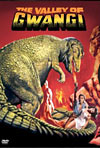
Plot: What’s it about?
Tuck Kirby (James Franciscus) is a real life cowboy and he works for Buffalo Bill’s wild west show. He is in search of a new attraction to boost attendance and add some new blood to the show, so he ventures to a small Mexican town. The act he seeks belongs to an ex girlfriend of his, a woman named T.J. (Gila Golan). It seems T.J. has a most unusual and rare attraction, the kind of score that would put Tuck in very good with his bosses. This is why she won’t sell her act to Buffalo Bill, as her new star attraction should send business through the roof. The new star is a miniature horse, one that hasn’t been seen in countless years and is known as an eohippus. Tuck speaks with some local experts and learns just how incredible the animal’s presence is, but when he hears a local legend, he starts to see the larger picture. It seems a valley in the area, a place closed off from outsiders save for one hidden entrance, is like a land that time forgot. In this valley, dinosaurs and prehistoric beasts of all kinds can be seen, which interests Tuck, of course. When a gypsy woman sees the eohippus, she warns that the animal must be returned, or else doom will knock on the town’s doors. The local paleontologist convinces the gypsy to steal the horse, then he plans to follow her when she returns it to the valley in the legend. Tuck and his men also follow behind, but when they reach the valley, will they find more than they bargained for?
As if it were a young boy’s dream come true, this film combines cowboys and dinosaurs, now how cool is that? The premise of The Valley of Gwangi came from special effects pioneer Willis O’Brien in the 40s, but he was unable to get his vision produced. Down the road, fellow special effects wizard and O’Brien devotee Ray Harryhausen took the idea and helped it reach the big screen after all. And Harryhausen was the ideal torch bearer for The Valley of Gwangi, as his creative genius and innovative special effects magic were just what the project needed. Even with his superb creations on showcase, the film failed to spark with audiences at the time and is often talked of as one of Harryhausen’s lesser works. But I found The Valley of Gwangi to be a lot of fun and while not his finest hour, Harryhausen’s visual effects are terrific here, including a handful of excellent set pieces. The culture clash between the prehistoric beasts and the wild west offers some great moments too and in the end, gives the film a fresh texture. Which is good, since the premise shares a lot of elements with the classic King Kong, though if you’re going to borrow, why not do so from the best, right? The Valley of Gwangi is great matinee fun and Warner’s disc is more than solid, so this release is recommended.
Video: How does it look?
The Valley of Gwangi is presented in 1.85:1 anamorphic widescreen. This is a solid overall presentation, but the print is more worn than expected. I saw frequent nicks, but these were minor and the real trouble is grain, which can be substantial at times. I knew the visual effects scenes would have some, but even normal sequences often have a lot of grain evident. Thankfully, this never results in an overly soft visual presence, but it does lessen the experience a touch. You can’t complain too much however, as this is still a cleaner and more refined image than previous editions have shown. The colors are bold and vivid here, especially the vibrant reds and lush greens, though no oversaturation is to be seen. No real troubles with contrast either, as black levels look consistent throughout. I do wish the print was cleaner in places, but on the whole, this is a more than acceptable visual effort.
Audio: How does it sound?
The original mono soundtrack is used here, which proves to be an acceptable presentation. On a technical basis, I found no real problems with this presentation, though it doesn’t sparkle either. The elements are in solid shape, with no hiss or other problems and in great news, the audio sounds clean and well recorded. So don’t expect a worn out, muffled soundtrack, as the included mono option is quite good. Its still mono of course, so let’s not ask for miracles, but all things considered, I have no complaints here. The dialogue is crisp also, while the musical score is smooth and consistent. This disc also includes a French language track, as well as subtitles in English, Spanish, and French.
Supplements: What are the extras?
This disc includes an interview with the film’s special effects master Ray Harryhausen, as well as the film’s theatrical trailer.