Plot: What’s it about?
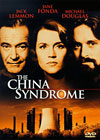
It seemed that one film had an Oscar winner all over it. At the end of the 1970’s, two Oscar winners teamed up with an Oscar-winning producer to put together an involving tale about accidentally stumbling upon a key story. At the same time a real-life incident mirrored the one in the film causing more attention as well as becoming a surprise hit. With talent like Jane Fonda, Michael Douglas and Jack Lemmon attached, along with director James Bridges who had earlier success in the Oscar department with The Paper Chase, the late seventies got a subtle bang of a film called The China Syndrome.
Kimberly Wells (Jane Fonda) is a reporter for a local news station. She gets the usual local stories that are the filler for the final minutes of the broadcast, like the neighborhood birthday specialty store. One day, she and her cameraman Richard (Michael Douglas) shoot an informative piece on a local nuclear power plant when an unexpected occurence happens. It seems that the shakes and the sirens on the main floor appear to be part of a routine exercise at the plant, but when head supervisor Jack Godell (Jack Lemmon) takes a closer look, he notices that a large amount of water has lowered from the nuclear core bringing the situation in a state of emergency. What Godell and the workers on the main floor don’t know is that the cameraman is recording all that has happened, but getting the footage shown is a lot more difficult than he thinks. The plant covers things up but doesn’t realize that Godell can’t cover up the truth forcing him to expose the bigger dangers at stake with the news people.
The term “China Syndrome” refers to when the core of a nuclear power plant overheats, the energy and heat generated would melt the Earth’s surface. The core would start sinking the earth and drilling a hole into the other side of the world, figuratively to China.
On the local movie channel (WHT) before my hometown became cable ready, The China Syndrome had the same amount of airplay as most of the big movies on the regular cable channels today without the big marketing. Today, it’s a more powerful movie than it was twenty five years ago. The acting by all are first rate and award worthy in that they capture the characters starting out as very calm and confident and then slowly show the effects after an incident where a state of panic is eminent and the final solution could result in death.
Only one other movie (Wag The Dog) was able to both combine Oscar winning talent with capturing a moment in the news for the time at the same time as its release as well as managing to be Oscar nominated at the latter part of a decade.
What’s most intriguing about this film is the lack of a score. Other than the Stephen Bishop song that starts the film, there is no background music and nothing to drive the tension. The dialogue, the actions and the small bit of silence add to the tension as well as make for a more compelling film if done properly and it done quite well in this instance.
The China Syndrome is a tense piece but one of many cinematic fine pieces of work that, even though it came empty handed on Oscar night, brought a great decade to a great close.
Video: How does it look?
The China Syndrome is in it’s first widescreen incarnation on DVD in the 1.85:1 aspect ratio. The look of this DVD is better than previous video releases that show a more projector film look than a cleaner look. The color scheme of both the nerve center of the nuclear power plant and a lot of the outdoor shots are sharper and a little better than most films of the seventies hold up image wise. The nighttime scenes don’t show a hair of speckling or grain on the print. A very good transfer. This DVD also has a full-frame transfer on the reverse side.
Audio: How does it sound?
In a mostly dialogue driven movie, there aren’t many innovations in the sound department. The Dolby Digital track is not very different from many of the films made at that time, but that’s not necessarily a bad thing. The sirens and the alarms sound quite good although the shakes that occur in the movie are not Earth shattering. Through it all, the dialogue comes across nicely and the clarity of the sound is decent without any hint of distortion among all channels. A good track. This film also has a Spanish audio track as well as English, Spanish, Portuguese, Chinese, Korean and Thai subtitles.
Supplements: What are the extras?
There was a making of this movie done a long time ago, but you won’t see it on here for the studio didn’t include it on this disc.
The only supplements on this DVD are cast bios and the film’s theatrical trailer along with liner production notes that are not too canned and are quite informative.
Overall, The China Syndrome is satisfying enough to have a nice transfer improving on the original video and laserdisc onto DVD.