Plot: What’s it about?
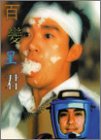
Lee Chak-Sing (Stephen Chow) is the son of a wealthy man who runs the local medical school, so while he is a real jerk, no one dares to call him on his antics. He is cared for by countless servants, whom he abuses at every chance and when he arrives at school, he just hassles everyone he can, playing cruel jokes on some classmates. When one student is using an outdoor toilet, Sing causes the walls to fall down, then he explodes the toilet while the man is still sitting on it. In other words, he is disliked by most everyone, but since his father has power over the school, he is allowed to do as he pleases. He soon runs into a visiting professor named Chang Sze (Elvis Tsui) however, who refuses to put up with Sing and his rudeness. When Sing and his right hand man sneak into Sze’s lab and find some strange creatures, they end up in hot water, but manage to escape. But then Sing finds himself in a dance contest with a young woman, who turns out to be married to the head of a local crime family, which is when the madness really kicks in…
As with most Asian comedies, Sixty Million Dollar Man is a blast to some folks and a ragged mess to others. I guess you have to figure on some of the humor being lost in the translation, but sometimes these Asian comedies can be outrageous. This is the case with this movie to be sure, as the storyline jumps from rail to rail, all in the name of outlandish and hilarious moments. I would call this about as hard to follow as a movie can be, but since it never tries to be cohorent, that never becomes an issue in the least. We go from set piece to set piece with tons of laughs, but again, some will be confused and perhaps even angered by this ridiculous style. Stephen Chow is the top Asian comic actor and you can tell why here, as he gives an off the wall performance, easily rivaling Jim Carrey’s more outspoken efforts. In fact, you’ll see some elements from The Mask pop up in Sixty Million Dollar Man, as well as a humorous take on Pulp Fiction. I highly recommend this to fans of Chow and Asian comedies, but others will want to rent the flick first, as this is the kind of movie you either love, or hate with a passion.
As I mention above, Stephen Chow is the main man in the comedy cinema scene in Asia, with a ton of smash hits. His films always seem to hit the number one spot with a bullet, often as the year’s highest grossing efforts in some places. But still, some audiences never click with his style and that’s understable, as his approach is an unusual one. In Sixty Million Dollar Man, he goes with a more outrageous, Jim Carrey kind of performance, which works well in this case. I prefer some of his other movies to this one, but he still delivers the goods, I think. You can also see Chow in such films as God of Cookery, Royal Tramp, Fight Back to School, King of Beggars, Gorgeous, and of course, The King of Comedy. The cast also includes Paulyn Sun (In the Mood for Love, The Untold Story II), Gigi Leung (Hitman, Full Throttle), and Elvis Tsui (A Man Called Hero, Deadful Melody).
Video: How does it look?
Sixty Million Dollar Man is presented in a 1.85:1 widescreen transfer, which is not enhanced for widescreen televisions. This image leaves something to be desired, but this is a decent enough presentation, all things considered. The print looks poorly cared for, which means it has a washed out appearance and has some damage also, which is a let down. I never expect pristine materials from Asian films however, so on the usual scale, this one is somewhere in the middle, I suppose. The colors and contrast are stable on the whole, but the condition of the source materials limit their impact from the start. Given the usual problems found with Asian releases, I don’t think this one is too bad, though I would love to see a restored & remastered edition.
Audio: How does it sound?
The audio won’t push your system, but it handles the basics, which is what counts. I do wish a full 5.1 surround option was included, as some the scenes seem like they have real potential, in terms of sound effects and musical score. But the included tracks seem solid enough and never falter much, so I see no reason to complain much. The vocals are clean and crisp at all times, even if I can’t understand a word of what’s being spoken. The audio options here include tracks in both Cantonese and Mandarin. You’ll also find subtitles here, but since both Chinese and English are shown at all times, that can become a little tiresome. I think a remastered edition is in order to be sure, with removable subs in various languages.
Supplements: What are the extras?
This disc contains no bonus materials, it doesn’t even include a menu! It does have chapter selections however, just via the buttons on your remote instead of a menu, which is good, but I would have liked a menu, as well as some extras, of course.