Plot: What’s it about?
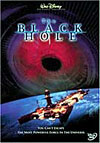
Two years after the first Star Wars movie, visual effects were becoming more important and more competitive. That year was the only year five films were competing in the category. They were Steven Spielberg’s 1941, Star Trek: The Motion Picture, Moonraker, Alien and the very first PG Disney film combining some computer images with a robot and the sensibility of a fifties science fiction film. That entry was Gary Nelson’s “The Black Hole”.
The exploring ship Palomino explores the greater regions into outer space until the crew encounter a Black Hole. As they get closer they encounter a ship known as the U.S.S. Cygnus that has stranded in space for quite some time. The ship’s master, Captain Hans Reinhart (Maximillian Schell), invites the crew onto its ship and proposes to go on a greater mission. His mission is to go into the Black Hole and back, but the crew of the Palomino start to realize there is more to Captain Reinhart than his impossible mission.
The story is an amusing one, but one that is of no great shakes. That is not to say that the film lacks fun. The supporting cast includes some wonderful actors of longevity like Robert Forster, Ernest Borgnine and Yvette Mimieux as well as the great voicework of both Roddy McDowall as the robot V.I.N.C.E.N.T and Slim Pickens as the veteran robot B.O.B. The film is amusing, funny, visually striking, entertaining and has the mood of making a movie for the fun of it. The shot of the big fireball rolling in the Cygnus is always one that has stuck with me for a while and even though Apocalypse Now and Alien ended up victorious in their appropriate categories that the Black Hole was nominated for, it is a movie that is worthy of being in that good company. remains a great guilty pleasure that never loses it’s sense of fun from one viewing to the next.
Video: How does it look?
Fans of “The Black Hole” will no doubt run out to buy this new disc solely for the fact that it sports a new anamorphic transfer. The previous disc by Anchor Bay left a lot to the imagination and the new transfer, though an improvement, still needs a bit of work. The 2.35:1 anamorphic image is much cleaner than it’s predecessor, but still some artifacting abounds in several scenes. The movie is twenty five years old, so it’s reasonable to understand that it won’t look perfect. Flesh tones appear to be normal and though there is the occasional edge enhancement, it’s not too terribly bothersome. I found this transfer to be a solid improvement over the Anchor Bay disc and thus nearly worthy of the price tag alone.
Audio: How does it sound?
Audio wise, “The Black Hole” delivers a fairly decent soundtrack. This appears to be the same mix used on the previous DVD release. I detected a somewhat “hollow” sound to the entire mix which is fairly common with older films being updated with new 5.1 soundtracks. That said, it’s not terrible, but it doesn’t hold a candle to today’s soundtracks. Many explosions and “space” noises can be heard through all five channels and dialogue is relatively clean and clear. On the whole, it’s not a terrible track, but don’t expect it to blow the roof off of your place, either.
Supplements: What are the extras?
There must not be a whole lot of supplemental information on “The Black Hole”, that or the movie isn’t quite as popular as people think and it would be a waste of money to produce an eloborate Special Edition of the title. Regardless, we find a rather lengthy theatrical trailer and a featurette that interviews Harrison Ellenshaw, the effects supervisor for the film. This runs about fifteen minutes and is actually pretty informative. If you’re a fan of the movie, then you’ll probably want to go and buy the new disc for the improved transfer. Casual viewers might just want to rent this version as this makes the Anchor Bay disc essentially obsolete.