Plot: What’s it about?
In the 1950s, the people of Algiera were under strict rule from the French, who ruled from a distance. That the area’s own people weren’t in charge didn’t bother most people, until new policies were rolled out. This pressed the sense of colonialism in the faces of the Algerians, who weren’t pleased with the new ways. Ali La Pointe (Brahim Haggiag) has been a small time crook in the past, but he has tired of the French authorities and has chosen to take action. After all, he and his fellow Algerians are being treated like outsiders and lesser people, even in their own lands. His friend Djafar (Saadi Yacef) keeps him in check, but if conditions continue to worsen, it is only a matter of time. So an Arab man’s home is bombed by French forces, who turned out to have made a mistake in their judgment on him, Ali is prepared to take drastic steps. So he joins in with a militant group known as the FNL, then begins to rally the Arab population of Algiers, in order to gain their support for an all out assault on the French. Soon enough, violence erupts as both sides take to the streets and resort to whatever means needed to kill off the other side. When the brutality reaches a boiling point, the French send in Colonel Matthieu (Jean Martin), a decorated veteran who installs a policy of torture and takes aim on the leaders of the FNL. But will this horrific conflict serve a greater purpose for either side, or is it just violence for the sake of violence?
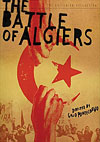
The Battle of Algiers is one of the most brutal political films ever made, based on one of the most brutal political events ever. The Battle of Algiers is also one of the best political films ever made, with influence that has impacted filmmakers even in current cinema. Gillo Pontecorvo creates a harsh, almost documentary approach to the material and true to that approach, he refuses to side with one group over the other. This is unusual, since filmmakers almost always sympathize with one side, but Pontecorvo keeps his film neutral and the result maintains that documentary texture and by turn, enhances the experience. At all times, you feel like you are right in the middle of the action, not in a motion picture conflict, but a real conflict. This is what all war movies attempt, but few realize and in The Battle of Algiers, the realism is intense and at times, too realistic. Pontecorvo used Algerian citizens as extras and shot on location in the same streets that were home to real violence, all of which adds to that sense of realism. This film also remains as potent now as ever, as the themes and conflicts dealt with are universal. Pontecorvo might approach them in a different fashion than most directors would, but the basics remain universal. Criterion has issued a stellar three disc edition of The Battle of Algiers, which boasts a wealth of supplemental material. The label has done some incredible work before, but this dynamic release of The Battle of Algiers could be some of their very finest. I recommend this as a purchase to anyone interested in classic cinema, but also war and political buffs.
Video: How does it look?
The Battle of Algiers is presented in 1.85:1 anamorphic widescreen. As usual, Criterion has gone to extremes to deliver a top notch visual presentation. The film was first restored in 1999, but Criterion has also used digital restoration to further enhance the visuals. The elimination of grain is a concern in this case, given the film’s rough, harsh visual design, but Criterion has taken care not to compromise the intended visual effect. So yes, the print has been cleaned up, but not at the cost of softness or losing the film’s harsh texture. The image looks as refined as we could want, though of course, this film isn’t about polish and refinment. So at first glance, the transfer might seem off balance, but that is the intent with The Battle of Algiers.
Audio: How does it sound?
The film uses a mixture of French and Arabic languages, which have been preserved in this passable mono option. The audio isn’t of much focus in this movie, but in a few scenes, you’ll hear explosions, fight atmosphere, and general warfare. In those instances, the audio is able to supply a little more oomph, but mono limits that to a great extent. The elements still sound solid however and in truth, dynamic presence and creative surround use would be out of place here and would probably lessen the experience. The dialogue is solid also, though the nature of the film sometimes causes some inconsistent moments. In case you don’t speak one or both of the languages, you can turn on optional, new and improved English subtitles.
Supplements: What are the extras?
On the first disc, you’ll find a collection of production photos and two of the film’s theatrical trailers. The second disc has a more substantial selection of goodies, including a fifty minute piece on how The Battle of Algiers was created. This documentary is loaded with all new interviews, from both production staff and film historians. So you can learn the ins & outs of the shoot, then hear about the film’s lasting impact. I found this to be excellent companion piece to the movie and this is sure to be enjoyed by fans. The second disc is also home to a series of interviews with five acclaimed directors who discuss the film’s influence and Gillo Pontecorvo: The Dictatorship of Truth, a half hour or so look at the life and career of the filmmaker. But we’re not done yet, as a third disc holds even more bonus elements, such as Gillo Pontecorvo’s Return to Algiers, an hour long journey with the director as he goes back to Algiers. To see what the nation is like after thirty years of independence is a harsh contrast to what we see in the movie, so this is an excellent inclusion. Remembering History is a seventy minute documentary on Algeria’s battles for freedom, with insight from not just historians, but also some of those involved in the conflicts. The other supplements here are a half hour case study on film’s relevance in the modern political world, as well as Etats d’armes, a half hour featurette in which French officers detail the torture methods used. As if three disc crammed with extras wasn’t enough, a fifty-six page booklet is also included.