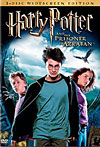
Plot: What’s it about?
Harry Potter (Daniel Radcliffe) is about to start his third year at Hogwart’s, but there is a dark cloud around the school. This year, Harry has to contend with the usual worries, like his magic, his Quiddich games, and his friends, but he also faces grave danger. The madman Sirius Black (Gary Oldman) has escaped from the Azkaban prison. The prison was supposed to be impossible to escape from, thanks to bonds and obstacles of both physical and magical varities, but Black managed to leave Azkaban behind. And the buzz is that Black will come to Hogawart’s and seek out Harry, but not with good intentions. Potter is told that Black will arrive to finish off his master’s work, which was to murder Harry and his family. At the school, new teachers arrive and so do wraith like guardians, all while Harry prepares for Black’s arrival. As all of the students adjust to the new precautions and the faculty changes, Harry tries to learn more about Black. This leads him to Black’s past and as he learns more, he finds out more about himself. But what is the real connection between Potter and Black, the stories he has been told, or some unknown connection?
The books in the Harry Potter series have been blockbusters, so of course, cinematic versions have followed. The films pulled respectable box office, but were panned by critics and even loyal book readers were often disappointed. The first two Potter films were overly long, meandering, and in some scenes, out and out dull. The productions were well funded, but sported low rent special effects and the much promised magic was, well…as flat as a pancake. This third installment marked some serious changes in the series however, as we were promised a darker, more polished effort, complete with a new director. I have to admit, The Prisoner of Azkaban is better than the first two movies, but this sequel still falls short of expectations. The darker tone is there, but only by a few shades, as this is still a film aimed at a younger audience. I suppose younger fans will see it as much more dark, but blue tinted visuals and mean expressions aren’t enough. If you’re a diehard Potter fan, then you’ll probably force yourself to like Harry Potter and the Prisoner of Azkaban, but the fact remains, this is not a good movie. The same bargain basement special effects show up, while story is limited to short bursts that don’t always weave together. But rest assured, more films in the series will follow, as long as the books sell. Warner’s disc looks and sounds good, but is stuffed with short, useless bonus materials. So for Potter nuts, The Prisoner of Azkaban is worth a look, but a rental is the best option.
If the producers want to make all of the books in the Harry Potter series with this same cast, then the pace has to be quickened. This is only the third film and lead Daniel Radcliffe is too old for the part, which demands a year between volumes, not two or three. So by the time the seventh book is rolled into production, Harry Potter will be in his thirties, or at least close. But in truth, the reality of the entire run being produced is slim, as the cast is aging much faster than the material allows, which means bad news. The producers have to pick up the pace and rush the productions, or cast new stars in the later volumes. In the case of Radcliffe, that might be good news, as his performances in the series have been dismal. He might bear a slight resemblance to the artwork of Harry in the books, but he brings a flat, lifeless presence to the screen. A more potent, skilled actor could inject more life and yes, magic into the role. Rupert Grint is as unfunny as a comedic sidekick can be, but he returns for this third installment. The lone bright spot is Emma Watson, who has decent presence and stands out compared to her lame costars. The adult cast members are solid however, with Alan Rickman, Michael Gambon, Ralph Fiennes, Brendan Gleeson, Jason Isaacs, Maggie Smith, Miranda Richardson, and Gary Oldman all involved.
Video: How does it look?
Harry Potter and the Prisoner of Azkaban is presented in 2.35:1 anamorphic widescreen. As this is a visually complex picture, I had some doubts about this transfer, but those worries were unfounded, as the image provided here looks terrific in all respects. I did see some grain, but it is light and never an issue, while the source print is in fantastic condition, as expected from such a new release. The blue hues dominate the scope here, but all the colors look in top form and I saw no bleeds or such, even when the colors hit maximum richness in some scenes. The contrast is also very important here and true to form, the black levels are stark and well balanced, so shadows and detail levels are dead on throughout. Not a flawless visual effort, but a damn good one and fans should me most pleased indeed.
Audio: How does it sound?
The track is a rockin’ Dolby Digital 5.1 option and just as you’d expect from this kind of movie, it puts all those speakers to good use. I was very pleased with the surround presence, both in action driven sequences and the more reserved moments, as all the scenes have a nice atmosphere, with plenty of subtle touches. The power is there too however, so your system will get a solid workout in that respect also, including some excellent, deep bass that kicks in on more than a few instances. All this never hampers dialogue however, as vocals remain easy to understand and that’s important here. This release also includes French and Spanish language tracks, as well as subtitles in English, Spanish, and French.
Supplements: What are the extras?
I think older fans will be disappointed, as the extras are aimed at kids and provide little to no production insight. The first disc some talent files, as well as the film’s theatrical trailer. The second disc is home to five divisions, each with an assortment of extras. Divination Classic houses a few minutes of deleted scenes, a bland behind the scene featurette, and a collection of interviews. These interviews are the most substantial piece of the supplements, but you still won’t find any real insight in the duration. Defense Against Dark Arts has a full interactive tour of Lupin’s classroom and a trivia game about the film’s magical elements. Tour Honeydukes is, you guessed it, a full tour of the candy store, much like the one for Lupin’s classroom. Great Hall is home to a brief choir performance, as well as two interactive games based on events from the picture. The final segment is Hogwart’s Grounds, which has a few brief, promotional featurettes. This sounds like a lot of stuff, but there is little substance to this assortment.