Plot: What’s it about?
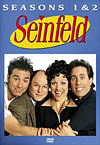
“Seinfeld” was called the show about nothing. Ironic, how it will likely go down in history as one of the best (or perhaps the best) show to ever grace the airwaves. The show combined the comic material of Jerry Seinfeld along with a supporting cast of crazy characters, three of which were unforgettable. George (Jason Alexander), the paranoid, usually unemployed man who lives with his parents. Elaine (Julia Louis-Dreyfus), Jerry’s ex-girlfriend and now best friend. And who can forget Kramer (Michael Richards), Jerry’s next door neighbor who never had a job and not even a first name (until later). “Seinfeld” managed to turn shows about nothing into shows about something and much like Seinfeld’s real-life humor; it just seemed to make sense to the audience. Consider an early episode in which the foursome go to a mall in Westchester. The entire episode takes place in the confines of a parking garage as the quartet looks for their car. Things happen, of course (Jerry gets arrested for urinating in a corner), but how many times has that same thing happened to us? Another episode focused on the gang waiting to be seated at a table in a Chinese restaurant only to leave just before their name was called. Brilliant! It wasn’t really until the fourth season that the show really took off commercially, but these early episodes set the stage for what was to come.
What really made the show work was the cast of supporting characters, namely Newman (Wayne Knight), Jerry’s parents (Barney Martin and Liz Sheridan) and later on, George’s parents (Estelle Harris and Jerry Stiller). A lot of television shows rely on the main characters, but “Seinfeld” wasn’t afraid to let the script speak for itself and bring in recurring characters to lighten the mood. Some of the most memorable episodes are still yet to come (in DVD terms, anyway); namely “The Contest”, “The Puffy Shirt” and “The Marine Biologist” (granted those are just some of my personal favorites). Further proof that the show was something special can be gathered from what happened after the show went off the air in 1998. The cast went their separate ways and though Jerry went back to his stand up roots, the other three members of the cast have each had failed shows. I think Jason Alexander is on his second as of this writing. Suffice it to say that no matter where your favorites rank, it all started with these first few seasons. I’m personally partial to “The Parking Garage” and “The Chinese Restaurant” myself, but each and every one is a classic in its own right.
Video: How does it look?
The first three seasons of “Seinfeld” come to us in a full-frame (1.33:1) transfer that, for the most part, looks very good. I’d say the only exception to this would be the pilot episode – which is understandable as not a lot of money is used on pilots (for obvious reasons). Colors seem sharp and vivid, though the earlier episodes have more of dullness to them. By no means are any of them un-watchable, but as the series progressed, so did the image quality. I have to keep reminding myself that the first season is almost fifteen years old – my, how time flies. On the whole, these episodes reflect their broadcast quality and in most cases, exceed it. Fans of the show will find more definition than the reruns on cable. A fine, above average job here.
Audio: How does it sound?
Television comedies never have been (and most likely never will be) too heavy on the audio. Newer drama shows like “C.S.I” and “Without a Trace” use more of the entire sound stage, but “Seinfeld” delivers just about what we might expect. The dialogue sounds rich and full, and I have to say that I was a bit surprised at how good even the early episodes sounded. The Dolby Surround mix does what it can to deliver a good-sounding track and it succeeds for the most part. I don’t think I can recall any instance in which I was blown away by the sound, but then again I wasn’t supposed to be. Overall, it’s a good, solid track that will more than serve its purpose.
Supplements: What are the extras?
Extras, extras, extras…there is such a thing as “Supplements overkill”, but with these sets it seems to work. Each of these are specific to the actual episode instead of having them haphazardly thrown onto a bonus disc. We start off with “Notes about Nothing” which are specific to all of the shows. It’s sort of a text-based commentary track which tells little insights and such about each episode. For example, it will say if a scene was cut or changed from what it was originally supposed to be. Obviously a lot of research was done and the hard work shows with this feature. Audio commentaries are available on specific episodes and though not great, it’s a pleasure to have them. Personally, I’d have liked them to do commentaries for all of the episodes like “The Simpson’s”, but this will suffice. Larry David, Jerry Seinfeld, Dreyfus, Alexander and Michael Richards make for some good tracks but somehow they seem lacking. It’s almost as if we get more information reading the “Notes about Nothing” than listening to these. Still, as always – it’s better to have them than not to.
Next up are some “Inside Looks” for most all of the episodes. These range in time from episode to episode, but they do offer a bit on character development and dealings with the studio, etc. I found them interesting, but not something I’ll go back and watch again and again. That brings me to a point; the true value of supplements is the “repeat viewing” factor. Naturally, it’s not uncommon to go back and watch the episodes again and again, but what about the supplements. Again, several of the episodes contain deleted scenes, though they don’t add up to a lot of supplemental material. We can see why they have been cut, but only a handful of episodes contain this feature. There are some outtakes and a very revealing documentary that traces the roots of the show and how it ultimately came to fruition. This, I believe, is the best supplement as it can stand on its own and provide worthwhile information about the show. Finally, there are some teaser trailers and some clips from “The Tonight Show” in which Jerry Seinfeld and Michael Richards are highlighted. A photo gallery rounds out the supplements. All of these same features are the same for the Third Season, but the inclusion of “Kramer vs. Kramer: Kenny to Cosmo” is a rather interesting watch. In it, we see how Richards was cast and how Kenny Kramer influenced the character of Cosmo Kramer on the show. All in all, “Seinfeld” is truly a great show and it’s very encouraging to see how much time and effort was put into these seasons. The sheer plethora of supplements virtually assures us that the remaining seasons (and that’s five, for those who are counting) will be identical. Not that there’s anything wrong with that…