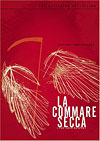
Plot: What’s it about?
A prostitute has been killed in brutal fashion, her corpse then left in a park near the Tiber River. The park was not vacant around the time of the incident, which means someone had to have seen or heard something, but not all witnesses can be trusted. In this case, a handful of suspects are rounded up and brought in, to tell their side of what happened. As the inspector goes through the various stories, it is hoped a version of the truth can be put together. Even if the suspects can provide small pieces of information, those could be put together and before long, a substantial amount of knowledge is had. But with these five, the stories don’t just offer bits and pieces, they supply almost the entire story. Of course, not all know specifics about the murder, but all have secrets and some kind of information to share. But under such intense stress, will the truth be forced out or will the five just lie until they’ve painted themselves into a corner? Were any of these suspects involved in the brutal murder and even if not, what will they attempt to hide from the police? Even with the high volume of information, can the police sift through the lies and untold secrets and find out who is behind the murder, or will the truth remain buried under all the false evidence and misdirection?
This was the first motion picture from director Bernardo Bertulucci (The Dreamers, Last Tango in Paris) and in some circles, La Commare Secca is also considered to be his best work. He has other films on his resume that are better known, including a few with controversial histories, but even if not his very best, La Commare Secca has to be ranked with his best. I do think this is his finest movie, although he does have several excellent films and beyond that, some movies that more than warrant a look. A first time director is often graded on a curve, given some slack for mistakes, but in this case, no such pass is needed. Even in this debut picture, Bertolucci has a firm grasp on his technique and vision. Of course, in his later and better known movies, he would turn to a less rigid style, but this is still a controlled, consistent approach. The performances in La Commare Secca are superb across the board, though not in a memorable sense. No, you won’t be singing the praises of the cast, but not because the turns were bad, but because they were so good. I know, that sounds odd, but the performances here are so natural and realistic, you almost forget these are actors. The realism fuels the atmosphere, which in turns keeps us content within the film’s world. As far as plot, the film plays like a kind of Italian Rashomon, but Bertolucci injects enough new elements to ensure this is not some carbon copy of that classic. I don’t want to leave out the music either, as the soundtrack is excellent. I think fans of world cinema will be most satisfied with La Commare Secca, but in truth, anyone with an interest in film should check out this release. Criterion’s treatment isn’t loaded with extras, but the technical presentation is impressive.
Video: How does it look?
La Commare Secca is presented in 1.66:1 anamorphic widescreen. This transfer doesn’t look as sharp as some of the other more recent Criterion releases, but I venture to say it is excellent given the nature of this release. This movie is over thirty years old and it looks better than many films I’ve seen around the same age, so I won’t complain. The source print shows some minor flecks and nicks, but the compression is flawless, with no artifacts to be seen. The contrast is well executed with this black and white transfer, so the image is never obscured or over lightened. The shadows seem accurate and I could find no traces of detail loss at all.
Audio: How does it sound?
There just isn’t much to discuss here, as the included Italian mono option is good, but won’t turn any heads, of course. This is a dialogue driven movie and that means mono is more than adequate, no real problems seem to surface here. I heard no hiss or distortion of any kind, which is good news with a flick of this age, to be sure. The very cool musical score comes through well, at least given the limitations of mono and the source material, of course. No errors in terms of dialogue either, which is crucial and all, since this is a movie dominated by dialogue, to be sure. Not much else to report to be honest, although optional English subtitles were included, should you need them.
Supplements: What are the extras?
This disc includes a new interview with Bertolucci, which is a little to brief, but still contains some insightful comments. I would have loved an audio commentary session with Bertolucci or a film scholar, but no such luck this time around.