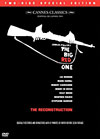
Plot: What’s it about?
Sergeant (Lee Marvin) is as skilled in combat as a man can be, with experience in the field and a brutal killer instinct. In the first World War, he served in the First Infantry and served with pride, honor, and courage, which helped him come home in one piece. He is now back in the First Infantry, but this time he is the leader of the squad and has four young soldiers by his side. These men were trained by him, trained well and trained how to endure the battles and survive. He is mean and brutal at times, but he does what needs to be done to help his squad return safe. The squad has a strong bond, though as time passes, some tensions do rise, but they’re always pushed to the side when the gunfire begins. The men manage to survive assault after assault and venture through countless theaters in Europe, alive after each one. But even if the men survive until the end, what will become of their lives after the war is over? Can Sergeant lead these young men through hellfire and brimstone to experience the real glory of war, survival?
Samuel Fuller’s epic The Big Red One is a controversial motion picture, thanks to studio involvement that slashed the budget and then hacked the film to pieces. So Fuller’s vision was unrealized, as he lacked the funds to provide to full scope and while he did finish the production, the studio then came in and cut out huge sections and left a mess behind. But film critic Richard Schickel took on the burden of restoring the film to Fuller’s original version, not a simple task. Now however, The Big Red One has over forty minutes of footage back into the movie, so his labors were not in vain. The result is a more expansive, in depth and epic experience, which is what Fuller must have envisioned. Is this is the exact vision Fuller had for his movie? No one knows for sure, but his personal notes and writings were used as a foundation, so this has to be close. The Big Red One finally resembles what Fuller wanted, which is reason enough for fans to celebrate. Warner’s two disc edition also features a wealth of extras, so this release earns a high recommendation.
Video: How does it look?
The Big Red One is presented in 1.78:1 anamorphic widescreen. Not only has the movie’s content been restored, but the actual visual presentation has also been revamped. The print found here is in incredible shape, with no real instances of debris or grain. And if you’ve seen other home video releases of this movie, even the previous DVD incarnation, you know how much of an improvement that would be. The clean print yields a sharp, refined image that is quite impressive. The colors pop as much as the material allows, so the hues remain within the natural scope, while black levels are remarkable here. In the end, this is a top level visual restoration and fans will be thrilled beyond words.
Audio: How does it sound?
The audio has also been overhauled, with a new Dolby Digital 5.1 surround option on deck. As always, I had my doubts about the remix, as so many have turned out poorly. In this case however, it seems as though great care was taken to ensure the overall feel of the soundtrack stayed true to the material, so this is more of a fine tune than a total remix. Yes, the surrounds do come to life and add punch to the movie, but only when the material demands it. So no hollow, forced surround presence just for the sake of noise, which was a relief. The mix even comes off a tad thin, which is how the original soundtrack came off and by turn, that keeps the audio grounded, which is good in this case. This release also includes a French language track, as well as subtitles in English, Spanish, and French.
Supplements: What are the extras?
Richard Schickel provides a full length audio commentary session, in which he talks about Fuller’s films and how they impacted his own life. As you listen, it becomes obvious how much respect and appreciation he has for Fuller. So while the reconstruction project was long and daunting, Schickel had such deep respect for Fuller, it was almost like a dream come true. If you want an in depth look inside the project, then don’t miss The Real Glory, a forty-five minute dissection of the reconstruction. But the piece also examines the production of the movie itself, so a lot of ground is covered here. As if that wasn’t enough, an hour long documentary on Samuel Fuller is next, as taken from Turner Classic Movies’ great series The Men Who Made the Movies. This is a well crafted look at Fuller, both as a man and as a filmmaker. You can also compare six scenes before and after the reconstruction, a vintage featurette about the real life soldiers, a selection of radio spots, and three of the film’s theatrical trailers.