Plot: What’s it about?
A lot of professions have codes established for proper conduct, with guidelines such as personal hygiene, dress code, and basic professionalism. Although prostitution might not seem like a field where such a code would be accepted, for one group of women, a strict code is enforced. A number of ladies in Tokyo have banded together to create a sort of personal union, in order to protect themselves and their livelihoods. The code dictates that no pimps are allowed, fend off outside prostitutes, protect the abandon structure they live in, and above all else, no one has sex without being paid. That means no boyfriends or even casual lovers, which isn’t a problem, since most of the women are cold to such affections. But when a thief named Shin is allowed to hide in their building, one of the prostitutes is drawn to him. She soon falls in love with him, but can she escape this world of darkness to start over, or is she trapped within the code?
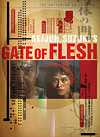
When Criterion began to issue films from director Seijun Suzuki, I couldn’t wait until Gate of Flesh was slated to be released. I’m sure others will disagree, but I hold Gate of Flesh as the director’s finest work and as such, I was thrilled when Criterion released this disc. Suzuki wields his cinematic madness with immense skill here, crafting a film that relies on a wicked blend of melodrama, brutality, and the surreal. There are scenes sure to offend folks, such as the killing of an animal, graphic torture sequences, and degradation of women. So if you’re easily shaken up or offended, then Gate of Flesh probably isn’t your kind of flick. Suzuki doesn’t seek to just shock however, as he stirs in melodrama that reminds us of Douglas Sirk, only with a strong injection of Suzuki’s style. In my opinion, Gate of Flesh is a true masterpiece, a movie that no film buff should be without. Of course, Criterion’s disc is top notch, so don’t hesitate to pick up this excellent release.
Video: How does it look?
Gate of Flesh is presented in 2.35:1 anamorphic widescreen. This transfer represents business as usual for Criterion, with yet another dynamic, incredible presentation. Of course, the image has been restored and remastered, to remove countless instances of unwanted grain, nicks, and other debris from the print. This yields more depth and detail than previous versions, so the visuals have more life than we’re used to. That is tremendous news, as the visuals are stunning and in this new transfer, they shine like never before. In short, this is almost a perfect visual effort and for a movie from 1964, that is more than a little impressive.
Audio: How does it sound?
The original Japanese mono track is included, which offers a solid overall experience. As you would expect from any mono track, range is limited, but I was pleased with the clarity and sharpness found within this track. The elements never overstep their boundaries, which means each remains distinct and bold, never overshadowed or buried under the others. The dialogue is excellent, no volume errors or harshness can be found in the least. This one won’t rile up the speakers, but it sounds terrific. This disc also includes optional English subtitles, in case your Japanese is a tad rusty or what not.
Supplements: What are the extras?
A new interview with Suzuki and production designer Takeo Kimura headlines the supplements, but you can also find a selection of rare production photos and artwork, as well as the film’s theatrical trailer.