Plot: What’s it about?
Any Cameron Crowe film defies conventional criticism by bathing the viewer in an overabundance of subjectivity. From his directorial debut in 1989 straight through to today, Crowe has always aimed to make films that touched each person where it counted most personally and intimately for them. Judging the degree to which this is accomplished for the average person is somewhere between difficult and useless. Now, some might argue that this theory could apply to movies and critics as a whole but, for me at least, Crowe’s films in particular have always seemed more than a little exempt from the normal standards of quality and excellence we routinely filter other movies through. When “Elizabethtown” was released in October of last year, it was met with a resounding critical groan that almost threatened to momentarily take the wind out of my sails, and I counted myself amongst the director’s most dedicated loyalists. It was more than a little disheartening, especially after the critical split over “Vanilla Sky” that left many of us scratching our heads after Cameron’s decade-long run of near-perfection. But as tentative as I was, I chose to keep the faith and go see the film anyway. I came away completely happy and slapped myself for doubting one of my favorite film-makers. I couldn’t understand why so many people detested this one so much.
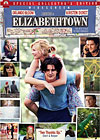
Then again, we’re now living in the age of the mindless, minimalistic blockbuster. There’s little room left for movies that have a purpose aside from lambasting evil conservative administrations or advancing social agendas of some type. Personally, I found this film to be a breath of fresh air after all I’d seen in the last year. With virtually everything being granted a hidden subtext by movie critics these days, and most of them unwarranted in this author’s opinion (“Star Wars: Episode III” comes to mind), I simply think that most found this film hollow in the absence of controversy. It follows the simple story of Drew Baylor (Orlando Bloom), a man who has just failed miserably at life and would just as soon take the easy way out than live to fight another day. A call from his sister sends Drew to Kentucky instead to deal with the sudden death of his father, Mitch. Along the way there’s an unconventional romance with a stewardess (Kirsten Dunst) and various off-the-wall encounters with Mitch’s family and friends. There’s not much more to the story than that, and really, it’s best to go into the film knowing as little as possible to get the most out of it. This isn’t a movie about prose. It’s about what you bring with you. But then, that’s why I love Crowe’s films in the first place: they’re interactive.
If it seems I’ve marginalized the events of the movie here, there is a good reason. Where I think the point of this movie got lost on its detractors is in its simple, sweet nature. There’s a lot going on in the film but, as all Cameron Crowe fans know, his films are about individual moments and not about their points per se, and on that level, the films delivers in spades. There are glances and brief moments of silence that rival the best that Crowe has ever done on display here. The music has even been cited as a problem this time around, with some calling it overkill and self-indulgence. Never minding that Crowe last two films both had more music than this one does, when does self-indulgence describe a maturing director who’s not afraid to embrace his own style? I think it’s a testimony to how much Crowe understands the function of music (at least for some of us) that he is so liberal in his use of it. And waver though his American accent may at times, I also have to rush to Orlando Bloom’s defense in this case. The movie stays grounded because it’s told almost exclusively through his eyes and, without that connection we have to Drew (and without a good actor breathing life into his lost soul), the film could have easily tanked. Personally, I don’t think it did. I just think that Cameron Crowe’s heart may finally have grown too big for the cynical world Jerry Maguire warned us we were living in nearly ten years ago.
Video: How does it look?
“Elizabethtown” comes to us in a gorgeous 1.85:1 anamorphic widescreen presentation. The image presented here is near-reference quality in its own, subdued way. Much like the film itself, this is more impressive in its subtlety than the in-your-face perfection of some other transfers. Contrast levels are pitch-prefect, sharpness and shadow detail are superb, and I couldn’t find any edge-enhancement at all. There’s no grain, no jittering, and no hue problems, either. In fact, for a film drenched in this many unremarkable Earth tones, this is a spectacular effort for its absence of distractions alone. It might sound odd, but this is one of the more impressive visual presentations I’ve seen of late due to its unobtrusive nature. This DVD is an example of how not every transfer need be jaw-dropping to be terrific in its own right. There are subtitles available in English and Spanish.
Audio: How does it sound?
Once again, the analogy stands. The Dolby Digital 5.1 track included here is incredibly immersive and effective. This isn’t a “sound film” by any means, but if you prefer ambient, subtle envelopment, this track is right up there with the best. Much has been said about Crowe’s use of music to tell his stories, and each track comes through with pleasing clarity and just the right amount of emotional punch to drive
the picture. Dialogue is always intelligible and the country atmosphere of the film is perfectly captured in the nuances of the mix. A Dolby Digital 2.0 Surround track and a French Dolby Digital 5.1 track are also included.
Supplements: What are the extras?
When “Elizabethtown” was first screened, it ran somewhere between 20 and 30 minutes longer than its current incarnation on DVD. After a negative test screening at the Toronto film festival, Crowe trimmed the film down to the mainstream-approved length of two hours. It was rumored that the eventual DVD release of the movie would reinstate this lost footage via seamless branching and offer fans of the film a choice of which version they wanted to watch. It was not to be, however, and what remains instead is disappointing. This marks the first DVD release of a Cameron Crowe film without a commentary track since the bare bones “Singles” disc. We get two featurettes, two extended scenes and two trailers. The first featurette is called “Training Wheels” and is essentially just series of video clips from the set against the backdrop of an impromptu performance of “Same In Any Language”, a song Crowe and his wife Nancy Wilson wrote for the film. The other is called “Meet The Crew” and is virtually the same thing set to a piece of score music. “Extended scenes”, as applied here, is a bit of a misnomer. The first is the full version of the video Drew shows the children in the film. Cute, but it makes for a trite extra. The second, “Hanging With Russell in Memphis”, is a look at the various takes of Drew discussing blues at the end of the film on his road trip. Again, nothing much to see here. The trailers speak for themselves. Considering what could have been (and what has been on previous Crowe releases), this one is hard to recommend on features alone. But if you’re a fan of the film, the wonderful presentation of the film itself should be enough to justify picking this up. If you never got a chance to check the movie out in theaters, at least give it a rental. It deserves the recognition that 72% of people think it does, even if only 28% of critics agree with me.