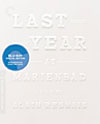
Plot: What’s it about?
At a posh hotel in Europe, a man (Giorgio Albertazzi) notices a beautiful woman and approaches her. The woman (Delphine Seyrig) is open to the conversation, but is taken back what he says. The man informs her that the two once shared a passionate affair and spares no details in his discussion. She doesn’t remember the man, let alone the affair, but he continues and insists his memory is on the mark. He does seem to know a lot about her and his claims have a lot of truth, even if she can’t recall the events he has gone on about. He even tells her the two agreed to meet one year later, then describes a tragic event that unfolded. Even he doesn’t have all the details, but it could have involved a shooting of some kind. Who is this man and is his story the truth and if so, why doesn’t the woman remember it all?
A fine line exists between artistic and pretentious, a line that is debated to no end by critics and audiences alike. The debate is alive and well when it comes to Last Year at Marienbad, Alain Resnais’ unusual production. One side boasts that the film is a true landmark, a “modern art mystery” or the like, while others dismiss the film as pretentious, hollow trash. I can see both sides, but I tend to fall on the latter side. I wanted to be floored the first time I watched this movie, but instead the film came off as forced and yes, above all else, pretentious. I don’t think Last Year at Marienbad is a bad movie, but it fails to ignite the sense of depth that is so badly wants. The entertainment value is low, but there are some memorable artistic choices. The film is so vague, you can pretty much get whatever you want from it, which is kind of the point. But regardless, Last Year at Marienbad is worth a look if you’re interested, but once will probably be enough.
Video: How does it look?
Last Year at Marienbad is presented in 2.35:1 anamorphic widescreen. This is impressive. As usual, Criterion has restored the film, this time under the direct supervision of the director. The end result is excellent and in my opinion, one of the landmark transfers to this point. If you’re one of those who think older, black & white films don’t benefit from high definition, one look at this will change your mind in an instant. The print looks immaculate, detail is fine and remarkable, and the contrast never wavers, this is simply a beautiful visual presentation.
Audio: How does it sound?
A pair of French mono soundtracks are here, a restored version and the untouched track, the latter requested for inclusion by the director himself. I chose to go with the restored version for this review and as per usual for Criterion, the result is a clean, capable presentation. The track has little signs of age or wear, which is impressive and overall clarity is solid. You won’t mistake this for a brand new soundtrack, but this is good work. I also appreciate the inclusion of the untouched track, as it is obviously important for the director’s wishes to be followed. This disc also includes English subtitles.
Supplements: What are the extras?
First we have two short documentaries from the director, as well as a newly created half hour featurette on the film’s production and legacy. This is a solid piece, but with a short duration, there isn’t a lot of depth. This disc also includes a half hour audio interview with the director, a film scholar’s unique views on the film, and two of the film’s theatrical trailers.