Plot: What’s it about?
If you don’t know the story of Dracula, you need to be slapped. But for those in need of a refresher course, here’s the deal. Count Dracula (Bela Lugosi) is a vampire, he feeds on the blood of the living in order to survive. He resides in the spookiest place on this dustball, Transylvania, but he feels a move is in order, perhaps to gain access to a larger pool of victims. At any rate, he hires a real estate agent, Renfield to ease the moving process, and of course, he forces Renfield to become a slave to his wishes. The Count makes the journey to England, where he now rents a nice place, which is right by an insane asylum, which seems like a wonderful place for Dracula to feed. After he has control of the joint, he goes after some fresh blood, the family of the asylum’s doctor, Dr. Seward. This doesn’t go over well with Seward, so he decides that damn Count needs to pack his bags and get the hell out. To help him in this matter, he enlists his daughter’s fiancee and Professor Van Helsing, who knows his vampires and detests them. It’s Dracula versus these three…will the threesome come out on top, or will they serve as nothing more than breakfast for Dracula?
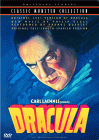
Universal’s Dracula…the first in their line of horror movies, most of which serve as the definitive tellings of those tales. Such is the case with Dracula, as when most people envision the Count, they think of the almost hypnotizing eyes of Bela Lugosi. While this is a classic in both realms of horror and film in general, I don’t know how more modern horror fans will take to it. Of course, those interested in classic horror will latch on the movie, but what about fans of blood soaked corpses and blood spattered naked breasts? Well, this movie is more based on dialogue and atmosphere than gore and nudity, so if you’re looking for either of the latter, this isn’t the movie for you. If you can appreciate old fashioned suspense however, I think you’ll find yourself enjoying this film, since it uses pace and environment to move the cogs, although not as much emphasis on atmosphere, at least not as much as the Hammer pictures. I recommend this disc very highly, as it is packed with all sorts of bonus materials, including the full length Spanish version of the film. As such, a purchase is a very wise idea, unless you have the time to explore the disc in one rental period, and don’t wish to see the material again.
This horror classic was directed by Tod Browning, who is no stranger to those of us who follow the horror genre. While Browning’s skills behind the camera are good, I think he was better with working actors, as opposed to technical directing. Browning uses simple camera pans and angles, which convey the events, but lack the splendor you might expect from such a classic horror director. If you look for the harbor master in this movie, that’s the director himself, mugging for the camera. If you seek more of Browning’s directorial efforts, make sure you check out Freaks, The Unholy Three, Mark of the Vampire, and The Mystic. When you think of Dracula, chances are you think of Bela Lugosi’s rendition of the character, which is understandable since he captures the spirit of the character well in this movie. Lugosi is nothing short of a legend in the horror genre, with an extensive resume of excellent performances. Lugosi is excellent here, and is every bit as creepy now as he was back then. Other films that showcase Lugosi’s skills include White Zombie, Murders In The Rue Morgue, The Wolf Man, Abbot and Costello Meet Frankenstein, and Plan 9 From Outer Space.
Video: How does it look?
Dracula is presented in a 1.33:1 transfer, which is the original aspect ratio. The image, being over sixty years old, has many nicks and flecks, but the problem with this transfer is the contrast. At times, the contrast levels can be extremely dark, which obscures details. This is isn’t a constant occurrence, but it does happen more than a few times. Since this is a black and white feature, contrast is vital, and this transfer seems to drop the ball. However, the Spanish version looks sharp and clear, with perfect contrast balance…go figure.
Audio: How does it sound?
You have the option of listening to the original mono score, or a new 5.0 score by Philip Glass. I chose the original, and I was pleased with the result. While the track sounds battered, remember that this movie is almost seventy years old! When taking the age into consideration, this track is excellent, in my opinion. The dialogue is clear and consistent, nothing to complain about there. The Spanish version is also mono, and sounds about the same.
Supplements: What are the extras?
This disc is filled with bonus materials, including the full length Spanish version of Dracula. This edition was made at the same time using the same materials, but turned out very different, and much longer. If you’re a fan of classic horror films, this version is a must see, it is equal to, if not better than the American edition. Trust me on this, if you have this disc, watch both versions, it is well worth the time. The Spanish production is an amazing inclusion, and I applaud Universal for sticking it on this disc. Also on the disc is a thirty-five minute documentary, The Road To Dracula, which contains interviews with many film historians. An extensive photo gallery is also housed on the disc, which is full of promotional stills and such. A running commentary with film historian David J. Skal is also included, which is informative although a little dry. Production notes for the American and Spanish version, an interview with the Spanish version’s female lead, talent files, and the theatrical trailer round out the extras.