Plot: What’s it about?
I can remember the day some nine years ago when I sat down and watched “Dark City” for the first time. I hadn’t heard of it, but this web site was fairly new and I’d just received my copy from New Line so I was anxious and eager to sit down and watch yet another movie that I’d received for “free.” I wasn’t familiar with the concept of the movie and only vaguely familiar with director Alex Proyas who had helmed another dark film a few years earlier: “The Crow.” Over the years, this film has gained a very devout following along the lines of “Donnie Darko” and some other rather, how should I say, interesting movies. I didn’t understand the movie the first time I saw it and until only recently I didn’t really give it much thought. Film critic Roger Ebert recorded a commentary track for the film and a new one for this director’s cut. Ebert has added this movie to his list of “Great Movies”, a list that includes “Casablanca”, “Citizen Kane” and “Singin’ in the Rain” to name just a few. So, after nine years, I sat down again and am going to try and comprehend what the allure of “Dark City” is all about.
We meet John Murdoch (Rufus Sewell) as he’s awakened in a bathtub and unaware of his surroundings and his own memory. He quickly dresses himself only to discover that he’s wanted for a series of murders of prostitutes. He stumbles around the metropolis, pursued by Frank Bumstead (William Hurt), a detective that no one listens to. John possesses certain powers that allow him to create doors where there were none, open windows and the like. He doesn’t understand these powers or where they came from and his sole concern is to figure out just what is going on. This is the world of “Dark City” and we learn that at midnight the town shuts down where the mysterious “Strangers” concoct new identities for their residents all in the name of science. We meet Dr. Schreber (Kiefer Sutherland), a human doctor assisting the “Strangers” and the exotic lounger singer Emma (Jennifer Connelly) as John’s wife. As John starts to put the pieces of the puzzle together, will it be too little too late or will he finally regain his memory?
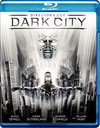
“Dark City” is a movie that makes the viewer think, no doubt about it. And I will say that this director’s cut is much different than the theatrical version (also included). We lose the opening voiceover narration; certain scenes are cut and even re-arranged in order. The music is changed in certain circumstances, but it seems to make a bit more sense this time around (for me). I’m not sure I’d quite hail the film as one of the all-time greats but it does play with your head and, as I mentioned before, makes you think. The set decoration is amazing and wile listening to Ebert’s commentary tracks, my eyes were opened to the little nuances that were present but I’d probably never even taken note of. The film prods along at a slower pace than most and without constant action being shoved down our throats, it’s a bit of a change of pace for me. “Dark City” is certainly worth checking out, though I somehow think it will be another nine years before I revisit this title.
Video: How does it look?
“Dark City” contains two versions of the film, a director’s cut and the original theatrical version and I found both 2.35:1 VC-1 HD transfers to be pretty much identical. I’d previously viewed the movie on one of my old TV’s, and if memory serves it was a 31″ 4:3 model. Suffice it to say that the film is, as the names states, dark and I was pretty impressed at how well the black levels were handled. There isn’t a whole lot of contrast in the movie, mainly just different shades of darkness. The entire set is influenced by the noir films of the 1940’s and admittedly they do look good. Films like “M”, “Metropolis” and even “Citizen Kane” all influences here and just looking at what was happening in the background made the film a bit more interesting. Details look good and I really saw no evidence of artifacting in the least. While not a perfect transfer, this looks as good as I expected it to.
Audio: How does it sound?
New Line offers up “Dark City” in a DTS Master Audio uncompressed track that lacks a little, but at certain times does flex its proverbial muscle. I found the dialogue to be very clear and clean and though a majority of the effects seemed to be few and far between, when they were present it really added an ambiance to the film. The music is a bit different between the two versions of the film, but not so different that it’s confusing. On the whole, it’s a nice mix and certainly better than the previous Dolby Digital 5.1 track.
Supplements: What are the extras?
The standard DVD of “Dark City” was one of New Line’s early “Platinum Series” discs that contained a wealth of supplements, most all of which have been ported over to this Blu-ray version. We’ve got two different versions of the movie here and the theatrical cut contains the same two commentaries from the standard DVD. The director’s cut contains three commentary tracks and Ebert has recorded a new track. I know of Mr. Ebert’s health problems, but I had to go back and listen to both tracks to make sure the new track was indeed Roger Ebert. His voice sounds completely different, though he’s no less insightful and even offers up very interesting tracks on the director’s cut track. Additionally we get an introduction by director Alex Proyas as well as two documentaries: “Memories of Shell Beach” and “Architecture of Dreams”, the latter focusing on the production and set design of the film which is, truly, amazing. There are some production still photos, text essays as well as comic book/graphic novel author Neil Gaiman’s review of the movie. We wrap up with the trailer and a fact track with director Alex Proyas. Additionally, we get a second disc with a “bonus digital copy” of the film which is very en vogue nowadays, we’ll see how long that trend lasts.