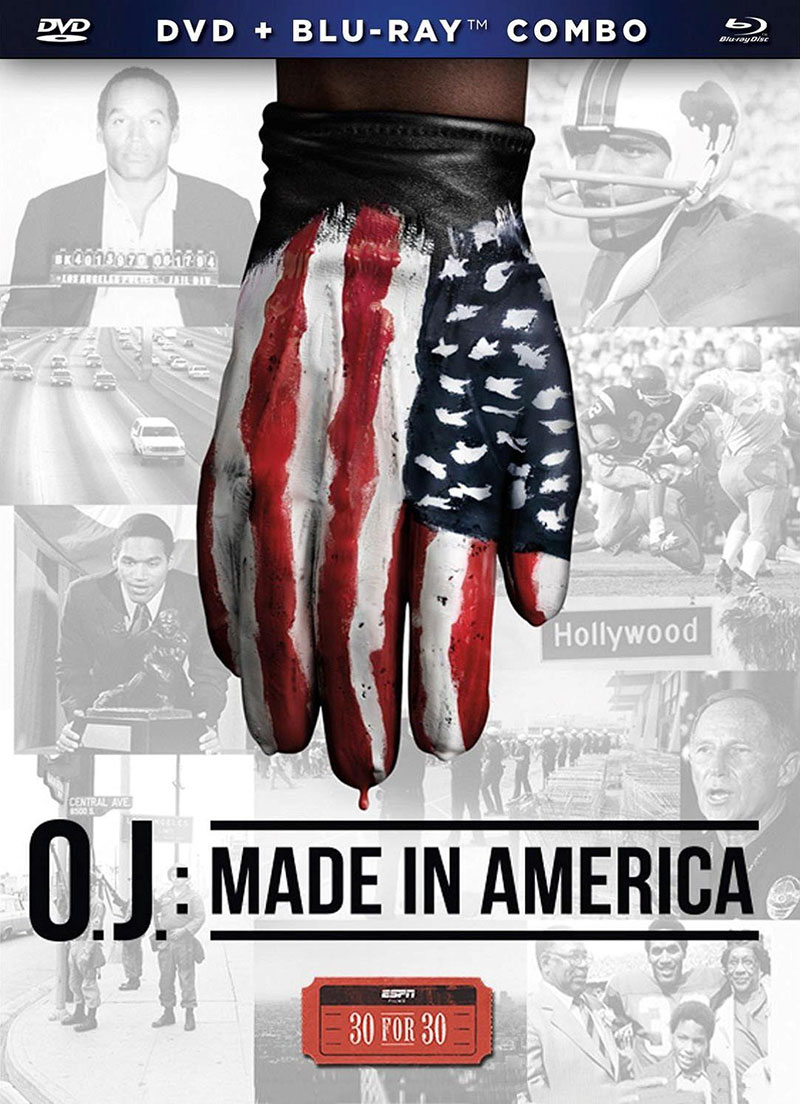
Plot: What’s it about?
In 2009, ESPN made a documentary series to celebrate their thirtieth anniversary. That documentary series, 30 for 30, was so popular and received so much acclaim that the series has continued to be produced by ESPN. I am a big fan of this series and have been steadily impressed by the talent they have attracted to directing these shows (directors like Barry Levinson, Peter Berg, Albert Maysles to name a few.) One of the reasons the show is so successful is their ability to focus on the events around sports with episodes that cover topics as far-reaching as Pablo Escobar’s involvement in soccer or how California and gangster rap were entwined with the Raiders.
This year ESPN took an even bigger leap with their series. They produced a five-part sprawling documentary on Orenthal James Simpson. The total running time for the series is over seven and a half hours. On top of that, they released it in theaters for a limited release to ensure that it would be qualified for Oscar consideration. After watching all of the series with my wife, I feel confident that they will win that Oscar for best documentary feature.
The documentary begins with O.J. looking into the camera as a question is asked, “At the time of your first arrest, you were forty six years old? Is this correct?” O.J. looks at the person asking the question and says “Are we still talking about that?” It is a great image that sticks with the viewer and is indicative of what will come. The documentary examines O.J. from his humble beginnings in the projects of San Francisco to his star turn at USC. From there it follows his tenure at the Buffalo Bills where he smashed league records and his success as a spokesman for Hertz. It paints the picture of a man who was an American hero and who transcended race. In a way, he was accepted by whites in a way that few other African Americans had been before himself. And then, in a blink of an eye the darkness forms. The domestic abuse that would lead to the death of Nicole Brown and Ron Goldman. As the story unfolds, a picture of a monster develops.
One of the best aspects of the documentary is that it was given the breathing room to really give the attention it needs to the time and place of Los Angeles before and after the Rodney King scandal. O.J.’s case became a symbol of racism in Los Angeles and then in the country. The documentary succeeds in explaining how an obvious murderer that was linked to the crime scene through DNA evidence, motive, and lack of an alibi, went free. Essentially, his freedom was payback for years of racial injustice in the community. To understand the case, you must understand Los Angeles. In order to explore the issues of race and outrage that influenced the decision, the documentary expanded to the length of seven and a half hours. Honestly, there is not a frame that should have been edited out. It is an eye-opener.
O.J. Simpson: Made In America is one of the best documentaries of the last fifteen years. It is an epic tragedy about the rise and fall of an American hero. To understand the scope of what O.J. accomplished in the eyes of the American people and the monstrosity he committed is a daunting task and the filmmakers were extremely capable. It is in turns frightening, funny at points, exhilarating, and excruciating. The entire time it is nothing short of fascinating. Highly recommended.
Video: How’s it look?
ESPN Films has provided a fully reference-quality transfer of the entire series with an MPEG-4 AVC-encoded transfer. This series spans from the sixties to this year and relies heavily on archival footage. Therefore, the quality of the footage will be in the eye of the beholder, but from what I could tell it seemed like they had done an amazing job of restoring the footage that they chose for the film. Also, all of the interviews were done with high definition cameras, so there is no lack of clarity on those.
Audio: How’s it sound?
ESPN Films has provided a DTS-HD Master Audio 5.1 track that sounds great, even though it is only really used for the score that is presented in the background of the film. Since this is a documentary, depth of presentation is fairly limited, but the score by Gary Lionelli is fantastic. It reminded me of some of Philip Glass’s work in Errol Morris documentaries. The score helps to bring the tragic currents of the film to the forefront. There is nothing wrong with this track. I was also impressed with the sound quality of all the archival footage that the film presents.
Supplements: What are the extras?
- Up Close with Chris Myers (43:53, 1080p) – an extended interview with O.J. where he continues to plead his innocence and justify some of his strange statements he made after being found not guilty.
- Sportscenter Montage (7:27, 1080p) – a montage of the reactions of the Sportscenter staff throughout the trial.
- Sports Reporters 1 (13:02, 1080p) – clips of an episode of Sports Reporters where they discuss the Simpson murder.
- Sports Reporters 2 (7:38, 1080p) – clips of an episode of Sports Reporters where they discuss the trial’s verdict.
The Bottom Line
O.J. Simpson: Made in America is a jaw dropper of a film. It is absolutely painstakingly researched and carried out flawlessly. The documentary is a blistering indictment of racist indignation on both sides and a tragedy worth sharing with the next generation that did not grow up watching as the white Bronco slowly drove down the 405 with police officers following closely. I can honestly not recommend this film enough. The supplementary materials include a full length interview with Simpson after the trial, which was a nice addition.