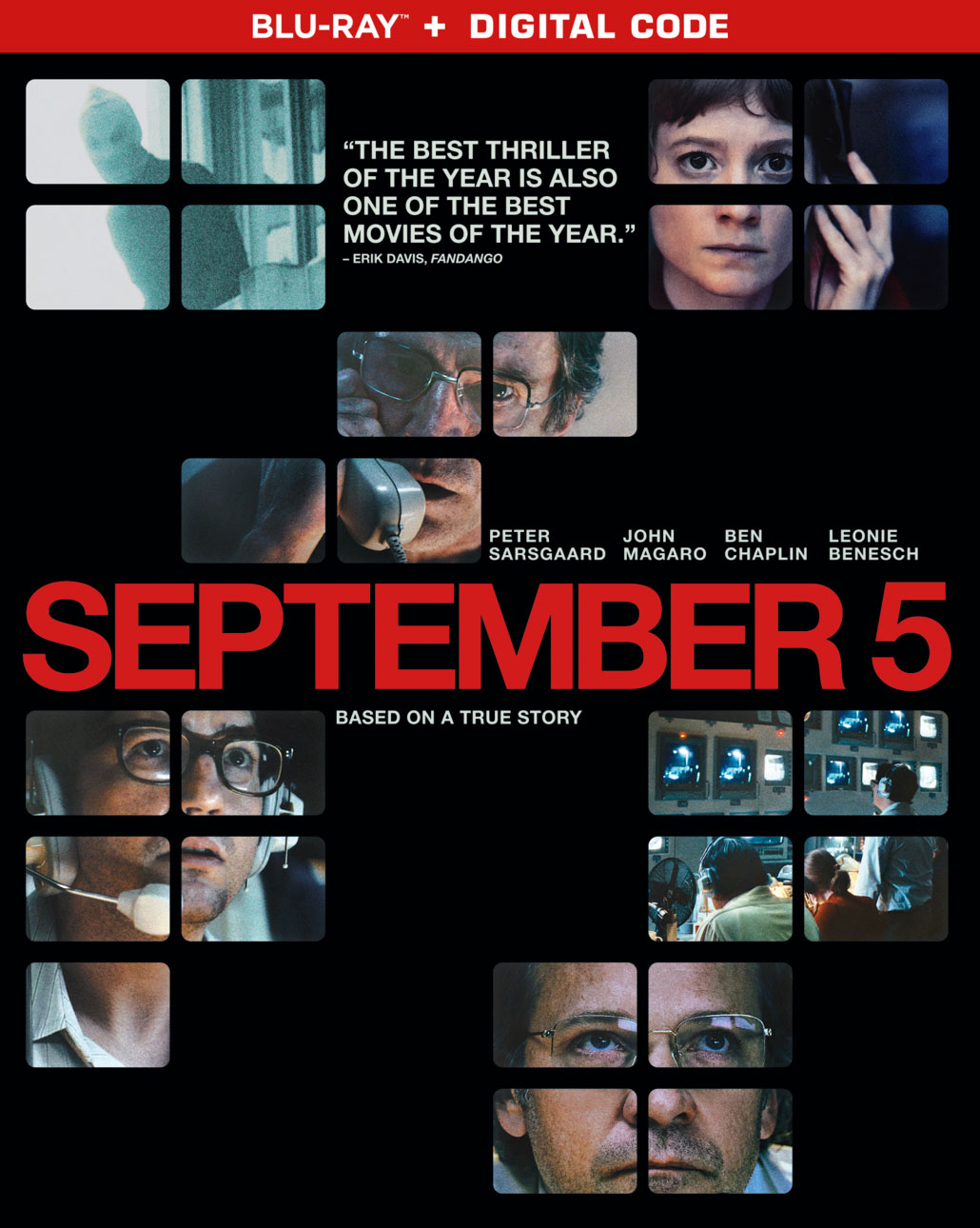
Plot: What’s it about?
Movies that are based on real-life events have always intrigued me. Certainly most of us know the tragedy that happened at the 1972 Munich Olympics in West Germany. Though it was literally before my time, the story has been told with great impact by Steven Spielberg in 2002’s Munich. It was nominated for 5 Academy Awards including Best Picture. What September 5 does is give is the same story, but from the perspective of the ABC TV Control Room. Think of it as The Bourne Legacy.
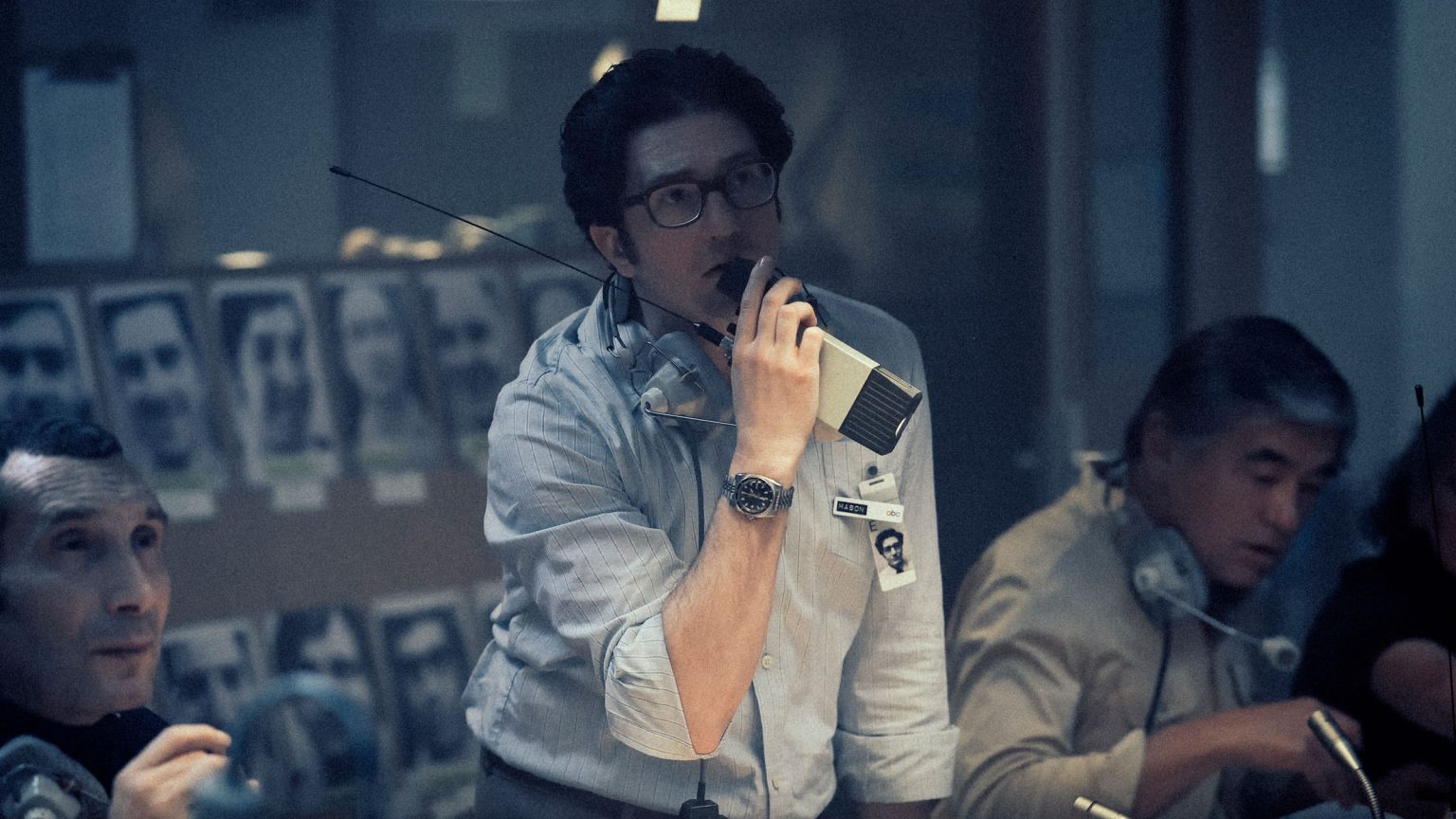
We meet the cast of characters on a seemingly normal day as Roone Arledge (Peter Sarsgaard) and his crew hear what sound like gunshots coming from the Olympic Village. When it becomes clear that a hostage situation is taking place, producer Geoffrey Mason (John Magaro) has the idea to use the cameras and take them outside to get a real-time vantage point of what’s going on. As the ordeal unfolds, Arledge has to contend with the higher-ups at ABC as well as lock horns with other networks for the coverage rights. The suspense generated in the film stems from how the crew assembles and approaches the deadly situation. A local crew member is recruited (Leonie Benesch) to serve as a translator. Though we all know what the outcome of the day was, this taut depiction of the events in the course of a day, give the movie its real impact.
There could have easily been another 20-30 minutes tacked onto the film, though I think that would make it lose its efficacy. Though the events take place over the course of the day, it’s how the film was shot that makes it play out in a close approximation of real-time. We see the quick thinking by the production team, we seamless transition to the reporters on screen. Truthfully, if you thought names like Peter Jennings and Jim Mckay were just names, they play an integral part in the film (as they did when the events unfolded). The film also uses real footage from the 1972 event which only adds to the genuine feeling. I’ll put this movie up against any other when it comes to tension. This is what makes the movie-watching experience so satisfying.
Video: How’s it look?
I’m always amazed at how different one movie can look compared to another. Films like Lawrence of Arabia can fill the screen with ultra wide shots that make the characters blend into the scenery. A film like September 5 gives us a nice wide, 2.39:1 AVC HD image, but the way in which the film is shot, gives it a very claustrophobic feeling. Most every scene has a few people crammed in the frame which only heightens the movie-watching experience. The setting is generally dark and dingy and having never been in the control room of a TV studio, I have to imagine that this is indicitive of what it’s like. Black levels are strong, as is contrast and though the outdoor shots are few and far between, I found the to look good as well. The way this film was shot certainly adds to its allure.
Audio: How’s it sound?
The Dolby TrueHD soundtrack doesn’t get a lot of opportunities to flex its muscle, but I found it a more naturalistic style of audio mix. By that I mean the voices we hear that are whispered in the reporters’ ears, some of the background gunfire and the subtle, ambient noise in the control room. Vocals are top notch as well and though they’re essentially non-existent, the surrounds do offer a bit of support in some of the key scenes. It’s, by no means, one that’ll blow the roof off the place but a nice, well-balanced mix that’s sure to please.
Supplements: What are the extras?
This disc contains no supplemental features.
The Bottom Line
Telling a story that most of us are familiar with might not seem like a novel approach, but telling it from a different perspective certainly is. I found September 5 to be one of the more gripping films I’ve seen in quite some time. Paramount’s disc looks and sounds the part, but the lack of extras on the disc are certainly disappointing and make this one a hard sell.