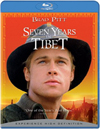
Plot: What’s it about?
Over the years, I’ve become more and more of a fan of Brad Pitt. While comparisons to Tom Cruise will almost certainly exist, I feel that Pitt’s roles have been a bit more daring and off the map. Pitt burst onto the Hollywood scene in 1991 with a small part in Ridley Scott’s excellent “Thelma & Louise” and the rest, as they say, is history. He followed up that role with a series of interesting and diverse parts in films like “Se7en”, “Interview with the Vampire” and “12 Monkeys” which landed him an Academy Award Nomination. It was nearly ten years ago that Pitt decided to take on the immense role as Austrian climber Heinrich Harrer. The simple fact of the matter is that the film wouldn’t have been made without Brad Pitt involved and though not a commercial success, it was one of Pitt’s most daring roles. Oddly enough, the next year Martin Scorsese would make “Kundun”, focusing on the same subject matter of the Dali Lama.
The year is 1939 and Europe is deeply involved in World War II. Austrian mountain climber Heinrich Harrer is set to go out on an expedition, leaving his pregnant wife to give birth without her husband present. As fate would have it, Germany has declared war on England and the crews of climbers are taken prisoners of war. Heinrich (Brad Pitt) misses his wife and son but circumstances keep him away from his loved ones. Eventually, he and friend Peter (David Thewlis) manage to escape from the camp and wander the countryside for a time. They land in the holy city of Lhasa, home of the Dali Lama where the two are welcomed by the citizens. Peter finds and marries a local tailor while Heinrich is noticed by the Dali Lama. The two form a unique bond as Heinrich tells the Dali Lama of the outside world, music and culture. However, the peace isn’t meant to last as this is also the time of the Chinese takeover of Tibet and the perils that come with war.
“Seven Years in Tibet” is a fairly good movie. I remember seeing it just as it came to home video about nine years ago and being somewhat impressed with it. I admire Brad Pitt for taking such a chance on an offbeat role so early in his career and I think it paid off for him. The downfall of the film is the first hour as we don’t really learn a lot. The film takes off when Heinrich and Peter enter Tibet and get immersed in their culture. The Dail Lama and the ways of Buddhism have always astounded me and I feel that the telling of the story from this point of view might have made this a better movie. Ironically enough, according to the Internet Movie Database, both Brad Pitt and David Thewlis have both been banned from China for life for making this movie. For those looking for Pitt in an atypical role, you might want to check this out.
Video: How does it look?
“Seven Years in Tibet” is shown in a pretty good-looking HD AVC transfer. This movie was also one of the few chosen for Columbia/Tristar’s “Superbit” line a few years back and as impressive as that looked, this Blu-ray version easily surpasses that. The movie has many sweeping landscape shots of the Himalayas and the countryside. Granted, some look a bit generic but to see them in High Definition really gives the viewer more of a feel for being there. Some of the close up shots were amazing. I can remember being able to see every pore on David Thewlis’ face. The lack of edge enhancement certainly helps and the detail breathes new life into the transfer. I did notice a few blips on the screen here and there but nothing to be worried about. For those that want to see this film as close to originally intended, this is certainly the way to go.
Audio: How does it sound?
An uncompressed PCM track is included, as it is on most Blu-ray releases by Sony, along with a standard Dolby Digital 5.1 track. There’s not a whole lot of difference between the two, but the uncompressed track is the way to go for sure. Dialogue is very clean and we can hear all the inconsistencies in Pitt’s Austrian accent with ease. The ambient surround effects aren’t too much but there are a few scenes when they really come into play – the scene when the Chinese attack comes to mind. Aside from that, it’s a pretty straight-forward track with little surprises. It sounds good, but not great but it’s not a fault of the mix in the least. Viewers should be satisfied with the way this sounds.
Supplements: What are the extras?
Unfortunately the only supplement is a preview of “Coming to Blu-ray” releases, some of which have already come and some we’re still waiting on.