Plot: What’s it about?
The Paris Opera House is home to some of the greatest voices and music in the world, a place where thousands of people retreat to be entertained. The operas hit all the right notes and the crowds never fail to be respectful, so it is a place of happiness and entertainment. But there is a darker force within the structure as well, one that remains hidden in the shadows. At least hidden from most eyes, but this dark presence, known as The Phantom (Gerard Butler) has become visible to a young chorus singer named Christine (Emmy Rossum), whom he tutors to improve her performances. At the same time, he terrorizes the other performers and demands that Christine be given lead roles. This spooks one of the top singers and causes her to leave, which allows Christine a chance to shine. But when her childhood sweetheart Raoul (Patrick Wilson) returns and the two fall in love, The Phantom is enraged and promises revenge. He then kidnaps Christine and plans to make her his bride, but only Raoul can stop his horrific plan now.
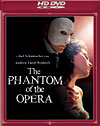
This story has been adapted more times than I can count, though each one seems to have a unique focus on elements and themes. Universal crafted tales that played up the horror angle, while others focused on romance, and of course, Andrew Lloyd Webber’s version, which embraced the music. Now The Phantom of the Opera is best known as a musical and after an epic run on stages worldwide, the story has once again been drafted for a motion picture. The reaction was mixed, but mostly positive with a lot of respected critics claiming it was even better than the stage production. I have said this before, but I am not that much of a musical fan, though in this case, even I had to see for myself. As expected, the production values are lavish from the detailed sets to the gorgeous costumes, so no expense was spared in that regard. The story is thin, as Webber’s take has always been thin, glossing over the depth within the original source. But as a musical with focus on music over plot, this is a solid production and fans of the musical should be satisfied. But for me, I’ll stick with the 1925 production with Lon Chaney. Warner has crafted a single disc with just the movie itself, as well as this double disc Special Edition, so make sure you rent or purchase the version you prefer.
Video: How does it look?
Ok…the wait is finally over. HD-DVD is here and the big question is this: how good does it look? The answer: very good. There are some issues that I’ll cover in an editorial I’m writing, but suffice it to say that if you’re looking for a great visual presentation, there’s nothing better than HD-DVD. “Phantom of the Opera†is shown in a very wide 2.40:1 anamorphic transfer. With HD-DVD we lose any edge enhancement that might surface on a standard DVD. Colors are bright and any errors that might present themselves will be evident. I saw no such errors here. I did a comparison with the 2 Disc Special Edition and though that transfer was spectacular, this one improves a bit where that one suffered. There are little things that differentiate a HD-DVD from a regular DVD and for the most part, it’s in the details. The pores in the actors’ faces, the background is clear, being able to read small text in the scene and so on. There isn’t a “night and day†difference between this DVD and its standard counterpart, so if you’re expecting that – you’ll be disappointed. That said, this looks amazing. It sounds like a cliché, but if all movies looked this good on HD-DVD – it would be like seeing them for the first time. A comparison to a standard DVD isn’t really possible. After all, in our review for the 2 Disc set we gave this a “5†then, but as far as HD-DVD is concerned, it’s hard to assign a review for a the simple fact that we don’t have much to compare it to.
Audio: How does it sound?
There seems to be a problem with the audio on a few of these inaugural HD-DVD titles. First of all, the tracks default to DTS when there isn’t a DTS mix on the disc. Secondly, the audio is very low and I had to crank up the volume on my receiver just to hear everything adequately. Compare this with the standard DVD, which featured a very rich Dolby 5.1 soundtrack. While I’m sure these errors will be corrected in the future, this isn’t limited to this particular title. “The Last Samurai†also has this problem and I’m curious to see if “Million Dollar Baby†will as well. It’s hard to give an adequate review on the audio portion here when there is clearly something wrong with the audio and how it’s processed on HD-DVD.
Supplements: What are the extras?
The supplements are the same as the “standard” DVD, so we’re getting the same thing as the lower-resolution counterpart. In Behind the Mask, we’re taken on an hour long journey through the history of The Phantom of the Opera in the world of entertainment. The original silent version to this new musical production, the entire movie life of this story is explored. Not just the movies either, but the novel is discussed and the stage productions are also given some screen time here. All in all, a solid look at how the material has evolved and been adapated in many different ways over the years. A second piece focuses on this production, with about forty-five minutes of behind the scenes material. The entire process is covered, with emphasis on the casting process, the production design work, and the soundtrack album. Not an in depth look, but a brisk one that allows a decent amount of insight. This release also includes an additional scene, as well as the film’s theatrical trailer and a “singalong”.