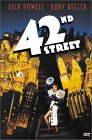
Plot: What’s it about?
Julian Marsh (Warner Baxter) knows how to make a successful musical and he has done so many times before, but this newest production could prove to be his last. Marsh is in very poor condition in terms of his personal health, but he chooses to push ahead with the show and leave his health problems in the background. This musical production is being funded by an old man and though that seems like a nice gesture, it is more of a bribe attempt that anything else. The man has plenty of money as it is and only funds the production in an effort to win over Dorothy Brock (Bebe Daniels), the gifted performer who stars as the lead. But his monetary charms don’t seem to work on her, as she still harbors feelings for her past partner and not the rich old man. So the show rolls on ahead and seems to be looking good, despite Marsh’s problems and some other conflicts that arise. But then shortly before the opening night’s show, Brock has an accident and is forced to remove herself from the production. Can Marsh pull a rabbit out of his hat and find a replacement in time, or will his final show turn out to be a total disaster?
I am not the world’s biggest musical fan by any means, but I do like more than a few of them, especially the older ones. I had seen 42nd Street a few times before this review so I knew I liked it, but I have to say that this film gets better each time I sit down to watch it. A great many of the musicals made around this time were overly innocent and clean cut, which is just too much of one thing for me. A few of them are good, but most of them come as second rate rehashes at best. 42nd Streets bypasses that style and chooses a more risque (for the time) approach, with excellent results. This film has a realistic tone to it and though the antics can be humorous at times, there’s still a rather serious undercurrent involved. This is what makes the film work so well for me, instead of the overly happy for no good reason style, we have a rather desperate set of circumstances, which enhances the whole film in my opinion. This is still a lot of fun to watch and the musical numbers are spectacular, but the storyline is not as optimistic at most of those at this time. If you’re a musical fan or just want a good movie to check out, then 42nd Street is a more than worthy choice.
As with most musicals, 42nd Street features an ensemble cast and though this one is very gifted, a few performers shine a little brighter than the rest. The finest turn is handed in by Warner Baxter, who plays Julian March to sheer perfection and I don’t think anyone could have done this role this well. A rather complex role, the character of Marsh demands both internal and external work, both of which Baxter handles with few problems. He is able to bring out the internal doubts and conflicts of the character, while keeping his strength and hope visible as well, not an easy task if you ask me. Baxter is able to show much optimism within the role, which helps to relieve some of the pressure the musical show has on his character. Other films which feature Baxter include The Cisco Kid, Man About Town, Daddy Long Legs, West Of Zanzibar, and Miss Brewster’s Millions. I also loved the performances of Bebe Daniels (The Palm Beach Girl, The Maltese Falcon) and Ruby Keeler (Sweetheart Of The Campus, Colleen), both of whom shine within their roles here. The cast also includes George Brent (The Spiral Staircase), Una Merkel (The Bank Dick), Ginger Rogers (The Gay Divorcee), and Dick Powell (Naughty But Nice).
Video: How does it look?
42nd Street is presented in a full frame transfer, which preserves the film’s original aspect ratio. I was pleased to find minimal grain and debris present on the source print, which is impressive for an older film like this one. I saw a few instances of moire patterns and such, but nothing to be that concerned with in the end. The image is clean and sharp, one of the better black & white transfers I’ve seen from this time period. The contrast is accurate and well balanced, which means high detail level and no murkiness in the least. Warner is known for good transfers and this one proves to be no exception.
Audio: How does it sound?
This is a musical, but the audio focuses mostly on the dialogue until the big night. So the included original mono track gets the job done, though it doesn’t do the musical numbers justice. The vocals emerge in crisp and distinct fashion, no volume errors and separation troubles arise at all. When the musical edge takes over, the music and vocals sound good, but lack the range I’d like to have heard. Still, this is mono and as such, you can’t expect that much in the first place. This disc also includes English & French subtitles.
Supplements: What are the extras?
This disc includes production notes, talent files, the film’s theatrical trailer and a trio of featurettes. These three run from nine to ten minutes in length and though not specific to this film, I was pleased they’ve been included on this disc.