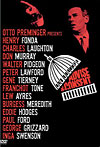
Plot: What’s it about?
Robert Leffingwell (Henry Fonda) has just been offered a position of immense power and respect, as he could be the next Secretary of State. The office is crucial to the government of the United States and his name was nominated by the President (Franchot Tone) himself. This seems like the chance of a lifetime, a chance to make a difference and make the world a little better, but there is a darker side. In order to take the position, he must be approved by a subcommittee in the Senate, not a simple process. The investigation is intense and covers Leffingwell’s entire life, including less than flattering ones. When a connection to Communism is found, the nominee defends himself and to most, proves his innocence. But doubts linger with some, especially when blackmail threats begin to surface. Is Leffingwell the right man to be Secretary of State and if not, what will become of those who refuse to approve him?
If you’re a fan of political cinema, as is movies centered on politics and you’ve never seen Advise & Consent, you’re in for a treat. The movie remains low profile and rarely seen, despite stars including Henry Fonda, Charles Laughton, Walter Pidgeon, and Burgess Meredith, not to mention Otto Preminger’s direction. With all that talent, you’d think the film would be well known, but it isn’t. I’ve seen countless political dramas and while Advise & Consent isn’t the best, it is a well crafted picture in most respects. A few casting decisions were poorly made and that brings down the film at times, but for the most part the cast is great. Laughton is superb in his final screen performance, in a turn aspiring actors should study at length. The most common knock on Advise & Consent is the conclusion, which is understandable. The final minutes do seem out of place and do lessen the movie somewhat, but the rest of the movie is worthwhile. I recommend this movie to all those who love political dramas, though a rental should suffice in most cases.
Video: How does it look?
Advise & Consent is presented in 2.35:1 anamorphic widescreen. I wasn’t sure what to expect here, but Warner has pulled out all the stops and given us a superb visual treatment. The print is not pristine, but it has minor defects at worst, which is impressive. A light amount of grain is present and debris can be seen at times, but on the whole, the print looks incredible. The image is never soft, so detail is excellent and the visuals have a good depth level. This does not look like a film made in 1962, as it is much crisper and cleaner than most movies from this period. I saw no problems with contrast, as black levels were stark and consistent, just as we’d want. All in all, a fantastic visual effort for an older picture, so kudos to Warner.
Audio: How does it sound?
A good, clean mono option is on deck here and while it won’t bring the house down, I had no complaints to lodge in this case. Although the film is over four decades old, the audio sounds acceptable and even excellent at times, one of the better original mono mixes I’ve heard from this period, no doubt about it. I noticed no hiss present, even when I turned the volume up beyond normal levels, while distortion and other age related defects are also absent. This means we’re given a sharp, very clean & clear overall audio track, in which the music, sound effects, and dialogue all come through in superb form. This disc also includes subtitles in English, Spanish, and French, should you need those.
Supplements: What are the extras?
An audio commentary with film historian Drew Casper is passable, but comes off as overly scholastic, as if he was just paid to research the movie and its contributers, When a commentator has passion for a film or those who made it, the session can be quite memorable, which is not the case here. Casper is well researched though, so he provides plenty of tidbits on the cast and crew. But he just doesn’t have the spark like he cares, which really lessens the track’s impact. This disc also includes the film’s theatrical trailer.