Plot: What’s it about?
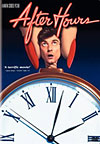
“After Hours” is one of those little gems that a well-known director has made, though for some reason or another, it never really gained “mainstream” status. My first encounter with the movie was, believe it or not, on cable when I was randomly channel surfing one night. I started watching it and really got hooked. How could all of these things happen to this one guy in one night? This came out just before another of my favotire Scorcese movies, “The Color of Money” and a a few years after one of his bigger flops, “The King of Comedy”. Can we credit “After Hours” with the return of Martin Scorsese? He really hasn’t made a bad movie since then and perhaps it’s a quirky little film like this that did put him back on the map (though he already had “Mean Streets”, “Raging Bull” and “Taxi Driver” under his belt). The movie is filled with an ensemble cast, much reminding me of a Quentin Tarentino movie (and I’d bet that he certainly gained some influence by this as well). Proving that you don’t need fancy effects, big budgets or “A” list actors, “After Hours” shows that, above all, a good script and the right actors are usually all it takes.
In this black comedy, we meet Paul Hackett (Griffin Dunne), a word processor who seems to think that his life is just passing him by. He’s not really interested in his job, though it does suit him. It seems that work is just something to pass the time between his nights. At a diner, he’s reading “Tropic of Capricorn” when a good-looking woman strikes up a conversation with him. He gets her number and, later that night, decides to take a chance and call her. She invites him down to her SoHo apartment and his adventures are only about to begin. Meeting her roommate, Kiki (Linda Fiorentino), is an experience. She’s into some interesting sculptures. After that, he bumps into a waitress with a rather interesting hairstyle (Teri Garr), then a seemingly normal bartender (John Heard) and finally Gail (Catherine O’Hara). He constantly runs into Neil and Pepe (Cheech Marin and Tommy Chong, better known as “Cheech & Chong”), thieves who are rather particular as to what they steal. As his dizzying night continues a downward spiral, he meets Mark (Robert Plunkett) and June (Verna Bloom, better known as the Dean’s wife in “Animal House”). And there’s a moment when he looks up at the sky, grabs his head and thinks “What the hell is happening?” And that’s what we’re supposed to think.
“After Hours” is more like a series of people and events, and it’s actually rather hard to put into words. It’s considered a comedy, much in the way “Heathers” is considered a comedy. There’s murder, sex, drugs – everything that was present in 1985 (and today). It’s really hard not to laugh when watching Paul fumble about, but it’s more of a mouth half open laugh coupled with a disconcerting nod. On a stranger note, this film is more of homage to the 1939 classic “The Wizard of Oz”. There are some pretty evident parallels like money blowing in the wind, certain characters that are reminiscent of the lion, the tin man and perhaps even Paul as Dorothy. Odd? Yes. But then again this isn’t something to be watched merely on the surface. I really can’t find anything bad to say about the movie, it’s not perfect and it does seem to be very dated watching it now, but some of the better films are dated. It’s got a great cast and that special style or “flare” from Martin Scorsese not only makes it one of his better movies, but certainly one of his most interesting. While dark, it’s funny and entertaining and a rather nice change of pace from some of his more dark works (which, in their own right, are amazing too). Highly recommended.
Video: How does it look?
“After Hours” comes in a very good-looking 1.85:1 anamorphic image. First off, this isn’t the best picture out there, but for a movie that’s been shown in full-frame on home video, this looks pretty darn good. Kudos to Warner for showing this how it was meant to be seen. This has a very film like look to it, edge enhancement and artifacting seem to not be an issue and while the flesh tones seem a bit on the reddish side, it’s a minor flaw that could and should be overlooked. I was taken with the level of detail and delineation, too. While this looks great it does appear to have a bit of dirt on the print in a few scenes, thus adding to the whole “dated look” thing. Still, I was impressed and viewers should be too.
Audio: How does it sound?
This includes the original mono track and, for the most part, it sounds pretty good. This was never much a movie for superb sound, as many of the scenes are dialogue-heavy. Since only one channel is used (presumably of your five), there’s no surround to speak of. Some scenes do sound a bit dry and though dialogue is reasonably clean, I found it to be a bit worse than some movies even older than this. While it’s not horrible, it’s certainly not up to the standard that the video has set. Quite frankly, it serves its purpose and not much more. Don’t prepare to be blown away, because you won’t be.
Supplements: What are the extras?
“After Hours” doesn’t come to fully loaded, but it does include a director and crew commentary for most of the movie. Their respective comments are compiled for the screen-specific commentary and though we’re lacking some 20 minutes of “nothing”, it’s still fairly informative. Eight minutes of deleted scenes are also shown as is the theatrical trailer. Additionally, a featurette entitled “Filming for Your Life: Making After Hours”. This says the same thing as the commentary, essentially, though we learn some more about the production (Tim Burton was originally supposed to direct). It runs twenty minutes in length and makes a great addition to what is already a great little disc.