Plot: What’s it about?
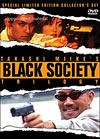
Takashi Miike has become a hurricane in the realm of cult cinema, the director of films that shock even veteran genre fans. His movies don’t just push the boundaries, they lay down dynamite and blow the limits to pieces. The films have outlandish sequences, tons of blood, graphic sex, intense violence, and just out of this world concepts, the kind of stuff you’d never, ever see from an American studio. As insane as Miike’s films can be, not all of his efforts are shockfests, as we can learn from his Black Society Trilogy. Don’t be fooled, as these still contain some of his usual elements, but not in lethal doses. You’ll still see violence and the like, but these are not on the same plane of madness as his better known pictures. These three films are based in the criminal world of the yakuza, which ensures violence and gunplay are present. I found all three to be worthwhile movies, but again, don’t expect Ichi the Killer here. ArtsMagic has compiled all three films in the series in one neat collection, or you can purchase separate releases. I have included a brief synopsis for each of the films below.
1. Shinjuku Triad Society- Tokyo’s Shinjuku district is the city’s epicenter for crime, violence, and overall bad elements. The area has fallen into such disorder that organized crime controls most of the district, though the different factions often battle. The main conflict arises between local yakuza mobsters and Chinese triad agents, who battle for local dominance. The war isn’t just over power however, as much blood is spilled over social and ethnic clashes, as the yakuza despise the foreign triad forces. Tatsuhito is a detective who works in the Shinjuku district, a once decent man who has been turned cold by his profession. When he goes after a Taiwanese mobster who is represented by Tatsuhito’s own brother, new inner conflicts surface. Can he protect his brother and even if so, will his actions be enough to save him?
2. Rainy Dog- Yuji (Sho Aikawa) used to be a yakuza lieutenant in a powerful crime syndicate, but those days have passed. Now he lives in Taipei and his lifestyle is less that plush, as he lives a lonely and depressed existence. The rain never stops and that seems to fit his mood, or at least dampen his spirits even more. But then a former lover arrives and informs him that not only does he have a son, but he is now to care for his child. At first, he is reluctant to take on the task, but he soon warms a little and takes in his son. Then a chance comes to make some serious money, if he returns to his criminal roots and performs a brutal hit. The task sets off a chain of events that introduces new people into Yuji’s life, including a police officer and a prostitute. Will Yuji be able to make a new, better life for himself, or will he fall into his old ways?
3. Ley Lines- Ryuichi and his friends have no real futures, at least not in the same sense as normal people. No, these three troubled youths seem poised to either face an early demise, fall into the drug scene, or be recruited into organized crime. The trio does smoke weed, but their path seems to lean more toward the criminal lifestyle. The boys have stolen before, but have escalated their actions of late, perhaps a little too much. So they head off to Tokyo, where they wind up as drug pushers with a product aimed at a younger user base. They soon meet up with a prostitute and make plans to roll her pimp, then jet with the cash. But can the group hold together to execute the plan, or will they fall apart before they have the chance?
Video: How does it look?
All three films are presented in 1.85:1 anamorphic widescreen. The images here look like lower budget video productions, which means some flaws do surface, but all in all, I found the transfers to be solid and acceptable. The prints have a lot of grain and looks quite dark, but that is part of the visual design by Miike. The colors are decent, but show some flaws, while contrast provides stable, though harsh black levels throughout. I did see some light edge enhancement and some shimmering, but even so, these movies look fine in these releases. I do think ArtsMagic has done solid work here, given the elements involved. The raw, rough visuals are just as Miike intended, which is all we can ask.
Audio: How does it sound?
The audio is rather basic, but the essentials seem well covered and I couldn’t find much to complain about. You won’t be too dazzled by these soundtracks, but they’re serviceable and with these flicks, that’s good enough. The gunshots and various other effects don’t have much punch, but the audio is passable. A full surround option might have enhanced the atmosphere and action scenes, but not all that much. As not everyone speaks Japanese, you can choose to turn on English subtitles, though they’re optional, not forced.
Supplements: What are the extras?
Tom Mes, who wrote a book on Miike’s films, provides audio commentary tracks on all three pictures. His sessions are informative, but as expected, some information is repeated over the course of the movies. Still, I am pleased to have these included, though I hope someone else is used on future Miike releases. This disc also includes interviews with Miike and editor Yashushi Shimamura, talent tiles, and theatrical trailers for three motion pictures.