Plot: What’s it about?
Although this is a two part production, I will only provide a synopsis for the first half, so as not to reveal too much about the second half. Siegfried (Paul Richter) seeks to find his bride and he has a woman in mind, a most beautiful and attractive potential bride indeed. Her name is Kriemhild (Margarete Schon) and she is the sister of Gunther (Theodor Loos), who happens to be the King of Worms. So Siegfried ventures to Worms to ask for Gunther’s sister’s hand in wedlock, but the journey isn’t as smooth as planned. On his way to Worms, he encounters a vicious dragon and has no choice but to engage in battle with the beast. The fight is an intense one, but Siegfried manages to slay the dragon and the result is a bloody scene. He bathes in the blood however, which provides him with enhanced protection from attackers. When he does arrive in Worms, he is given court with King Gunther and asks for his sister’s hand. Gunther grants permission for such a marriage to take place, but before it can happen, Siegfried must win a bride for Gunther as well. This seems to be a fair request, but the road to Kriemhild’s heart will not be a simple one. When the search for Gunther’s bride begins to lead him toward darker paths, can Siegfried remain ahead of the game, or will he fall victim to his opposers?
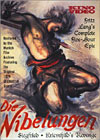
If you’re a serious film buff, then stop reading this review and run out to purchase Kino’s release of Fritz Lang’s Die Nibelungen. No need to browse my other comments, as this movie is spectacular and Kino’s treatment is superb in all respects. This version is over one hundred minutes longer than any previous edition released in America, which means Lang’s epic is restored to its full five hour duration. Die Nibelungen is a two part presentation, the first titled Siegfried and the second is called Kriemhild’s Revenge. The films were released in 1924, which means cinema was still fairly new and special effects were still a work in progress. But you wouldn’t know from Die Nibelungen’s special effects and visuals, as it boasts some impressive moments and has out of the world production values. The battle with the dragon alone is worth the price of admission, not to mention the countless beautiful sets and memorable visuals. A fantasy film needs beasts, heroes, epic battles, big set pieces, and scenes of high adventure, all elements found in ample doses in Die Nibelungen. I found both volumes to be exciting, well crafted fantasy in all aspects. The special effects provide numerous highlights, but the storyline and other production elements are also top notch, so this isn’t just one to watch for the visuals. I give Die Nibelungen my highest recommendation, with the same regard to Kino’s superb two disc presentation.
Video: How does it look?
Die Nibelungen is presented in full frame, as intended. As this was released in 1924, we can’t expect a pristine, flawless presentation. After all, time takes an immense toll on film elements, so when the materials have this much age involved, you have to adjust your expectations. But Kino is often able to produce superb visual treatments, even on projects as old as this one, so I had high hopes for this release. As it turns out, Kino was up to the task and we have a clean, refined presentation of this epic silent production. The elements have signs of age, but that is to be expected and in truth, most of the defects are minor and never prove to be a distraction. A few more serious flaws do surface, but these are infrequent and on the whole, Kino has rounded up some excellent source materials. I found contrast to be smooth and consistent, much better than anticipated and in the end, this is a terrific visual effort from Kino.
Audio: How does it sound?
These are both silent productions, so the audio isn’t given much to do and as such, don’t expect a dynamic experience. But there is a musical score of course, which sounds solid here and provides a good background for the visuals. The original 1924 score is used in this release, which is performed by the Munich Radio Orchestra. The music comes across quite well, with no serious flaws to mention. It won’t dazzle your ears or put your surround sound to work, but all in all, we couldn’t ask for much more in this case.
Supplements: What are the extras?
This release includes a special look at the dragon slaying sequence, some rare production photos, a selection of footage of director Fritz Lang on the set, and a collection of production design and special effects sketches.