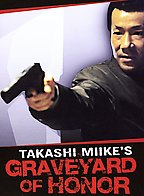
Plot: What’s it about?
In life, sometimes the smallest details can make all the difference in the world. Rikuo Ishimatsu (Goro Kishitani) works as a simple dishwasher, but a quick turns of events lands him in a position of power with the yakuza. Unknown to him, he saves the life of a yakuza Godfather and because of his actions, he is taken in and given a high ranking post. He is by no means a criminal, but he does have a short temper and violent tendencies. Over time, he proves to be even more volatile than the mobsters around him, with bursts of violent rage and unpredictable behavior. A stretch in prison lands him a devoted right hand man and upon release, even those he has wronged seem to be loyal to him. But when he allows his anger to rule his mind and he declares war on a rival clan, the blood begins to flow like wine. As Rikuo descends into a spiral of rage, violence, and heroin, will he ever snap out of the haze or will he be consumed by his personal demons instead?
If you’re even a casual fan of yakuza cinema, then you’ve seen Kinji Fukasaku’s Graveyard of Honor, considered to be one of the definitive genre pictures. In other words, a remake of such a film didn’t seem like likely, but Takashi Miike decided to revisit the concept and put his own spin on the material. The two films do share some common threads of course, but Miike opts to take a more laid back approach, which might shock some. He still lays in the violence of course, but compared to Fukasaku’s original, this film seems slower and more deliberate. I prefer Fukasaku’s frenzied take, but Miike has crafted a solid version, one that pays tribute to the original, but also stands on its own. I do think it runs overly long and could use a boost at times, but still, for yakuza fans, Miike’s Graveyard of Honor is worth a look.
Video: How does it look?
Graveyard of Honor is presented in 1.85:1 anamorphic widescreen. This is a great transfer, a crisp and clean presentation that never hinders the visuals. The visuals look natural and suffer from no serious problems, with sharp detail in most scenes. I found colors to be bright, but within natural scope, while contrast performs well throughout. I’ve seen a few different releases from around the world and hands down, this is the best looking version you’ll find.
Audio: How does it sound?
The original Japanese soundtrack is preserved here, but don’t expect wonders from the audio here. The dialogue is well placed and never hard to understand, while the music & sound effects are also well presented. A few scenes do spice up the sound a little, with gunshots and what not, but even then, this isn’t a dynamic presentation. You won’t be dazzled here, but the material is covered and that’s what counts. This disc also includes English subtitles.
Supplements: What are the extras?
A total of five featurettes are included, with interviews and footage from the premiere. None prove to be that substantial, but they’re worth a look and its cool to have supplements of any kind in this case. AnimEigo has even subtitled these extras, which is quite cool and most appreciated. This disc also includes some still photos, as well as the film’s theatrical trailer.