Plot: What’s it about?
Hannibal Lecter (Gaspard Ulliel) is haunted by the memories of his childhood, dark images from a dark time of his life. As World War II unfolded around his homeland, Hannibal and his family were forced into hiding, to avoid the German invaders. After a battle took place right in front of the small house they were hiding in, all of Hannibal’s family was killed, except for his sister Mischa and himself. The children tried to hide and wait for some kind of help, but they were soon discovered by a band of mercenaries, led by the brutal Grutas (Rhys Ifans). A snowstorm soon blows in and with no food, the mercenaries decide to kill Mischa, using her flesh to keep them alive. Hannibal would escape with his life, but he is now driven by vengeance, to find and kill those mercenaries. But can he manage to do so and if so, will it bring the closure he seeks?
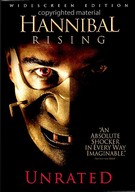
The trend used to be countless sequels, but these days, filmmakers seem to be obsessed with prequels. Not to be left out, we now have a “before they were stars” look at Hannibal Lecter, titled of course, Hannibal Rising. I loved The Silence of the Lambs, which I consider one of the best movies ever. I even found some enjoyment in Hannibal and Red Dragon, but without Anthony Hopkins, I had my doubts about this latest excursion. In the end, this is just not up to the level it needs to be, even with lowered expectations for a prequel or sequel. I hated how Lecter’s journey was portrayed here and instead of giving us a glimpse into a heart of darkness, we’re shown a weak, watered down version of one of cinema’s most intense characters. I have to wonder what writer Thomas Harris had in mind here, as this really weakens his creation. The film has bright spots, such as lush visuals and Rhys Ifans’ dynamic performance, but this isn’t a worthy installment in the Lecter franchise. I do think it is worth a one time look however, so if you’re interested, give Hannibal Rising a rental.
Video: How does it look?
Hannibal Rising is presented in 2.35:1 anamorphic widescreen. The image looks excellent, crisp and sharp, one of the best overall transfers I’ve seen. Since the film was brought to home video shortly after it left theaters, the print is pristine, with few mars or nicks. As I talked about above, the movie has some great visuals, such as the lush period production design. As such, I expected the disc to ensure the visuals looked impressive and this transfer lives up to that.
Audio: How does it sound?
The audio here has some moments of spark, but most of the time, this Dolby Digital 5.1 track remains rather dormant. The war sequences and a few of the more frenetic moments allow the surrounds to open up, but on the whole, this film has no need for powerful audio and by turn, you can’t fault this track for that. The music sounds good however, while dialogue is clean and always in proper balance, so no vocals are lost here. This is not a memorable audio experience, but the material is well covered and as such, I see no reason for complaints. This disc also includes subtitles in English and Spanish.
Supplements: What are the extras?
If you want to hear how much director Peter Webber and producer Martha De Laurentis love this movie, then listen to their audio commentary track. The two shower compliments on everyone involved, as if they’d created the next Citizen Kane. In a sad way, it makes for one hilarious session, but it is quite shameful at the same time. This disc also includes some deleted scenes, two brief featurettes. and the film’s teaser and theatrical trailers.