Plot: What’s it about?
With any well-rounded family film, it’s almost always a good idea to tell a story about sports — they’re a hobby and a pastime we’re all familiar with, and the challenge they often pose can easily be made into a solid story about a determined struggle to overcome great odds. The only problem is trying to make them unpredictable, because everyone expects the typical championship finale. Paramount’s Hardball does have the look and feel of a predictable Disney-style film, but director Brian Robbins (Varsity Blues) has actually created a heartwarming, likeable baseball movie that sets itself apart from similar family films by sidestepping the “big game” mentality.
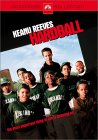
Director Robbins’s opening title sequence lasts about ten minutes, as it overlaps the introduction of Conor O’Neill (Keanu Reeves). Not surprisingly, we discover he’s an aimless, young drunk with an addiction to gambling — not the best pair of vices for one man. He subsequently gets himself deep in debt, and turns to a successful businessman of a friend to loan him a large sum of money. Instead, the friend offers to pay Conor $500 a week if he helps coach a Little League team in the Cabrini Green housing project in the slums of Chicago. Conor reluctantly accepts but soon discovers there’s something special about the kids he’s coaching and begins turning his life around.
Robbins’s seemingly quick introduction gets the movie going right away and doesn’t give the audience time to lose interest. And even though the script reeks of a Mighty Ducks-inspired plotline, he handles the script well throughout — there’s enough material there and in Robbins’s technique that makes Hardball worthy of its own place on the shelf of family sports films. The characters, especially those on the Kekambas (Conor’s Little League team), are lively and humorous enough to allow us to forget any similarities it has with additional films like Remember the Titans and The Bad News Bears.
That’s exactly what needs to happen with Hardball, because it’s quite obvious that the main character who starts off as a complete lowlife will become a better person while turning the ragtag team he coaches into better competitors. Keanu Reeves has received a lot of critical bashing throughout his career (deservedly much of the time), but his growing maturity as an actor is quite apparent in Hardball. Opposite him, Diane Lane (The Perfect Storm) plays the pretty Elizabeth Wilkes to complete the sports drama formula as Conor’s love interest. Her character, along with Conor and the eleven kids on the Kekambas, are all well-established and likeable — another vital element in a drama in order to get the audience more involved in what’s going on.
But most importantly, Hardball plays some dramatic hardball of its own and distances itself from generic sports films — the story pulls an unexpected emotional twist in the third act. Although many movies follow the pattern of a dramatic negative turn towards the end of the movie and round out with a cheerful finale, this film starts its change for the better much earlier. It gets the audience thinking the whole movie will end on a highly positive note, and though it still does, it’s not what the average viewer will expect. And thus director Robbins succeeds in making his movie less predictable.
Tricking audiences like this is the best way to have them leaving the multiplexes with a smile on their face, or maybe even a tear on their cheek. Like most family films, Hardball carries a strong message, but its ability to be different and entertaining is what drives the point home.
Video: How does it look?
Presented in a 1.85:1 anamorphic ratio, Hardball looks great. As can be expected from a day and date release, Hardball doesn’t suffer from any aging or artifacting. There are some errors, but on the whole the transfer looks very crisp and clean. The black levels are right on target and I saw no evidence of "jaggies" or anything else that would deter from the image quality. No edge enhancement is present either. While the lack of errors doesn’t always make a "perfect" transfer, this is as close to perfect as you can come without being such.
Audio: How does it sound?
A standard Dolby Digital 5.1 track is used here and to great effect in some scenes. Mark Isham’s score does radiate throughout the speakers from time to time, but for a non-contact sport like baseball, you won’t get that "thump" that is so effective in football movies. Still, there is no problem with the sound, it serves it’s purpose here. Surrounds are used very sparingly, as this is not a movie made for sound, you shouldn’t expect much. Dialogue is very clean and crisp. A good soundtrack that gets the job done without any surprises…
Supplements: What are the extras?
A special edition from Paramount, Hardball has it’s share of extras but has a long way to catch up with Infinifilm releases! The screen-specific audio commentary is the most robust feature, with Director Brian Robbins and Writer John Gatins on the track; the two are proud of their efforts here and have some interesting observations to offer about the movie. It’s not the greatest track, but if you’re interested in the movie you’ll find this entertaining. Next up is a 12 minute featurette entitled "The Making of Hardball". This is pretty self-explanatory, essentially it’s like so many other featurettes that we see on DVD’s. It has interviews with the kids, the rest of the cast and the director and a voiced-over narration that essentially gives away the entire plot. Watch this after the movie! A trio of deleted scenes are included, "Duffy’s Town", "The Funeral Parlor" and "Talking to the Kids" can be played individually or all three together. They run around 4 minutes, are presented in non-anamorphic widescreen and do not have the director’s comments to accompany them. A music video is also included of the song "Hardball" by Lil’ Bow Wow, Lil’ Wayne and Lil’ Zane and Sammy. Rounding out the features is a theatrical trailer and some Interstitials. I had to admit, I had no idea what Interstitials were. It turns out it’s three short commercial spots of the kids from the movie saying what they’ll be like when they become professional baseball players. Interesting, but I’ll still have to look up the word "Interstitials" to see what it means!