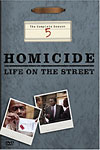
Plot: What’s it about?
The homicide division of Baltimore’s police force has an uphill battle, as the detectives try to keep pace with the city’s murders. That is no simple task, as the streets seem to produce new cases at a rapid pace, while manpower is overwhelmed with the current ones. A board is placed in the squad’s room, which bears the names of the cases being followed, including those have been left behind at the time. Those cases have turned cold, without enough evidence, clues, or leads to continue the investigations. Whenever a case is solved, the board is spared a name, but that isn’t always a frequent occurrence. But even when times are at their darkest, the men and women of the division push onward. In this fifth season, the detectives face the same challenges as ever, as new cases pile up and old ones seem to gather dust. But they take to the streets, interview witnesses, and collect what evidence is available, then use their keen wits to put the pieces together, though that doesn’t always solve the case. As if the duties of a police detective weren’t enough, they have to deal with their own personal issues and that includes clashes within the office, which only serve to make the job even tougher.
The television airwaves are often overrun by shows about law enforcement, with the genre second only to sitcoms in sheer volume. The scope of potential is wide, with some focused on street cops, others on detectives, while some follow an entire precinct. NYPD Blue, The Shield, Brooklyn South, Law & Order, and CSI, just to name a few, have all found some manner of success, but these are just some of the ones that worked. So imagine all the failed attempts, such as the ill fated Cop Rock and the lame 21 Jump Street. Perhaps the best of the lot is Homicide: Life on the Street, a series produced by Barry Levinson and Tom Fontana. Homicide is a dark, realistic look at the work of one Baltimore office of detectives, who work to solve the cases, but also work to keep their lives in some kind of order. The balance of professional to personal isn’t as even as shows like NYPD Blue, but you will learn a lot about these detectives. That is quite a feat, given the numerous cast members that garner substantial screen time. You’ll see Yaphet Katto, Andre Braugher, Richard Belzer, and Reed Diamond, plus countless others. The tone is bleak, but has moments of hope, which is what drives Homicide: Life on the Street. This six disc collection includes all of Season 5’s episodes, plus a few supplements. I give Homicide: Life on the Street a high recommendation, so these season sets from A&E are well worth a look.
Video: How does it look?
The episodes are presented in full frame, as intended. This series was shot with on 16MM with handheld cameras, so the visuals aren’t refined. The approach yields a visual style that works for the material however, an almost documentary texture. The prints do show grain, but that is expected in this case. I did see some softness also, but detail remains high in most scenes and for 16MM, the elements look quite good. I found contrast to be well handled, with stark black levels that provide adequate detail level throughout. No real problems with colors either, though the material has no need for vibrant hues. So we have bright, but natural colors and flesh tones are spot on at all times as well. I think these episodes look as good, if not better than you’d see on television, which is about all we can ask.
Audio: How does it sound?
The audio here is basic, thanks to the included stereo soundtracks, but all the bases seem to be covered. The nature of the series is one of a natural, subtle audio presence too, so its not like the material screams for dynamic presence. A few scenes could have been boosted a shade, but even then, the experience wouldn’t have been enhanced that much. The sound effects come across in fine form, with the same kind of audio presence you’d expect from a television show, though these days, some do provide a more immersive texture. No troubles with dialogue either, as vocals are clear and crisp throughout the episodes. Not the kind of audio to show off your system with, but I have no complaints about the results.
Supplements: What are the extras?
An interview with writers David Simon and James Yoshimuira is up first, then when we have an audio commentary track on the episode titled The Documentary, as writers Yoshimura and Eric Overmeyer discuss the episode.