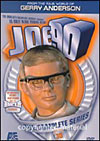
Plot: What’s it about?
Joe McClaine might look like a normal nine year old, but he is by no means a typical child in most respects. In fact, he is an agent for the World Intelligence Network and he’s one of their best, which is quite odd, because of his young age. His father invented a device called the Brain Impulse Galvanoscope Record and Transfer machine, which allows people to enhance themselves in endless ways. The device can look into the minds of anyone on the planet, soak up their skills, knowledge, and experience, then transfer those elements to Joe’s own mind. Joe can use this device in any scenario, so if he needs to learn how to perform a delicate surgery, fly a plane, or operate complex machinery, a simple series of commands is executed and soon enough, he has the information he needs. As you can imagine, this makes him an invaluable agent and no matter what the situation, he’s able to come through with flying colors. And since he is so young, his appearance gives him a special edge over other agents, since no one would suspect he was part of the World Intelligence Network’s team. His adventures will take him all over the world, to some of the most exotic, dangerous places on the planet. But even with his special device, Joe is still just a kid and when trouble arrives, will he be up to the task?
This series was produced after the immense success of Gerry Anderson’s Thunderbirds and Captain Scarlet, but Joe 90 never found the same level of success. I happen to prefer the earlier Supermarionation shows, but this one is still a lot of fun and for fans of those other series, Joe 90 is a worthwhile experience. The technical merits of this show are excellent, as the animation process had improved and the production values increased. The characters have a more refined, detailed, natural appearance, which makes for a more immersive experience, though of course, you’re still watching puppets. As always with Anderson’s productions, Joe 90 features very cool machines, such as cars, planes, and other vehicles, some of which have special powers, such as Joe’s father’s car, which can fly through the air. The sets look impressive also, while the camerawork seems a little more complex as well. But in the end, the storylines simply didn’t interest me as much as previous Anderson shows had, especially Thunderbirds. Joe 90 has some great episodes, but the writing just seems a tad off at times. The secret agent theme offers some cool scenarios however, ones that play out well in Anderson’s Supermarionation world. I can’t say this series is as good as Anderson’s finest work, but if you’re a fan of his other Supermarionation projects, then you will want to give Joe 90 a chance.
Video: How does it look?
The episodes are presented in full frame, as intended. This series isn’t as old as most of Anderson’s Supermarionation projects, but as a series made in 1968, the material still has some years behind it. You wouldn’t know it from these transfers however, as the prints look almost pristine and show minimal signs of wear. I saw no grain, marks, or nicks, while time hasn’t faded or worn the visuals in the least. The show has a bright, but natural color scheme and that is well replicated in these presentations. I saw no troubles with contrast either, as black levels remain stark and true at all times. I wasn’t sure how good Joe 90 would look here, but A&E has given us a terrific visual treatment in all respects.
Audio: How does it sound?
The audio here is rather basic, but it sounds solid and all the needed elements come through as intended. As per usual, Barry Gray’s exceptional music often steals the audio limelight and it sounds quite good here. Of course, a more dedicated surround track might enhance it, but as it is more than effective here, I won’t complain much. The wacky sound effects are well presented too, with enough punch to work, but keep the material’s nature in mind, as the elements are a little confined at times. The dialogue is clean and clear also, so all the vocals are in fine form and in the end, this is a solid, acceptable audio presentation.
Supplements: What are the extras?
You can listen to audio commentary on two episodes, as designer Mike Trim talks about The Most Special Agent and director Ken Turner discusses The Unorthodox Shepherd. I would have liked comments from Gerry Anderson himself, but these two tracks prove to be quite solid. This release also includes character biographies, information on the equipment & locations seen in the series, and a selection of still photos.