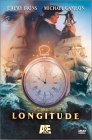
Plot: What’s it about?
John Harrison (Michael Gambon) seeks to do what no man could before him, create a clock that would keep the correct time at sea. Previous efforts have fallen short and if the seas are ever to be traveled in an efficient manner, this is an invention that must come to be. Those at sea were able to navigate somewhat by using the stars and such, but that would only supply them half the information they need. This gave them the latitude to travel at sea, but they also needed the longitude, which meant either traveling near the coast or finally creating a seaworthy clock. This is what Harrison plans to do and since he is a determined man, he thinks he can do just that. There was a hefty reward for the device, but even when Harrison made his clock that served that purpose, he was ignored in favor of using the stars still. In the future, his work would become the obsession of Rupert Gould (Jeremy Irons) and by the end, both men will have sacrificed almost everything to achieve their dreams.
This is a period piece that features Jeremy Irons and revolves around the sea, as well as all the battles and such that took place there. I was sold before I ever sat down to watch this one, but for the sake of the review I went back and revisited this one, which was a very pleasant experience. I wasn’t sure how much replay value would be involved, but I liked this a lot even the second time around. I love a good epic and this one qualifies to be sure, with a bold and sweeping portrait of the high seas. The costumes look excellent, the set designs are impressive, and the overall production values are very high for this effort. Irons (Lolita, Damage) proves to be the perfect choice to lead this epic, giving a tremendous turn from start to finish. The cast also includes Michael Gambon (The Insider), Ian Hart (Michael Collins), Christopher Hodsol, and Jonathan Coy (Horatio Hornblower). This is a fantastic film that defies the “made for television” label, actually rising above similar major motion pictures at times. If you’re a fan of the high seas or just love period pieces, Longitude is more than worth a look.
Video: How does it look?
Longitude is presented in a full frame transfer, which preserves the original aspect ratio of the feature. This is a television presentation and as such, it doesn’t look as polished as a feature film, but it does look as good as you could expect. I found no compression flaws on the transfer and the print looks clean, with minimal grain. The colors are not as bright as usual, but this is intentional and the natural spectrum is used well. The waters appear in an almost crystal shade and flesh tones look warm, with no distortion in the least. The contrast is in fine form also, no detail loss is evident and black levels seem dead on. This looks much better than the television airing, which is more than enough for me to give this a passing grade.
Audio: How does it sound?
I didn’t expect much from this track, but I was pleased with the overall range and power of this audio presentation. The musical score is a perfect match for this film and in this mix, it sounds terrific. I was also pleased with the general sound effects, which create a seafaring environment quite nicely. The crashing waves sound great and nothing less should be expected from a mix for a film like this one. The dialogue comes through in perfect form also, no volume issues or separation problems arise at all. I wasn’t blown away by this mix, but it conjured up a nice, effective sound experience.
Supplements: What are the extras?
A nice behind the scenes featurette has been included, which offers interviews and some behind the scenes pieces as well. With a running time of around twenty minutes this one isn’t that in depth, but it does provide a nice look behind the scenes.