Plot: What’s it about?
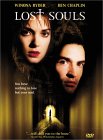
Maya Larkin (Winona Ryder) was possessed by a demon when she was young, but now she finds herself on the outside of that situation, as she serves as an assistant to two priests. The two men of cloth (Elias Koteas and John Hurt) are trying to perform an exorcism on a man at a mental hospital, but Maya thinks this is no normal exorcism. She is of that opinion because in the man’s room, she finds a wealth of numbers written down and while at first glance they seem random, Maya feels there is a method to this madness. Within the patterns of numbers, Maya discovers a hidden truth and if the code is correct, then Satan will soon surface and take a human form. This form happens to be novelist Peter Kelson (Ben Chaplin), who Maya feels she must warn and then convince to do whatever is needed to avert the situation. But with little support from anyone, even the churches, Maya has to prevent the unthinkable, all while the fate of her world hangs in the balance.
This movie was held back for some time prior to release, but managed to hit theaters just in time to be ignored by the masses. I like these end of the world supernatural thrillers, so I checked out Lost Souls and liked what I saw. I also thought Bless The Child and End of Days were decent genre pictures also though, while critics and mainstream audiences panned them. I suppose I went into Lost Souls expecting a decent movie and that’s what I got, while others were waiting for a modern classic to be shown to them. If you’re a fan of these kinds of movies, then I suggest you ignore people and check these out for yourself, as you never really know until you do, right? Lost Souls has a stunning visual atmosphere, which is a good element to have in a supernatural thriller, as well as some cool eerie sequences that drive home the chills. Winona Ryder heads a decent cast here, which also includes Elias Koteas, Ben Chaplin, and Philip Baker Hall, all of whom seem in fine form. This movie is well worth a rental for genre fans, so if you’re interested, ignore the critics and judge for yourself.
She seems to love these dark, stylish films, so of course, Winona Ryder is right at home within Lost Souls. I admit her work here is not her finest hour, but her performance is strong enough and I think she was the right choice. This movie doesn’t use a traditional storyline much, but Ryder still has a solid character to work with and she uses her role very well. She is more than experienced in these darker pictures, so she seems natural within this sinister realm, but not too natural, as she shows her weaker side at times, as she should. Another terrific performance from Ryder, who continues to impress this reviewer with her work. Other films with Ryder include Lucas, Edward Scissorhands, Autumn In New York, Bram Stoker’s Dracula, Heathers, Beetlejuice, and The Crucible. The cast here also includes Sarah Wynter (The 6th Day, Molly), John Hurt (New Blood, Contact), Elias Koteas (Crash, Teenage Mutant Ninja Turtles), Philip Baker Hall (The Insider, Boogie Nights), and Ben Chaplin (The Thin Red Line, The Truth About Cats & Dogs).
Video: How does it look?
Lost Souls is presented in a 2.35:1 anamorphic widescreen transfer. This film has a visual presence unlike the normal transfers we see, so while there is some grain present and colors seem muted, it’s all good in this case. So while the grain and lack of color could seem strange, rest assured this is how the film was meant to look. The colors are present, but dulled down a lot for visual’s sake, so don’t expect deep reds or lush greens here. I saw no problems with the contrast either, which is tweaked and balanced to fall into line also. This one might seem a little rough, but that’s the intended visual style and once again, New Line has provided a superb visual presentation.
Audio: How does it sound?
The audio here is more along the beaten path, with dual 5.1 surround tracks in Dolby Digital and DTS forms. I found both mixes to be excellent in all respects, but the DTS option shows some edge in a few scenes. But on the whole, both tracks come across in fantastic form and in truth, either would be a perfect choice. The surrounds are used to effective ends, but not always in an obvious fashion, as subtle audio seems to rule this mix. The musical score is well treated also, with a rich and immersive presence throughout the running time. I heard no problems in terms of dialogue either, as the vocals were clean and crisp from start to finish. This one contains not one, but two superb audio tracks and whichever format you prefer, you’re covered with this release. You’ll also find a 2.0 surround track included here, as well as English subtitles.
Supplements: What are the extras?
In addition to a fine treatment in terms of video and audio, this disc also houses some cool supplements. The usual talent files, DVD ROM content, and theatrical trailer are packed in, but there’s more to come with this disc. You can listen to an audio commentary track with director Janusz Kaminski, who is joined by director of photography Mauro Fiore. The two discuss a lot of technical issues in this track, but also branch into other topics as well. I do think this track will be too dull for most folks, but those interested in the technical side will want to give this one a spin. Rounding out the disc is a selection of ten deleted or alternate scenes, which are worth a look and add a little to the film’s storyline. All in all, a decent array of goodies for a normal (i.e. non special edition) release, which means the disc offers more value to the consumer.