Plot: What’s it about?
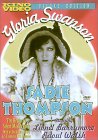
Sadie Thompson (Gloria Swanson) has ventured to the tropical paradise of Pago-Pago to start a new life, but as she soon discovers, even in paradise some things never change. She has come from San Francisco to settle within the palm trees and blue skies, but even here, she finds problems she wanted to leave behind her. Sadie works as a prostitute and with her stunning good looks, she never has a lack of clients, so she manages to do well enough for herself. Add in her intense charm and power over most men and viola, Sadie can pretty much do whatever she wants, with little resistance in the path. But in the midst of this lush tropical place, she runs into someone who disapproves of her and wishes to change her, even if she feels no change is needed. Now, this is a basic rundown of the storyline, but I have missed a lot of smaller touches, so expect more when you watch. Sadly, the end of the film was lost due to poor care techniques, but Kino has restored some sort of an ending sequence, which is better than no end at all, of course.
I wasn’t too taken in by most of this film, but the excellent photography and performance of Gloria Swanson made it well worth my time in the end. This movie didn’t take home an Oscar for the cinematography, but if a movie ever deserved it, Sadie Thompson did, as the visuals elevate the movie a lot. I don’t mean to make this seem like a bad movie by any means, because it isn’t, but I suppose it just didn’t click with me that much. I always like to watch silent films and that is what drew me to this release, but in the end, I wasn’t too impressed with Sadie Thompson. But the lush photography is wonderful to look at and as such, your eyes will be dazzled, even if the film starts to lag a little. The story seems a little risque for the time and perhaps that is why certain things never get looked into, which leaves some questions open in my mind as far as the storyline. But Gloria Swanson (The Danger Girl, Manhandled) is superb and sexy here, as she lights up the screen and provides more eye candy than you can shake a stick at. I still recommend this disc to silent film lovers and those interested in cinema, but in the end, Sadie Thompson just wasn’t my kind of girl.
Video: How does it look?
Sadie Thompson is presented in the intended full frame form. I am pleased with this transfer and given the film’s age, I think the print used is pretty clean overall. Of course, some marks and debris are present here, but minimal serious damage is evident and that is of course, very good news indeed. No real problems with the contrast either, black levels seem right on the mark and I never saw any detail loss. This film was made in 1928 and as such, doesn’t look pristine, but this is a more than solid presentation in the end.
Audio: How does it sound?
There’s not a whole lot to talk about here, since this is a silent film and as such, has no real audio presence. The sole audio element here is a stereo musical score, which is very good and sounds terrific in this mix. I like the music here a lot and it seems to suit the film well, which is very important of course. That’s about all I can say, a solid sounding mix of a proper musical soundtrack, good work overall.
Supplements: What are the extras?
This disc includes background information on Sadie Thompson, from the real life version to the stage version to the film versions, all of which was interesting to read about. You can also compare text treatments from different editions of this story, which let you see how different authors handled a couple scenes in particular and I found it to be worthwhile. You can also view a selection of still photos, as well as look at three different treatments in terms of the film’s lost ending. You can see Kino’s restored version, you can read the original screenplay to see what happens, or you can see the ending as shown in a remake of the movie.