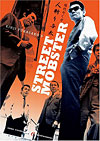
Plot: What’s it about?
Isamu Okita (Bunta Sugawara) just spent a few years in prison, but that is no surprise, as is a member of the yakuza. He is an old school gangster, someone who values loyalty and honor, as evidenced by his prison sentence. The crime was the murder of several rival gang members, who were taken out Isamu in a bold assault. He completed the task of eliminating his targets, then he took the punishment when he was convicted. He isn’t high on the ladder in the organization, but he likes the current established system of govern within his clan. When he is released from prison, he could have gotten a normal job and started over, but of course, he wanted to return to service with the men he left behind. But the world has changed he was put behind bars and that includes the yakuza, which has undergone some serious alterations. A new crew now runs the show, a younger and more brash group leaders. He is let down and chooses to join with a new friend to start a new gang, one which he will command. They soon recruit another clan and before long, Isamu’s clan shuts down the new yakuza leaders. But when a new rival arrives and Isamu’s clan splinters, he is forced to reconsider his options. He decides to put a plan into motion to turn everyone against each other, but will he survive the chaos that follows?
Kinji Fukasaku (Graveyard of Honor, Blackmail is My Life) directed numerous yakuza movies in his career, but Street Mobster stands out. As always, Fukasaku directs with immense skill and crafts an impressive motion picture, but a lot of credit is also due to his lead performer. In that lead is Bunta Sugawara (The Yakuza Papers, The Underground Syndicate), veteran of yakuza cinema and a genre icon. Sugawara turns in not just a solid effort, instead he burns through the role and leaves a trail of fire in his wake. His performance here is incredible, not just of the best of his career, but one of the best in the genre’s history. He infuses the role with charisma and balances a madman act that could teeter at any second. You can tell he loves the role and makes the most of the part, as he is intense and really fuels the picture. The pace of Street Mobster is brisk and slows only for some melodrama, which does bring down the fun a shade. But Fukasaku balances it all out with some fast paced, very enjoyable action sequences. This is also more violent and dark at times than I expected, but that works well within the film’s framework. I’d rank Street Mobster toward the top of yakuza cinema, thanks in no small part to Sugawara’s awesome performance. This is an excellent movie and Home Vision’s disc is well crafted, so Street Mobster is well recommended.
Video: How does it look?
Street Mobster is presented in 2.35:1 anamorphic widescreen. This is not a flawless visual presentation, but it is damn close and should delight fans quite a lot. Home Vision has given us a brand new digital transfer here and it shows, as the image is clean and very refined, despite the age and nature of the material involved. This film is well over three decades old, which makes it easy to be grateful for such a clean source print. I didn’t see much in terms of grain or debris, which means the superb visuals are never hindered. The contrast holds up well also, with stark and consistent black levels throughout. I never expected Street Mobster to look this good, so kudos to Home Vision on this one.
Audio: How does it sound?
The original Japanese soundtrack is preserved here, via a somewhat dated, but more than acceptable mono option. This is a much cleaner, clearer presentation than I had expected, as very few age related defects can be heard. I heard a few minor pops and moments of harshness, but given the age of the material, this is a superb effort. Even the smallest sounds can be heard with ease, so nothing is ever drowned out or lost in the shuffle. No worries on the dialogue front either, as all the vocals are sharp and never muffled. This disc also includes newly refined, optional English subtitles.
Supplements: What are the extras?
This disc includes a talent file on Fukasaku, an interview with a former yakuza, and the film’s theatrical trailer.