Plot: What’s it about?
“I dunno, I’m making this up as I go…â€
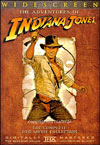
Movie heroes come and go, but the really great ones stand the test of time. Indiana Jones is one of the latter. Though armed with a whip and a profound knowledge of archeology, Dr. Jones has been on some of the greatest adventures that we’ve ever seen captured on screen. Played with a sly and eager wit by Harrison Ford, his character is what embodies a movie hero. Created from the fertile imaginations of George Lucas and Stephen Spielberg, their goal was to create (re-create, actually) the Saturday matinee “B†movies they saw as kids. Though they succeeded, this “B†movie was elevated to “A†movie status while it garnered 6 Academy Award nominations including one for Best Picture. Perhaps the most impressive thing (looking back) is the fact that these movies were done without any CGI effects. Yes, it’s hard to believe, but stunts were either performed by actors or stunt men. But what is it about the Indiana Jones movies that makes them so beloved by all? Is it the fedora, the leather jacket, the whip, the gun that when fired makes the coolest sound, the countless string of adventures that one man gets into or is it a little bit of everything? Written by George Lucas and Stephen Spielberg while on vacation in Hawaii, the two have created a hero for the ages. While the films center around ancient artifacts, it also bears a lot of anti-Nazi propaganda. Naturally, this makes sense and we more than know how Spielberg feels about the Nazi’s…
As the movie begins, we have to realize that just because “Raiders…†came first in the series, it doesn’t necessarily mean that it happened first. The two sequels actually happen (in movie time) at different times. “Raiders…” is set in 1936, “Temple of Doom” in 1935 and “Last Crusade” in 1938; though it’s of no real consequence as to which really came first. “Raiders of the Lost Ark†has now been changed to “Indiana Jones and the Raiders of the Lost Arkâ€. This comes as no surprise as the later two movies featured the “Indiana Jones and…†name before the title. Dr. Indiana Jones (Harrison Ford) is at odds with his old nemesis, Bellog (Paul Freeman). The United States government wants to hire Indy to find the Ark of the Covenant, a precious religious artifact, so that it doesn’t fall in the hands of the Nazi’s. The Covenant, in the wrong hands, would make the Nazi’s unbeatable. Crossing all over the map, we follow Indiana as he meets up with his old love, Marion (Karen Allen), who holds a vital key to locating the Ark. As in the old serials that the movie was inspired by, we meet foes that only exist in Indiana Jones’ world. Whether he’s using his bullwhip to save the day or being dropped into a pit full of snakes; Indiana Jones will make things interesting to say the least.
Ford embodies as much of Indiana Jones as any other movie icon in history. In hindsight we can’t really picture anyone else in the role, though Tom Selleck had the part but couldn’t commit due to his role on Magnum P.I. What makes him so beloved is the fact that he plays it like he plays almost every other role, as the “everymanâ€. Granted that his presence here is at its best, but this movie established him as a leading man (something that he hasn’t lost, even twenty years later) and that he has equal charm to women and men, young and old alike. If “Raiders of the Lost Ark†was his proving ground, then his future efforts did nothing but reinforce that point.
We then move onto “Indiana Jones and the Temple of Doomâ€. This is perhaps the most criticized of the three in that it followed the “sequel†formula just a little bit too closely. The stunts were bigger and the action more in your face and Kate Capshaw had the role of the “desirable busty blonde†that we just knew Indiana would end up with. This time around we find Indiana in route from Shanghai, but as luck would have it, he ends up in Delhi. This time around the artifact are the mysterious Shankara stones that if used properly, could result in someone with a little too much power. That person in search of the power is none other than Mola Ram. Children are mysteriously used as slave labor and it’s up to Indy and his somewhat annoying counterpart (future “Mrs. Spielbergâ€, Kate Capshaw) to save the day/world. While this was the most unbelievable of the lot, it still delivers laughs and action but being a bit darker than its predecessor. It’s no secret that this movie was one of the factors that led to the PG-13 rating (one which Spielberg was very adamant about). Yes, it’s more violent, yes it’s worse than Part I and III, but it’s still fun.
This leads us up to the last installment (until Part IV a few years from now), and one that I think is almost as good as the original. Sean Connery shows up as Indiana’s father and we get a bit of a prologue in which we see the late River Phoenix portray the young Indiana Jones. This time the quest is none other than the Holy Grail itself, Monty Python eat your heart out! And once again the Nazi’s play a central part in the story. Walter Donovan (Julian Glover) has hired Indiana’s father, Henry (Sean Connery), to look for the Holy Grail. This also happens to be Henry’s life study and he is the most renowned expert on the subject. But he has disappeared and now Donovan has set his sights on Indiana to take up where his father left off. Joined this time by Elsa Schneider (Allison Doody), the three (Marcus Brody played by Denholm Elliott) take off on a quest that leads them to Italy and the quest for the Holy Grail. Perhaps the best thing here is the casting of Sean Connery who comes off as a great Dr. Jones Sr. their bickering throughout is the heart and soul of the movie and one of the key elements that makes it work. Though the first installment is the one that everyone thinks of when they think “Indiana Jonesâ€, there is some debate as to which one of these two is actually the better movie. Still, it’s a debate for the ages and I believe most would go with the first one.
Indiana Jones, in addition to being one of our favorite movie characters, has been showered with accolades since it came out in 1981. The American Film Institute, incessant upon ranking anything and everything, has seen fit to garner it with a place in its coveted “Top 100” list (#60) and placed it in the Top 10 in its “Most Thrilling” list (#10) and has ranked Indy as the greatest hero that has ever graced the silver (or any) screen except that of Atticus Finch in “To Kill a Mockingbird”. Not a bad resume, considering that these were supposed to be “B” movies…No matter which way you cut it, Indiana Jones has at long last arrived on DVD. Granted, the format has been around for almost seven years now, but still…One thing I leaned while taking in the entire series is exactly how much George Lucas played in the part of the movies. While not credited with the Directing, he owns a vast majority of the movie and it’s a good thing too. Word has it that he is very impressed with the way this set turned out and that he might be preparing a similar set for his beloved “Star Wars†trilogy next year. Granted, it’s a rumor we’ve heard all too often, but this one might tend to have a little more substance than the others. The days of watching your old VHS and LaserDisc versions of this are over, the Indiana Jones trilogy is likely to be one of the most sought after DVD sets in history and might just be the best-selling DVD of all time. While that remains to be seen, we can all rest a bit easier and know that whenever we want to hear the crack of a whip, the sound of a gun or the witty banter of Indiana Jones, it’s all just a disc away.
Video: How does it look?
Suffice it to say that any title as high profile as this will surely look good (and after a near seven year wait, it had better)! Thankfully, Paramount has once again enlisted the help of Lowry Digital Images who have once again worked their magic (previous titles that they’ve given the digital “brush up†to include: Snow White, Citizen Kane, Sunset Boulevard, Singin’ in the Rain and The Adventures of Robin Hood just to name a few). Some 35,000 scratches and blemishes were removed from the original negatives and the result is nothing short of spectacular. Each of the three movies features a brand new 2.35:1 anamophic transfer and if there were ever movies that deserved the treatment, it’s these. Though the movies are showered in earthy tones (browns dominate all three), the result is a somewhat brilliant-looking transfer. The flesh tones tend to have a reddish-hue to them, but that’s the way that these were intended. Considering the origins of the films, it might seem somewhat oxymoronic that these films look this good, but better they look good as opposed to bad, right? “Raiders…†probably suffers the most from some ever so slight scratches, but being the oldest of the three, it’s expected. The ages of the films aren’t that old and considering what the movies have gone through (in a restoration sense), they receive our highest rating.
Audio: How does it sound?
I remember watching the old LaserDisc when in college and had a very minimal home theater system. I do, however, remember the sound being better than I expected. Now with my “much better†system and the films re-mastered in Dolby Digital 5.1 sound, imagine my surprise when I heard the ever-so-present theme in all of its 5.1 glory. Anything coming out of Lucas and Spielberg will most likely sound very good, regardless of the age of the movie. Between the two, they have developed THX (which the discs are THX certified) and dts; so sound shouldn’t be an issue. It isn’t. Dialogue is full of rich texture and the front speakers are almost always constantly humming away. There is never a shortage of action and as such, the subwoofer gets a workout as well. The surrounds were aren’t quite up to the same standard as the other speakers, but have been processed to sound more like they were originally intended. While “Raiders…†is the oldest, we can expect that it might sound the worst. Actually, the “worst†isn’t a great descriptive term as they all sound great, especially considering the age of the films. The movies don’t have as much of an “in your face†quality as some other movies, but when there’s action (and there’s plenty), you’ll know its there from every aspect. All three films sound great and if there’s a single complaint about this set, it shouldn’t be the sound.
Supplements: What are the extras?
In the supplements department we have a fourth disc specifically devoted to bonus materials (cleverly enough, the disc is labeled “Bonus Materialsâ€). While other studios are putting out four, five and *gasp* nine (Alien Quadrilogy) disc sets, this is more than enough for me. Supplements are great, but when it takes half a day to watch them, it’s kind of beside the point. I’m not letting Paramount off the hook, as I would like Spielberg to sit down and record a commentary (c’mon, he’s the most mainstream director out there, get with the program Steve) he just won’t do it. Fine. OK. What we essentially have in terms of extras is a great two-hour documentary entitled “Indiana Jones: Making the Trilogyâ€. This divided into three sections, each devoted to one of the three parts of the trilogy. Everything is covered here from the origins of how the story came up to the wrapping of the third installment. Documentary footage is included as are new interviews with the cast and crew of the movie. Suffice it to say, if you’re wanting to know the background of Indiana Jones, this is a great place to start. Also included are four featurettes: “The Light and Magic of Indiana Jones†(note the name) shows us how, in the age before CGI, paintings, models and morphing was used to make the unreal real in all of the Indiana Jones movies. “The Sound of Indiana Jones†is dedicated to just that – sound. Sound designer Ben Burtt guides us through the sound effects and what it took to make some of our favorite scenes sound that much better. “The Stunts of Indiana Jones†shows us how Indy actually did all of those death-defying stunts. If he were real, Indiana Jones would have been dead so many times it’s silly. However, with editing and, most importantly, stunt men, Indiana Jones is truly larger than life. Lastly, “The Music of Indiana Jones†is dedicated to composer John Williams whose unmistakable theme to the trilogy has left its mark on our society. We find out how it came about and how the score establishes the mood and setting for each of the three movies.
Trailers have long been absent from Paramount’s catalog titles, but teaser trailers for “Raiders…†and “Last Crusade†have been included as well as the original trailer for each movie (and a re-issue trailer for “Raiders…â€). Each is presented in anamorphic widescreen and by comparing these to the final product found on the discs, it’s clear (no pun intended) as to how much better the transfer is as compared to the original. Lastly, some DVD-ROM content is included as is a link to indianajones.com, but as of this writing, there is nothing on the DVD-ROM side of things. Like it or not, that’s the end of the supplements. Personally, I think this is just good enough, if they want to come out with an 8 Disc set in the future, fine; but as for now we all have what we’ve been waiting for and now it’s time for Mr. Lucas to get off his duff and release that other trilogy on DVD.