Plot: What’s it about?
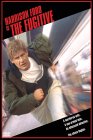
So what is so good about ‘The Fugitive’ that makes everyone like it so much? Personally, I don’t really know. It has a quality about it that a lot of other movies don’t have. While Harrison Ford plays the part of Dr. Richard Kimble to a tee, he is, in all senses of the word…an antagonist (the bad guy). When you look at it through a strict, letter of the law type of viewpoint, that is the only way that it comes up. Richard Kimble killed his wife, he has been caught, apprehended, tried, sentenced and convicted of murder. End of story. Richard Kimble is guilty. Richard also has a member of law enforcement that is hunting him down like a dog. Deputy Samuel Gerard sees things in black and white. Richard Kimble is guilty, he is running from the law, he must be apprehended and returned back to jail. No questions asked. On the other hand, if you look at it through the director, Andrew Davis’, eyes…Dr. Richard Kimble is innocent, and the audience knows that he is innocent. He didn’t kill his wife, he was performing surgery. A one-armed man killed his wife, all he has to do is prove it! He can’t. This is where The Fugitive takes off…
Richard Kimble has been sentenced to life in prison for the murder of his wife. Is he innocent? Yes. We (the audience) know that. The law doesn’t. So when his bus that is leading him to prison, gets in a wreck and he is set free, what does he do? He runs. He runs for freedom, because he knows that the only way that he can have any sort of a normal life is to prove his innocence. To quote a line of the movie: “I am trying to solve a puzzle here”. Richard is trying to find out why his wife was killed and who killed her. Why was this mysterious one-armed man behind all of this? We see, throughout the course of the movie, that a drug called Provasic was set to be approved by the FDA. Only thing was that Dr. Kimble had a few patients that weren’t doing so well on it. Dr. Kimble, being the good doctor that he is, reported it and planned not to give it his endorsement. This, of course, angered some higher-ups in the pharmaceutical industry and they intended to deal with him (motive). So this sets up the entire storyline.
It is this type of cat and mouse game, this type of insecurity and suspense that makes The Fugitive one of the best modern day thrillers. We see Kimble running for his life and narrowly missing being captured by the Illinois US Marshals. So why do we root for the “bad” guy? Because it’s so fun, and we all have a different idea of who and what the bad guy may or may not be. If you’ve never seen The Fugitive, take two hours our of your day and give it a listen and a watch…you will NOT be diasappointed. The Fugitive was not only nominated for Best Picture (which should say a lot there), but was one of the most popular movies of 1993. With this kind of wide reception, you can’t help but to be sucked in to it’s wake. Highly recommended!
Video: How does it look?
The Fugitive was one of the very first movies released…on DVD. Warner, then a pioneer (and they still are) gave the film a 16:9 transfer at the time when not too many other DVD’s had this. So not only could the film be seen as the director intended, if you had one of those widescreen TV’s that are becoming more popular now, you would get the full effect of the movie. For this new edition of the movie, they have given this film a new digital transfer (a new High Definition master) that soars leaps and bounds above the other transfer. Aside from everything being brighter and more well-defined, the movie is now on a dual layer disc, which didn’t exist at the time when the first edition came out. Aside from removing the full-frame version, this gives the movie more “room” if you will and it’s not as compressed as it’s predecessor. Being a huge fan of the movie, I decided to compare the two versions side by side (or as close as I could come to “side by side”) and the difference is literally night and day. Pixelation and some compression errors that plagued the original are now gone, and really the only thing I can find about this transfer is that a few scenes tend to be a bit soft in parts. The 1.85:1 image is an example of how good a movie can look, despite it’s age. On a side note, if you do have the older version, look at the scene right after the train wreck. Amid the wreckage, when Kimble looks up, you can see a crew member looking right at the camera. I’ve never noticed it before, but in one of the featurettes they mention it. Sure enough, he’s there. In this new version he has been digitally “erased”. A neat little “Easter Egg” if you can call it that.
Audio: How does it sound?
The Fugitive was one of the first movies to have a true “Dolby Digital” mix when it came out in theaters, way back in 1993. I owned the Laser Disc version of this movie and Warner never bothered to give it a Dolby Digital soundtrack, it was plagued with the “Dolby Surround” mix that so many other movies had. When the first DVD came out, it was one of the most active soundtracks that I had heard and for the first time since I saw it in the theater, I heard what it was truly like to hear the 5.1 mix. The movie’s signature scene is the train wreck sequence in which a real train was used to hit a bus. Hearing this in 5.1 sound will not only wake your neighbors, but give you a sigh of relief that all the money you spent on home theater speakers didn’t go to waste! James Newton Howard’s score, nominated for an Academy Award, sounds terrific and I attribute it to one of the reasons I liked the movie so much. Dialogue is clean and free of any distortion as well. Essentially this is the only thing that hasn’t changed from the first incarnation of the disc, but it’s the one thing that they didn’t need to change. High marks for a soundtrack that will keep blowing away it’s competition for years to come.
Supplements: What are the extras?
While Andrew Davis has laid down commentary tracks for U.S. Marshals (not a sequel to this movie…it’s a “spin off”) and A Perfect Murder among others, this jewel in his crown had not received any recognition it so deserved. But alas…it’s finally arrived. Davis and Tommy Lee Jones (who won his Oscar for his role in this movie) participate on the commentary track. Though Jones and Davis aren’t in the same room, it’s Davis who does most of the talking, they do have some insightful information to offer. Davis, as mentioned earlier, is the more talkative one with Jones spouting stuff occasionally like “Oh yeah…I liked this scene” or “That river was very cold”. Davis comes to our rescue with bits and pieces of the movie that true fans of it will like to hear. The movie is also introduced with Harrison Ford, Tommy Lee Jones and Andrew Davis (part of this is repeated on the commentary as well…minus Ford), it’s a bit disjointed, but I suppose that it’s a nice touch to have. Also included is a documentary entitled “Derailed: Anatomy of a train wreck” that shows how the train wreck sequence was set up and shot. We realize how important that scene was, as most effects these days are done digitally, and as Davis admits, this was done before the CGI effects were really where they are now. The planning and thought that went into the sequence paid off, but we learn that they only had one shot at making it right. Thankfully, it paid off. Also included is “On the run with The Fugitive” which is a longer, more in-depth look at the making of the movie. Spliced with bits and pieces and interviews from 1993 and now, this is very informative and goes a step beyond the typical “Behind the scenes” that we’re so used to. Sadly, that’s about all the features that this new version has. I’m more than happy with the new version as the improved picture and supplements will keep me entertained, but with sub-standard movies coming out as full-fledged Special Editions these days, it’s quite distressing to see that a modern classic can’t get a few more supplements. Nit picking, I know, but if you’ve already owned the DVD, time to pick up another one. It’s worth the cash…