Plot: What’s it about?
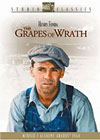
It’s amazing how time makes bad movies good and good movies bad. In 1940, Alfred Hitchcock’s “Rebecca†won the Academy Award for Best Picture. While a good movie, Hitchcock certainly produced far better in his later years (Vertigo, Rear Window and Psycho anybody?) yet none of those were bestowed with the highest honor of the Academy. That same year, Director John Ford won the Best Director Oscar for “The Grapes of Wrathâ€. The movie, an adaptation of John Steinbeck’s novel, is now considered to be one of the best ever, let alone for that year. But as we all know, Best Picture isn’t always what it’s cracked up to be and voting members can easily get swept away and vote the wrong movie Best Picture (Shakespeare in Love and Lord of the Rings). That being said, this was one of the roles that Henry Fonda is best associated with, that and Juror #8 from “12 Angry Menâ€. His honest, down to Earth portrayal of Tom Joad was recognized as one of the greatest heroes in American Film and for those in other countries who had not experienced the “Dust Bowlâ€, this movie gave an all to true account of what it was like for farmers in the Midwest United States.
For anyone who’s read the book, the movie isn’t that true to it, especially with the novel’s controversial ending. That being said, the movie is equally as good in its own right. We begin with Tom Joad (Henry Fonda) returning home from prison after a four year stint for manslaughter. Joad learns that his family has packed up and headed off to California a few weeks earlier due to the lack of crops. Banks, as it seems, were also foreclosing on land as the depression was in full swing. They did this in cruel ways and in some cases literally force families off their farms. This happens to the Joad family and under the promise of a better life, they head out to California. Tom also heads out West, but along the way we see the cruelty of man to his peers. The family is under the impression that once in California, all problems will be solved; but it’s not until they get there that they learn there’s no pot of gold at the end of the rainbow. Ma Joad (Jane Darwell) is the most vocal of the bunch and Darwell even won an Academy Award for her performance here. Fonda was also nominated as Joad but would have to wait some 40 years to get his Academy Award.
“The Grapes of Wrath†tells the ultimately bleak tale of life in the depression-era farmers. The “Dust Bowl†was one specific to America and it couldn’t have come at a worse time than in the Great Depression. Farmers were chased off their land and we see life through the eyes of the Joad family. There’s not a lot of positive things in this movie, save for the human spirit. Tom grows as a person in that his ultimate caring of others is influenced by his experiences on the road. Prison has not made him hard and callow, rather someone who cherishes his life and the people in it. In much of the same way that “Schindler’s List†is a good movie, so is this. This is proof that you don’t need a happy ending to make an emotional movie and telling the tale of life is sometimes just as strong as fiction. The movie continues to gain new audiences as time goes by and even placed in the Top 25 in the American Film Institute’s list of American Movies (#21). Some sixty years after it’s release, we see that life hasn’t gotten any easier and the indomitable human spirit was just as alive then as it is now. Highly recommended.
Video: How does it look?
“The Grapes of Wrath†shows signs of age. The film was made before a better film stock could be used and more likely than not, the original negative was used so many times that it became worthless. That being said, Fox delayed this release to get the best possible picture. I’m pleased to say that they have succeeded and though it’s not a shining example of DVD, it’s a testament to how good movies can look that have looked awful before. The full-frame transfer has been digitally restored and there’s even a great featurette on how it was done and comparisons to the earlier version. Compared to its predecessor, the cleaned up transfer looks like someone has cleaned off a window. That is to say that everything looks sharper, clearer and in a more refined detail than before. The scratches have been digitally removed and the black levels evened out a bit for consistency. While errors exist (as they will on most any movie of this age), the good far outweighs the bad and Fox should be commended for their efforts here.
Audio: How does it sound?
Audio-wise, there isn’t much to work with. As we might expect, the original mono track is all that we have, but it doesn’t sound too bad. There is a bit of a hiss to some scenes that are associated with movies of this age, but Fox also cleaned up the audio for this DVD release. Dialogue seems strong and natural, without much distortion and though there aren’t any “surround†effects per se; the soundtrack is accurately represented here. I compared this with my old VHS tape and the sound is much cleaner by comparison. While this won’t be a test disc for your system, it won’t let you down either. A stereo track is also included, but my advice is to stick with the mono track.
Supplements: What are the extras?
As part of their excellent “Fox Studio Classics†line, they have included several extras and put them on both sides of the disc. On Side One we find the movie complete with the “UK Prologueâ€. This is nothing more than a couple screens of text explaining what the “Dust Bowl†was. The studio worried that non-U.S. audiences wouldn’t fully grasp what was going on and evidently these two screens make it so they would. Included is a very insightful audio commentary by Steinbeck scholar Susan Shillinglaw and Ford expert Joseph McBride. While the commentary is informative, these two do a great job in the last half of the movie. Their comments are based on research and I found it an interesting listen (though nowhere near as powerful or interesting as the film itself). Side Two contains the rest of the extras which begin with a “Biography†documentary on Daryl F. Zanuck: 20th Century Filmmaker. This doesn’t concentrate so much on “The Grapes of Wrathâ€, but of Zanuck and all of the fine films that he made for Fox. “Biography†does some top notch work and this is no exception. Some “Movietone Newsreels†tell the tale of the real Dust Bowl and gives us a look at what “The Grapes of Wrath†was really like. Also included are some outtakes and a trailer for this and some of the other Fox Studio Classics. A still gallery contains 15 images, but the most interesting supplement is the “Restoration Comparisonâ€. Fox has used this in several of their other titles just to show what the before and after look like. See for yourself what the image looked like before restoration and after. You’ll be as amazed as I was. “The Grapes of Wrath†is finally on DVD and it looks and sounds better than it ever has.