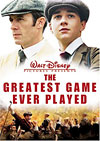
Plot: What’s it about?
Just in time for The Masters comes “The Greatest Game Ever Played”??. And actually, when the movie hit theaters it came on the heels of last years’ PGA Championship which Phil Mickelson won. Movies about golf are, pun intended, hit or miss. Golf is a sport that has broken the mold that “The Greatest Game Ever Played”?? has in spades. A game for gentlemen and that’s that. Well, any true fan of the game knows that Francis Ouimet pulled off possibly the greatest upset of any sport when he played against Harry Vardon in the 1913 US Open. The movie has been compared to “Seabiscuit”?? in which you can’t help but root for the underdog, and Shia LaBeouf’s performance embodies the young Ouimet in a very likeable way. The casual viewer or fan might not realize the impact that his event had on golf history, but odds are that every member of the PGA Tour bought their ticket and realizes the significance of a caddy winning the US Open.
The movie opens as they show us a young Harry Vardon, later in his career known as “The Stylist”??. He’s ultimately respected, but never really accepted into the class system of British golf. We then flash forward and meet a young Francis Ouimet. His immigrant father doesn’t approve of his love for the game of golf, but his mother encourages him. Years later, he’s a caddy and on his way to glory, but he misses the cut and as a promise to his father “?? gives up the game. Years pass and Francis is working retail at a sporting goods store in Boston only to be recruited to play the US Open. He frets, thinks and decides to go against the wishes of his father and plays. The rest of the movie is devoted to his play and his interest in Sarah (Peyton List), a woman he can most likely never have.
Director Bill Paxton (yes, that one) has another credit behind the camera, 2001’s “Fraility”?? which is the polar opposite of this feel-good movie. Paxton experiments with some different views of the golf ball (we get ball’s point of view after it’s hit) which is different than watching it on television, for obvious reasons. I will say that “The Greatest Game Ever Played”?? isn’t the greatest movie ever made, it’s a bit over sentimental at times, but unlike a lot of other sports movies it does focus more on the actual game, rather than get sidetracked with other stories. The real show stealer in the film is young Josh Flitter, who plays Francis’ caddy, Eddie. He’s 10 years old but seems to have the wisdom of someone three times his age. Their banter is good and makes the movie more enjoyable. As I mentioned before, casual movie fans might not see any interest in this movie but if you’re a fan (and player) of the links (which, obviously I am) then “The Greatest Game Ever Played”?? knocks it close to the hole. Recommended.
Video: How does it look?
Disney has presented “The Greatest Game Ever Played” in a 1.85:1 anamorphic ratio that looks great. Parts of the movie are very muted and washed out, but for the most part the transfer reflects the best of what DVD has to offer. Fleshtones are warm and natural, details are clear and vivid and I noticed no artifacting or edge enhancement. Granted, none of this should be a problem for a new to DVD movie and it’s not. This is a great-looking transfer.
Audio: How does it sound?
The Dolby Digital. 5.1 soundtrack is ample and robust at times and very subdued at others. There isn’t a great many places that the soundtrack has a time to shine, at times during the movie the score takes over and the crowd scenes at the ending match offer some ambiance as well. Dialogue is warm and natural. It’s a good track that makes use of every speaker, though the majority of the action is located in the front stage.
Supplements: What are the extras?
There isn’t a whole lot in terms of supplements; a pair of commentaries are well worth the listen, though. I preferred the Director’s track in which Paxton gives a pretty good track. He’s obviously a fan of the game and he goes through the casting process, the game itself and the obvious history of the event. A making of featurette is included with some interviews with the cast and crew as is a featurette on the 1913 US Open. The theatrical trailer is also included.