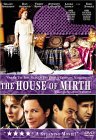
Plot: What’s it about?
In the realm of New York upper class life, status is crucial and with a few minor slips, one can fall to the bottom of the ladder in no time. This is a hard lesson that is learned by Lily Barton (Gillian Anderson), who was once the adored member of her social group, but soon discovered how fragile her position really was. Of course, her beauty and irresistible charms are good traits to have, but soon they attract unwanted attention, such as jealousy and undesired romance. But before that all takes hold, she seeks to wed a wealthy man and secure her future, both in her eyes and in terms of social status. This causes problems however, as she wants to remain in the upper tier of socialites, but also has second thoughts and wants to do what her heart demands. As she pushes ahead, she learns how hard that struggle can be and as she tries to overcome her situation, she sees the glimmer of true love with Lawrence Seldon (Eric Stoltz). But in her quest to fulfill both sides of her needs, she might end up losing both elements, true love and social status.
This is a period piece to be sure, but The House of Mirth is not your typical Merchant/Ivory style production, not by any means. This movie features great costumes and lush production design, but chooses to focus on the characters, which makes for a turn from the usual, I think. The Merchant/Ivory flicks are always good on the old eyes, but here, the brain and heart are also called into use and that deepens the whole experience, which is very welcome, of course. The writing is superb and never seems to miss a beat, especially when performed by such a gifted cast as this one, very impressive indeed. The lead is taken by Gillian Anderson, who is backed by such workers as Elizabeth McGovern, Dan Aykroyd, Laura Linney, and Anthony LaPaglia. I loved the performances found within the film and since the direction favors the actors, the background elements remain just there, in the background. Yes, I like period pieces that have a visual focus, but this one offers lush eye candy, as well as dynamic all around filmmaking. This film is highly recommended and since Columbia/Tristar has issued a terrific disc, don’t hesitate to pick this release up.
She is best known for her work on a certain television series, but here, Gillian Anderson is given a chance to lead a feature film. Her experience in cinema is limited, but Anderson is a very talented performer and in The House of Mirth, she more than holds her own. Even with a stellar supporting cast around her, she still gives a memorable turn that stands out, very impressive indeed. I think she captures the right essence here, as her character’s flaws are more than evident, but you can also see the other traits, as it should be. In truth, it saddens me to think Gillian isn’t involved in more films, as I think her presence could add a lot to the right movies. As such, I am very pleased with her performance here and of course, I would love to see her in more pictures down the road. You can also see Anderson in such films as The Mighty and Playing By Heart, as well as the television series The X-Files. The cast also includes Dan Aykroyd (Ghostbusters, My Girl), Anthony LaPaglia (Empire Records, Trees Lounge), Elizabeth McGovern (The Handmaid’s Tale, Twice Upon A Yesterday), and Eric Stoltz (Pulp Fiction, Anaconda).
Video: How does it look?
The House of Mirth is presented in a 2.35:1 anamorphic widescreen transfer. As per usual, Columbia/Tristar has delivered the goods, as this transfer is a terrific one. There is a tad of grain at times, as well as some minor debris on the print, but this is still a very solid effort and presents the film in a very fine fashion. The film’s color scheme is well presented, with the golden hues intact and radiant, while other shades look as intended and flesh tones seem natural, very solid indeed. No issues with the contrast either, as black levels are even handed and no visible detail loss is evident. I was hoping for a proper treatment here and as such, I am more than pleased.
Audio: How does it sound?
I wouldn’t recommend this movie in terms of dynamic audio, but the included Dolby Digital 5.1 is not wasted by any means. The surrounds aren’t used as much as in an action driven picture, but when needed they come to life and enhance the experience. The musical score weaves through the speakers at times and in some instances, you’ll detect some excellent subtle use that adds to the atmosphere. This is a dialogue driven piece however, so the front channels handle most the elements, as it should be. The vocals sound terrific also, very clean and never hard to understand, which is vital to a film like this one. This disc also includes a 2.0 surround track, as well as subtitles in English, Spanish, and French.
Supplements: What are the extras?
This release is not labeled as a special edition, but it has been given enough goodies to almost warrant that moniker. An audio commentary with writer/director Terence Davies is included, which provides a nice overview of the production, as well as interesting anecdotes at times. This session wasn’t as good as expected, but Davies still offers a nice commentary and includes a lot of information, so fans shouldn’t miss it. You can also view some deleted scenes and once again, Davies’ comments can be enabled, if so desired. I like it when optional commentary on deleted scenes is offered, as you can learn much more about the process, why they were trimmed and such. This disc also includes some talent files, a weblink, and the film’s theatrical trailer.