Plot: What’s it about?
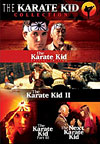
1984 almost exclusively represented the quintessential 80’s flick. Films of this vintage can be identified by their signature attributes: nostalgia, schmaltz, and a self-assuredness that comes complete with a heavy dose of oblivious charm. It’s as if it were early enough in the decade of blossoming cliches to excuse the occasional (or even frequent) misstep into the proverbial quicksand that is the movie formula. This is not to say that I don’t appreciate formulas when they’re done right, but it seems to me that films like “The Karate Kid” haven’t endured for future generations as they were expected to back in the day. Case in point is this new DVD collection from Columbia, complete with some of the most sickeningly banal cover art ever to be graced upon even a minor studio franchise. The individual slipcases are even worse, demonstrating more of an experiment in unattractive packaging than any kind of understanding of what these films are about. No matter. One major problem of the previous release of these films has at last been corrected, and the 1984 curse isn’t going to do a thing toward alienating this series’ core audience. If anything, it’ll prompt a few of you fanatics to snatch this set up for the privilege of owning its cheesy charm. For some of us, 80’s films are about a lot more than bad clothes, bad hair, and cringe-inducing music at the most emotionally inappropriate places. They’re about more than lame stereotypes, dated special effects, and scripts with as many one-liners, plot holes, and bad puns as your typical straight-to-video killer snake movie. If you can just overlook the…wait, where was I going with this? Only true 80’s fans know, and we’re the ones watching “The Karate Kid Collection”. Enjoy.
The Karate Kid
Anyone reading this knows the setup. It’s your typical boy moves to a new town, meets a girl, pisses off an ex-boyfriend, gets beat up, learns karate from the friendly old man from Okinawa, and wins a climactic fight to the finish story. We’re not surprised by anything this film throws at us. This isn’t the movie’s fault, mind you. It’s just that there are so many things about the plot twists and turns that are now so formulaic and old hat to us that they seem more projected than inspired. Naturally, we see Mr. Miyagi’s training techniques coming literally miles before Daniel ever catches on. But then, the beauty of a film like this is in its execution of said predictability. I mean, let’s face it: no one back in 1984 actually worried about whether Daniel LaRusso would triumph in the end. It’s not about what happens. It’s about the journey. And in that respect, “The Karate Kid” is further proof (along with “Rocky”) that director John G. Avildsen is a master storyteller when it comes to underdog tales. Sure it’s exactly what we expect in some regard, but it’s also a lot more. There’s a depth to this story that is rare for a film like this, and I was surprised upon viewing it again how much time is spent on interpersonal relationships. That this film held my interest when I was younger is a testimony to how well it presents itself. In that regard, “The Karate Kid” does in fact stand the test of time rather admirably (well, aside from Johnny’s hair, which can at times seem like its own character). It’s not on par with “Rocky” by any means, but it’s still a great little feel-good flick that does precisely what it sets out to do and does it well. What more can you really ask for?
The Karate Kid Part II
I’ve always felt as though this first sequel to “The Karate Kid” was destined to be disregarded right from the start. Mislabeled on the new cover art as “The Karate Kid II” (sans “Part”) with the same kind of jaded disinterest that the film has apparently inspired since its initial release in 1986. I think to call this film underestimated from day one is an understatement. Our tastes in film is often quite the eclectic incongruity. One the one hand, we prefer films to advance the story, add emotional and physical tension, and propel the original concept to different and exciting places. Other times, we seem content to stick with the plot structure that worked the first go around and just live with our begrudging need to experience the same film in thirty different ways. This movie seems to me to do an extremely good job at satiating our needs on both counts, though more so in the first bracket. Sure, the same archetypes are there and the basic thrust is the same as it was before, but we do get introduced to several new characters, a new location, and even learn some things about the characters (namely Mr. Miyagi) that we didn’t know from the first film. This is something that, at least to me, is always a plus in a sequel, as I feel it enriches the first film more than simply rehashing an idea. I’ve always loved “Part II” as both a sequel and a logical progression of the story. Not to mention, the fight at the end of the film is done extremely well and definitely manages a real sense of danger (even if the end result is never in question). This is something that the future installments would never quite get right again. It may not have the newness of the first film to its credit, but I think many who use that argument against this one forget just how derivative the story of “Part I” was to begin with. All in all, an underrated sequel with a lot of heart.
The Karate Kid Part III
Ralph Macchio just can’t get a break. I mean, he’s apparently about as likable as David Banner on the original “The Incredible Hulk” series. Everywhere he goes, someone wants to threaten his life, tear down his dreams of living peacefully, and cause physical harm to his love interest. And as if that weren’t enough, this film almost single-handedly torpedoed his already faltering career into complete and utter oblivion. It’s not that this movie is so terrible. Well, it is terrible, but it’s so earnest in its portrayal and so determined to make itself into a better film than it obviously is that you just can’t help but sit back, feel sorry for all involved, and have a good, hearty laugh at the proceedings. This is a film that I think would have worked much better as the first sequel than the second. Daniel’s karate is worse than it ever has been, his “girlfriend” has a boyfriend, he’s afraid of losing a tournament even though he’s just won a battle to the death against a crazed Chosen, and everything that was done right in the first two films is here just repackaged window dressing at its most insipid. The plot is much more a direct sequel to the first film than the second ever was, with the main antagonist this time being the ever-oily Terry Silver. An entertaining villain to be sure, Silver brings an almost cartoon-like quality to the film. It’s the kind of over-the-top performance that makes you wonder if anyone working on the film ever watched a single daily. And as for the irrepressible Mr. LaRusso, Macchio plays him here as such an annoying, neurotic, bipolar mess that you simply have a hard time feeling too sorry for him. When your main character spends half of the film professing his stupidity and you find yourself just wishing he’d go away, you know you’ve failed to create a sympathetic hero. Still, this is one of the best films ever made for downing shots, and for its hilarity alone, it’s worth the ride. Note: An extended version in which Daniel gets beat up yet again after the climactic tournament is currently in the works (I couldn’t help myself).
The Next Karate Kid
If watching “Part III” is like watching a train wreck, then seeing “The Next Karate Kid” (the dirty-blonde illegitimate stepchild of the franchise) in all its glory must be like watching that same wreck without the disturbingly satisfying destruction at the end. Avildsen even jumped ship on this one, most likely having learned his lesson sometime during the last outing. Hilary Swank takes over the lead this time, which may not seem like such a bad idea for those who happen to notice that Ralph Macchio aged about as quickly between Parts II and III as that kid from Harry Potter. On the other hand, Macchio’s chemistry with Morita is also taken from us here, and what we’re left with is a bratty wannabe to take his place. This film comes complete with a new karate move (a recurring tradition of the series), a dance sequence set to the Cranberries, and a fight that just barely passes for a climax in which our heroin saves her new boyfriend’s rear end. Speaking of which, the law of diminishing returns seems to be in full swing in more areas than one, as the love interests in the subsequent entries have just gotten less and less attractive. We also have on hand another staple of the “bay guy in a bad movie” sub-genre: Mr. Michael Ironside. The only problem with his teacher with the heart of soot is that it’s all been done before…and better…and in the same series. Ironside simply doesn’t have the humor of Terry Silver in “Part III”, the presence of Chosen in “Part II”, or the menace of Martin Kove’s Kreese in the original. Then again, anyone going into this film doesn’t expect much after the first few minutes, and it’s probably just as well. This series ran itself into self-parody territory with this entry, and it’s a shame to see such a good concept go this bad.
Video: How does it look?
Ralph and Pat fans rejoice. Columbia has (finally) seen fit to present the original Karate Kid film in its original aspect ratio, and the results, I’m pleased to say, are mostly worth the lengthy wait. When I started watching this new transfer, I was very skeptical. During the opening credit sequence, there is a veil over the entire screen that is extremely distracting. I was hoping and praying that once the movie got going, this would go away. Thankfully, it did. It’s actually an amazing transformation from one shot to the next. This film has really come to life with this new treatment, with colors jumping off the screen and contrast much improved from the previously released disc for deep, pure blacks and whites that are bright without any blooming. Edge enhancement is present, but not excessively so, and is only really even noticeable during the outdoor scenes toward the beginning of the film. I did notice a bit of compression artifacts (most notably during the scene in which Daniel is training on the bow of Miyagi’s boat), but nothing that distracted too much. All in all, this new transfer isn’t as good as I was hoping it would be, but it’s a definite breath of fresh air compared to what we’ve been offered up until now, and fans who bought the original disc will be absolutely thrilled. The sequels appear to have been struck from the same transfers as were previously used on the out of print offerings, and this isn’t necessarily a bad thing as all of them are anamorphic and the prints all seem to be in good, if not stellar, condition. The only time the new transfer for the first film and these clash is if you’re watching them back-to-back as I did. It’s a bit jarring to go from the new transfer back to these, as colors appear more washed out and contrast is a bit less than eye-popping. Still, they look as good as they ever have, with compression possibly a slight bit better than before. The real draw here is the new transfer on the original film, and that will certainly not disappoint.
Audio: How does it sound?
All four films in this box are presented in fairly average Dolby 2.0 Surround audio tracks. All four mixes are relatively front-heavy with minimal surround envelopment. There’s not too terribly much here to distinguish these from the glorified stereo tracks that they are, but I suppose there’s something to be said for having these movies together in one place in their original visual and audio formats. All in all, these audio tracks aren’t disappointing, but they aren’t surprising either. I would have preferred full 5.1 treatments on the flicks to sweeten the pot for the potential double-dipping consumer, but I suppose this will have to do for now. A French audio track is included on the first film (the sequels also add additional Spanish and Portugese tracks). Subtitles are available on the first film in English, French, Spanish, Chinese, and Thai (the sequels also offer additional Portugese and Korean subtitles).
Supplements: What are the extras?
Columbia is undoubtedly aware of the status of these films in relation to each other. For proof of this, one need not look any further than the extras bestowed on each film. The first film has a virtual monopoly on supplements whereas the second has two inconsequential extras to its credit, no doubt simply included to make this seem like a more well-rounded box set than it really is. Adding insult to injury, the final two films in the set are shafted completely in this department, rendering them just about as useless in this box as the films are to the saga itself. As for the extras that are included, let’s take a look.
First up is the commentary on the first film with director John Avildsen, writer Robert Kamen, Ralph Macchio and Pat Morita. This is a tremendously entertaining commentary track that made me remember why I used to actually enjoy listening to them. Avildsen, Kamen and Macchio do the bulk of the talking here, and they have great fun poking at the film – and each other. This is a must-listen to fans of the film. There’s not a whole heck of a lot of information here about the movies themselves, but the track is so amusing that it almost makes up for that. Next up is a two-part documentary on the film called “The Way of the Karate Kid” which functions as kind of a band-aid for the technical shortcomings in the commentary. While the first part stays firmly entrenched in personal story territory, the second part does focus more on the behind-the-scenes aspect of the film. There’s some great stuff here like candid footage from the making of the movie and even Martin Kove’s original test screenings (which are simply priceless for a fan like me). Together, these are far better than your average DVD fluff piece, and I’m happy to have both of these documentaries together with the flicks. “Beyond the Form” is narrated by Pat Johnson, martial arts choreographer on the film. It’s worth a look at least for the inclusion of a few more photos and video of the actors behind the scenes and in training. “East Meets West: A Composer’s Notebook” is a relatively interesting interview with Bill Conte on the thematic undercurrents present in the film’s orchestral score. Kudos to Columbia for including a featurette on music. “Life of Bonsai” is a ten-minute dream come true for you horticulturists out there. A sweet, sentimental peek at the life of Ben Loki, a man who knows more than anyone should about little trees, this is still worth watching once as it’s pretty informative. Also included on the first disc are trailers for “The Karate Kid”, “The Karate Kid Part II”, and “3 Ninjas High Noon at Mega Mountain”. On the second platter, all you’re going to get is a very brief EPK-style featurette on the making of the second film. This is a throwaway extra that you’ll most likely watch only once (this was included in the previous edition). Filmographies are also included for Avildsen, Macchio, and Morita, as are trailers for “Roughnecks: Starship Trooper Chronicles” and “Godzilla 2000”. The first side of the third disc includes nothing additional except a trailer for “Beverly Hills Ninja”. The flip side includes a filmography for Hilary Swank. All in all, I’d recommend this box for an upgrade even if you already have the previously released discs. There’s not many extras to speak of (and for some reason, there’s no trailers offered for the last two films), but what is included is worthwhile and the new transfer and commentary on the first flick are excellent.