Plot: What’s it about?
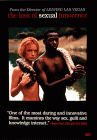
Sex is a very powerful tool, it can change everything in someone’s life. Not always for the better either, a bad sexual experience can be scarring, and leave bad memories for a lifetime. This movie follows four stories, of different people, and the effects that sex can have, both positive and negative. The bulk of the story deal with Nic (Julian Sands), and his exploration and development. The movie goes forward and backward in time with flashbacks and what not, but everything weaves together in due time. Nic is a director, who is involved in a marriage with a woman he does not love, and he has serious problems in his childhood as well. We watch his slow fall, as shown through a visual guide of the Garden of Eden, and it’s legendary woes. Nic is joined by an Italian girl (Saffron Burrows), who has a twin that was separated at birth, and the two go through a wide range of emotional experiences together while in North Africa. That’s about all I can say about the plot, really.
Directed by Mike Figgis (Leaving Las Vegas, One Night Stand), The Loss of Sexual Innocence is a very visually impressive movie, as are most Figgis films. The movie explores the sexuality of man, and the bitter after effects thereof. The film has impressive cinematography, with great camera work and visual imagery, but the picture will lose most viewers before the half way point. The movie is loaded with sexuality, be it nudity or sexual situations, but in this day and age, we expect it, and the title does give a small warning as to the movie’s concept. The negative attachment to sex will not scare people off either, as many people have at least one bad experience they could share. Where this film loses the audience is the pace, which moves at the speed of a three toed sloth. While some movie watchers enjoy a film that takes it’s time in telling a story, this one is too barren of interesting points to maintain most of today’s video renters/buyers. That’s not to say it’s a bad movie, by any means. This is a good movie, and the visuals are remarkable, but the pace will leave many potential fans in the dust. If you want nudity, this film packs the punch, with some very lurid shots, including one full frontal shot of “Eve” that hides nothing. I mean nothing. If you can enjoy a film for it’s artistic value, you will like this movie.
The cast is quite good, but lacks the star power to pull in a mass audience, though I don’t believe Figgis was expecting a blockbuster with this film. Julian Sands (Leaving Las Vegas, Warlock) is a veteran of Figgis films, with Leaving Las Vegas and The Browning Version under his belt. Sands turns in a nice performance, and seems comfortable in his role at all times. I think this is Sand’s finest performance yet, played with great skill and dedication. The character’s intense loneliness and desperation come through loud and clear, and most importantly, convincingly. Saffron Burrows, as the separated twins, is decent, but compared with Sand’s portrayal, she lacks vigor and energy. I didn’t know what to expect from her, since her other roles I was familiar with didn’t call for much acting talent, with Wing Commander and Deep Blue Sea coming to mind. She was good, but I think she has some major improvements to make. Also on the cast are Jonathan Ryhs Meyers, Stefano Dionisi, and Kelly MacDonald. I recommend this disc as a purchase for Figgis fans, as well as readers who can enjoy a film’s artistic value, not just body count and non stop action. Everyone should rent first, as this is a slow moving, but powerful, movie.
Video: How does it look?
The Loss of Sexual Innocence looks great on this edition, with a nice 1.78:1 widescreen transfer. The packaging does not list the title as being anamorphic, so I assume it’s not. But Columbia is known for it’s support of 16X9 enhancing, so if anyone knows for sure, email the site for clarity. The film has a hazy glow to it, which is intentional, and gives the movie a dream like appearance. Colors look a bit subdued, but again, this is intentional, so don’t worry yourself. Black levels are natural, and no detail is lost during darker scenes. The transfer looks very good, and retains the visual impact from it’s theatrical release.
Audio: How does it sound?
The only real audio activity is the dialogue, which sounds clear and is always audible. There is some music, but it’s mainly for feel, and is very loud and repetitive. Although this is not a reference disc, for the material, the disc sounds great.
Supplements: What are the extras?
The only extra is a commentary track by director Mike Figgis, which for this film, is highly welcome. He reveals a lot about how hard the movie was to make, and some reasons behind certain images. While the commentary is very cool, I would liked a trailer to go along with it.